
Why do some stories seem to repeat themselves within a family? The generations, partners, and circumstances change, yet certain losses, conflicts, and forms of suffering return as though they were obeying some kind of curse. We often hear that “all the women in this family choose the wrong men,” that “the men always leave,” or that “no one in this family can be happy in love.” After a while, what began as an experience starts to be treated as destiny.
Psychoanalysis offers another possible interpretation. Perhaps there is no supernatural force guiding events, but rather an unconscious story that continues to be repeated because it has not yet been recognized and worked through. That is precisely what Practical Magic and its sequel help make visible.
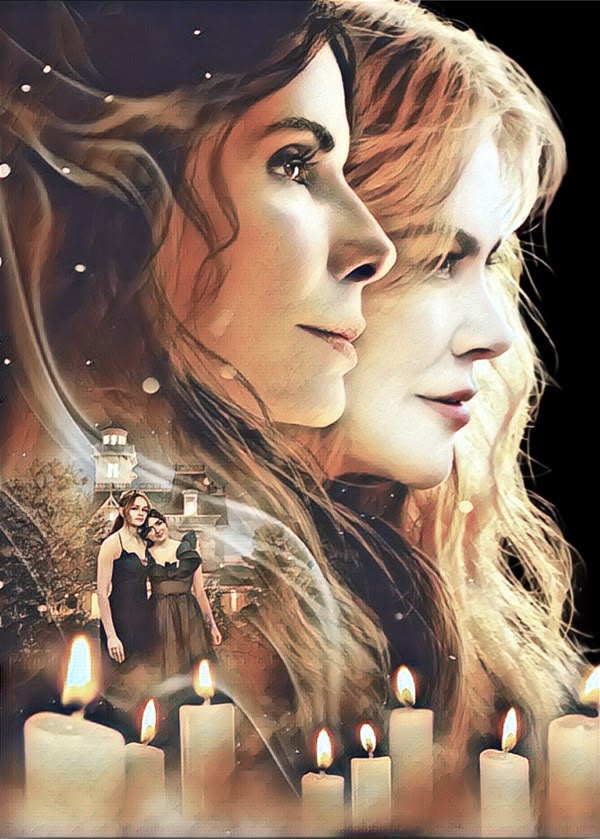
In the story, the women of the Owens family are condemned to lose any man they love. The curse began in 1620, when Maria Owens, pregnant and abandoned by the man she loved, cast a spell so that she would never feel that pain again. What was meant to protect her became a sentence for her descendants: love and death began to walk hand in hand.
The fantasy is magical, but the mechanism is profoundly human. Maria tries to prevent her descendants from experiencing the same abandonment and, without realizing it, turns her trauma into an inheritance. What began as protection comes to shape the lives of all the women who follow her.

How does a family story cross generations?
A family passes down more than physical characteristics, possessions, or surnames. It also transmits ways of loving, fearing, interpreting the world, and reacting to suffering. Some of these messages are stated openly. Others emerge through silences, prohibitions, expectations, and behaviors that no one can fully explain.
A woman who was abandoned may teach her daughter not to trust men. A family that has experienced devastating losses may treat any separation as a threat. Parents who had to grow up too soon may demand excessive independence from their children. These messages are not always conveyed through words. They often appear in how adults relate to others, in what they avoid, in what they fear, and in what they attempt to control.
The next generation receives this history before it can even understand that it exists. This does not mean that it is condemned to repeat it, but it helps explain why certain choices can feel so natural. What is familiar is not necessarily what is good for us. It is simply what we recognize.
In Practical Magic, Maria Owens’s descendants grow up knowing that love represents a danger. Each woman finds her own way to respond to that threat, but none of them starts from scratch. The curse was already there before they were born, just as beliefs, expectations, and conflicts exist in every family before a new child arrives.
What is psychic determinism?
Psychic determinism begins with the idea that events in our mental lives have causes. Forgetfulness, slips of the tongue, symptoms, fantasies, and choices do not emerge from a void. Even when we do not understand why we act in a certain way, an unconscious logic may be guiding our decisions.
This does not mean that everything is decided in childhood or that we have no freedom. Psychic determinism is not predestination. Our history influences us, but it does not have to imprison us forever. Recognizing what determines us can expand our freedom in relation to what previously simply repeated itself.
The Owens curse represents this determinism almost literally. The women believe that an external force condemns their relationships, but the expectation of loss also affects the way they love. If love means loss, they may avoid intimacy, choose unavailable partners, leave before they can be left, or remain in destructive relationships because suffering was expected from the beginning.
Each new loss appears to confirm that the curse is real. At the same time, believing in the curse helps keep them trapped in the same narrative.
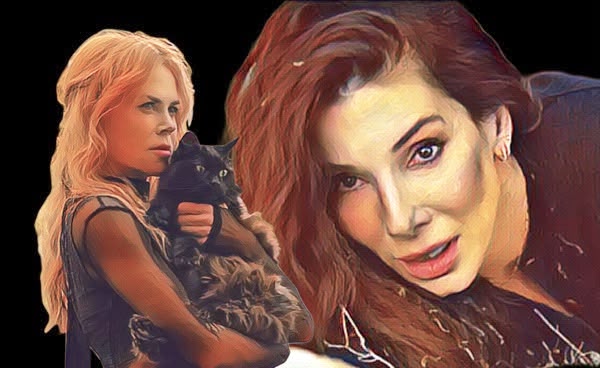
Sally and Gillian: two responses to the same fear
Sally and Gillian grow up under the same threat, but develop opposite strategies. Sally tries to control love. While still a child, she casts a spell so that she can only fall in love with a man whose qualities are so unlikely that he could never exist. If she does not love, she imagines, she will not lose anyone.
Gillian responds differently. She longs to fall in love, runs away from home, and pursues intense relationships, as though she could experience everything before the inevitable loss occurs. Sally avoids desire; Gillian plunges into it. One seeks safety, while the other confuses freedom with risk. Both, however, continue to organize their choices around the same fantasy.
It is important to clarify that Gillian does not choose to suffer Jimmy Angelov’s violence. Responsibility for abuse belongs to the person who commits it. The psychoanalytic question is not about blaming the victim, but asking why danger could initially be confused with passion and freedom. Certain situations attract us not because we want to suffer, but because there is something strangely familiar about them.
Sally cannot escape the family story either. She falls in love, loses her first husband, and, by the end of the original film, believes she has found a new opportunity with Gary. The sisters’ union, Jimmy’s exorcism, and the community’s acceptance of the Owens women create the impression that the curse has been broken. The sequel reveals that it was not so simple. Sally experiences another romantic loss and is once again alone.
Faced with the fear that her daughters will suffer the same pain, she erases their knowledge of magic and hides the truth about the family. Her decision is meant to protect them, but it repeats Maria Owens’s logic: an attempt to control love and pain through prohibition.
Silence also transmits
Sally appears to believe that if Kylie and Antonia (her daughters) know nothing about the curse, they will be able to escape it. The problem is that what remains unspoken does not cease to operate. A family secret can emerge as anxiety, a sense of danger, inexplicable behavior, or a repetition that no one knows how to connect to the past.
In the sequel, the daughters discover that they have been deprived of a fundamental part of their own history. Kylie falls in love and realizes that the curse has reached her generation. In Alice Hoffman’s novel The Book of Magic, her boyfriend, Gideon, suffers a serious accident after the two finally declare their love for each other. In an attempt to save him, she travels to England in search of the origins of a book capable of undoing the curse.
Kylie and Antonia do not repeat Sally and Gillian exactly, because psychic transmission does not produce copies. Each person responds to a family inheritance singularly. Sometimes someone tries to be completely different from their parents, only to discover that they are still organizing their life in opposition to them. Repetition can appear in reverse.
If a daughter does everything her mother did, the continuity is obvious. If she spends her life trying not to resemble her, the mother may still remain at the center of her choices. The difference exists, but it does not necessarily represent freedom.


What is fate neurosis?
Freud observed that some people repeatedly go through remarkably similar experiences. Their partners, jobs, and cities change, but they arrive once again at abandonment, betrayal, failure, or loss. Because they do not recognize the unconscious logic involved in these choices, they feel persecuted by an external fatality.
This became known as fate neurosis. It does not mean that someone consciously causes their own tragedies or is responsible for the violence they have suffered. It means that there is a repetition so persistent that it begins to resemble the work of destiny.
Repetition compulsion leads us back to conflicts that could not be worked through. Unconsciously, we try to produce a different ending for a story in which, at another moment, we were powerless. The problem is that, until we recognize what we are repeating, we may end up reconstructing the very conditions that led to the earlier suffering.
For centuries, the Owens women have been trying to answer the same question: is it possible to love without losing? Sally avoids, Gillian takes risks, and Kylie searches for answers in magic. All of them try to find another way out, but they begin with the same association between love and death.
Why do the sisters need to unite again?
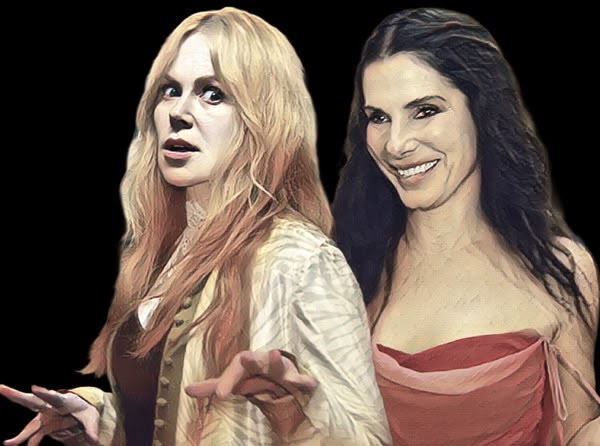
To break the curse, Sally and Gillian must unite once again. In the new generation, Kylie and Antonia will also have to find a way to face what they have inherited together. This is not simply narrative repetition designed to capitalize on nostalgia for the first film. The sisters’ union represents a possibility of working through the trauma.
Family trauma is born and circulates within relationships. For that reason, it often needs to be recognized within new relationships as well. When an experience is no longer an individual secret and finds words, a listener, and a witness, it can acquire another meaning.
In the first film, Sally can only save Gillian when she calls other women to help them. The community that once judged the Owens women enters the circle. What had been experienced as private shame becomes a shared experience. In the sequel, the family must return to the origin of the curse and give the daughters the knowledge that Sally tried to conceal.
A family, however, does not transmit trauma alone. It also passes down resources, affection, knowledge, and ways of caring. If the curse has crossed generations, the Owens women’s ability to come together and protect one another has crossed them too. Repetition does not always have to lead to the same ending.
The actresses and the fantasy of rewriting a story
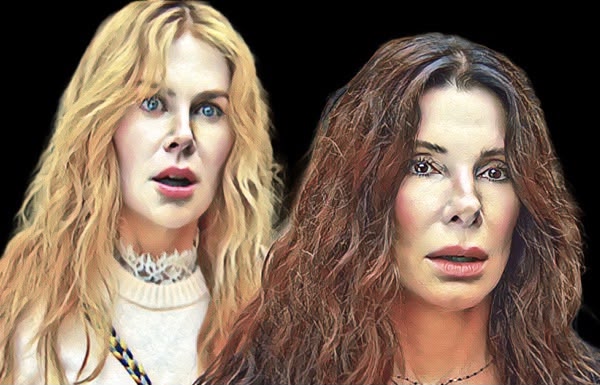
There is a delicate parallel between the characters and the actresses returning to play them. When Nicole Kidman made the first film, she was still married to Tom Cruise. Their separation would come a few years later. During the production of the sequel, she was ending another marriage, this time to Keith Urban, after nearly two decades.
Sandra Bullock returned to Sally after experiencing an even more painful loss. Bryan Randall, her partner since 2015, died in 2023 after living with amyotrophic lateral sclerosis. They were not legally married, so she did not become a widow in the formal sense, but she lost the man she considered her great partner and stepped away from filmmaking while she grieved.
We cannot claim that Nicole and Sandra chose to return to Practical Magic to work through their own romantic histories. That would turn a symbolic coincidence into a diagnosis. We can, however, fantasize about the meaning of returning, almost 30 years later, to characters who associate love with separation and death.
Repetition compulsion is not limited to reproducing suffering. It can also express an attempt to return to a particular story in search of a different response. Through the magic of cinema, Nicole and Sandra revisit Sally and Gillian as older women after experiencing their own farewells. They return to the same setting, but they are no longer the same women. On some level, they can relive that story and, this time, participate in building a different ending.
When culture also repeats and transforms
Practical Magic itself underwent a similar process. In 1998, the film received mixed reviews and performed modestly at the box office. Bullock says she was traumatized by the press tour, which was marked by complaints that the production was excessive: too many women, too many witches, too many tones.
For years, she carried shame over a film she believed had not worked. Then a new generation discovered it, particularly through social media, and transformed what had once been received with discomfort into a cult classic. The film did not change, but the way people looked at it did.
The word “witch” was also redefined. For centuries, it was used to persecute women considered inconvenient, uncontrollable, or dangerous. Today, many women reclaim the term as an expression of identity and autonomy. What once produced shame can lose some of its power when it is given a new name and a different meaning.
Before making the sequel, Bullock rewatched the original with her children and their friends. She wanted to see the story through the eyes of a generation that did not carry the rejection of 1998. The gesture fits the psychoanalytic question perfectly: to transmit a story differently, we must also listen to those who will receive it.
Breaking the cycle does not mean erasing the past
Psychoanalysis does not promise to eliminate the past, prevent every repetition, or protect us from new losses. Its work is to allow what had been guiding the subject without being recognized to finally be connected to their own history.
A trauma does not disappear simply because it was confronted once. The same issue may return at another stage of life and require a new process of working through. That is why the curse’s return in the sequel does not invalidate what Sally and Gillian achieved in the first film. They defeated one manifestation of the family story, but they had not yet reached its origin.
Breaking a cycle does not mean ceasing to inherit. That would be impossible. It means recognizing what has been transmitted to us so that we can decide what to do with it. Kylie and Antonia inherit the Owens women’s magic, losses, and secrets, but they also receive the unity, resilience, and knowledge of the women who came before them.
Perhaps the curse was never only about the deaths of the men they loved. Its power also lay in the certainty that every woman in the family was condemned to repeat Maria’s suffering. By hiding the story, Sally kept that certainty intact. To transform it, they will need to return to the beginning, understand how a defense against abandonment became a prison, and allow the next generation to discover another way to love.
Destiny, in this sense, is not necessarily what awaits us. It is often the name we give to a story we continue repeating because we have not yet been able to recognize it. Breaking the curse does not mean erasing what came before us, but preventing the past from continuing to choose our future on its own.
Descubra mais sobre
Assine para receber nossas notícias mais recentes por e-mail.

