
For a long time, Slow Horses was the show its fans recommended almost indignantly: how can you still not be watching it? The Apple TV production had excellent reviews, intelligent adaptations of Mick Herron’s novels, and Gary Oldman delivering one of the finest performances of his career. Even so, it remained relatively confined to a loyal, passionate and steadily growing audience.
That is finally changing. As the sixth season approaches, Slow Horses is becoming a sensation. Emmy nominations, belated recognition for Gary Oldman, the rise of Jack Lowden, and the series’ discovery by a wider audience have turned the rejected agents of Slough House into one of television’s most beloved teams.
Choosing only ten scenes, then, is almost cruel. The series balances action, espionage, British humor, tragedy, and poisonous dialogue like few others. But these are, so far, the moments that best explain why we love these spies who fail, fall, get back up and, almost always against all expectations, save the day.
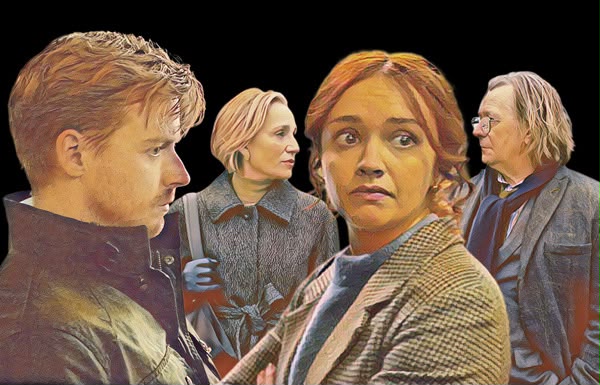
1. River’s Mistake at Stansted Airport
The opening of the first season is a masterclass in how to introduce both a series and its protagonist. River Cartwright believes he is pursuing a terrorist about to board a plane. He races through the airport, crashes through barriers, knocks people over, and tries to prevent a tragedy while receiving contradictory instructions through his earpiece. When he finally catches the suspect, he discovers that he has chased the wrong man.
It was all part of a training exercise, but the simulated explosion determines River’s future. The mistake sends him to Slough House and establishes the series’ central premise: this ambitious young agent, the grandson of an MI5 legend, will have to live with the humiliation of having failed publicly. We later discover that the blame was not exactly his, making his punishment even more unjust. River does not arrive at Slough House because he is incompetent. He arrives because someone had to pay for the failure.
2. Jackson Lamb Confronts Diana Taverner
Choosing only one exchange of barbs between Jackson Lamb and Diana Taverner is virtually impossible. Gary Oldman and Kristin Scott Thomas turn every encounter into a duel in which no word is wasted, and no insult is gratuitous. But their confrontation in the first season, when Lamb dismantles the covert operation organized by Diana, perfectly summarizes their relationship.
Diana works in the elegant offices of Regent’s Park, dresses impeccably, and represents the respectable face of MI5. Lamb operates from a crumbling building, looks as though he never showers, and makes a point of being offensive. In practice, however, he understands the game before she does and knows precisely how far he can push her. The scene makes it clear that Lamb’s decaying appearance is also a weapon: while everyone is busy feeling disgusted or embarrassed by him, he observes, calculates, and gathers enough information to survive.

3. Catherine Standish Beats the Russian at Chess
Catherine Standish is constantly treated as “Lamb’s secretary,” as though her only purpose were to make coffee, organize the office, and endure her boss’s insults. Her chess match against Victor Krymov in the second season reveals what lies beneath that discreet exterior.
Krymov believes he is in control. He underestimates Catherine, tries to intimidate her, and turns the chessboard into another demonstration of power. She accepts the game, sacrifices her queen, and quietly prepares the checkmate. Her victory is not merely about chess. By defeating him, Catherine obtains the information Lamb needs to identify the real mastermind behind the operation.
It is one of the show’s most satisfying moments because it does not suddenly transform Standish into an action hero. She wins by using the qualities she has always possessed: intelligence, patience, powers of observation, and a resilience few people notice. Catherine survived alcoholism, Charles Partner’s manipulation, and Lamb’s cruelty. Krymov should never have underestimated her.
4. The Death of Min Harper
Until the second season, we could still believe that the agents of Slough House were protected by the show’s humor. They took risks, made mistakes, and escaped by the narrowest of margins. Min Harper’s death destroys that sense of security.
After being drugged by the Russians, Min rides away on his bicycle without fully understanding what is happening and is struck by a car. The incident is initially presented as an accident, but it soon becomes clear that his death was deliberately caused and covered up. The violence of the scene lies precisely in its banality. There is no heroic farewell, grand speech, or opportunity to fight back.
The greater impact comes through Louisa, who had begun a relationship with him. Her grief carries into the following seasons and changes the atmosphere of Slough House. Min was not the group’s finest agent, but he was one of them. His death proves that the Slow Horses may look like characters in a workplace comedy, until the brutal world of espionage demands its price.

5. River Escapes Through France
In the fourth season, River travels to Lavande using the identity of the man killed at David Cartwright’s house. He believes he is investigating a secret from his grandfather’s past, but soon realizes that he has entered a territory designed to conceal something much larger.
The sequence of his escape through the small French town brings together everything Jack Lowden does so well as River. He is brave, quick and trained, but he is also frightened, improvising and trying to understand why so many people seem determined to kill him. There is none of James Bond’s polished fantasy. River runs, stumbles, gets beaten, miscalculates, and keeps going.
The pursuit also marks the transformation of a professional investigation into a deeply personal discovery. River believes he is following a clue connected to MI5. In reality, he is moving closer to the truth about his own origins and to his encounter with Frank Harkness, the man who will change the way he understands his family.
6. Diana Taverner Brings Down Ingrid Tearney
While River and Louisa fight to survive inside an underground facility, Diana Taverner and Ingrid Tearney wage a much quieter battle at Regent’s Park. There are no shots fired between them, but the objective is just as destructive.
Ingrid believes she has managed to contain the crisis and preserve her position. Diana, however, has already gathered the information needed to expose her boss’s cover-up. The confrontation between Kristin Scott Thomas and Sophie Okonedo is a masterclass in restraint. Neither woman needs to raise her voice because both understand perfectly well the consequences of every revelation.
This is MI5 stripped of any romanticism. The institution is governed not only by principles of national security but also by ambition, fear, vanity, and political survival. Diana wins, but not because she is morally superior to Ingrid. She wins because she played the game better. In Slow Horses, reaching the top rarely means being right. It merely means knowing how to use other people’s mistakes before they use yours.

7. The Shootout in the Underground Facility
The end of the third season turns a records facility into a claustrophobic battlefield. River and Louisa are surrounded by Chieftain mercenaries, while documents capable of compromising MI5 must be recovered before they are destroyed.
The sequence works because the action never feels easy. River and Louisa do not move through the shootout like invulnerable heroes. They run out of ammunition, improvise, hide and depend on each other to stay alive. With every new corridor, it seems increasingly unlikely that there is a way out.
It is also the moment when the term “Slow Horses” loses any suggestion of incompetence. Those agents were sent to Slough House because they made mistakes or became inconvenient, but they did not lose their training, courage, or ability to act under pressure. When the official MI5 tries to erase its own crimes, it is precisely the outcasts who fight to preserve the truth.
8. The Grenade in River’s Hood
Frank Harkness needs to escape from a restaurant surrounded by MI5. His solution is to embrace his own son, place an unpinned grenade inside River’s hood, and calmly walk away while everyone else tries to stop it from exploding.
The scene is almost unbearable because it summarizes Frank within a matter of seconds. He does not hesitate or display guilt, and he knows that River will be forced to remain still while he buys himself time. The grenade is a weapon, but it is also a message: to Frank, any bond can be turned into an instrument of control.
Jack Lowden conveys River’s panic without exaggeration. River knows that any movement could kill him, and he also realizes, definitively, exactly who his father is. Frank does not merely put his life at risk. He destroys any fantasy that some form of affection might be concealed beneath the brutality.

9. Lamb Takes River for a Drink
After Marcus’s death and the painful decision to place David Cartwright in a care home because of his advancing dementia, River ends the fourth season emotionally shattered. Lamb finds him and takes him for a drink.
Naturally, there is no embrace or sentimental conversation between them. Lamb would not know how to offer comfort that way, and River probably would not know how to accept it. The gesture lies in the silence, the drink Lamb pays for, and his presence. For the first time, Lamb allows River to understand that he is not entirely alone.
It is a small scene, but a crucial one for their relationship. Lamb has spent years insulting River, questioning his intelligence and treating his ambition like a disease. Yet he has also protected him, taught him, and recognized something in him that he may never want to admit. That drink at the pub is Lamb’s twisted way of telling River that he has finally earned his respect.
10. Jackson Lamb’s Torture Monologue
The fifth season finally opens a window into the past Jackson Lamb conceals behind the filth, alcohol, flatulence, and cruelty. When he talks about the KGB’s methods of torture and what happened to the pregnant woman beside him, the character’s mask falls away.
We do not witness a sudden transformation. Lamb continues speaking with his usual dryness, as though he were describing something that happened to somebody else. It is precisely this restraint that makes the moment devastating. Gary Oldman does not ask us to feel compassion for the character; he simply allows us to see the trauma Lamb has spent decades trying to conceal.
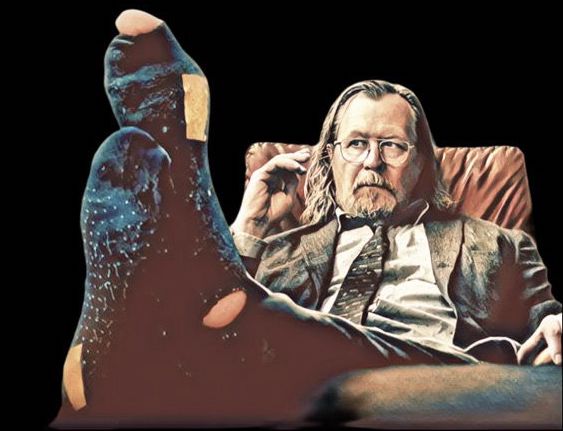
Later, Catherine asks whether the story was true. Lamb lies. Then we see his burned foot through the hole in his sock and understand that behind the account was an experience he never managed to leave behind. Catherine may understand it too. Between them, affection has always been hidden inside the lies one tells to protect the other.
The monologue rearranges everything we thought we knew about Jackson Lamb. His negligence, cynicism, and even his refusal to show emotion are no longer merely amusing character traits. They are also survival mechanisms. Lamb is not a great spy despite his scars. In many ways, he became that man because of them.
A Sensation That Took Its Time
Slow Horses needed time to find a wider audience, perhaps because it has never made things easy. There is no glamour, miraculous technology or flawless heroism. Its agents make mistakes, drink, betray one another, suffer, and carry the consequences from one season into the next.
Now that the series is becoming a sensation, those arriving later are discovering something rare in streaming: characters who have been given time to mature and relationships built over several years. These ten scenes are not memorable only because of the action, revelations, or performances. They work because we know these people and understand what every silence costs them.
That is ultimately the great irony of Slow Horses. The series began by telling the story of agents discarded by MI5 and ended up proving that some of the finest stories are precisely the ones audiences take longer to discover.
Descubra mais sobre
Assine para receber nossas notícias mais recentes por e-mail.

