
Some cancellations are easy to understand. A series costs too much, nobody watches, critics hate it, audiences give up before the end. And then there is Ride or Die, whose failure to secure a renewal at Prime Video became far more interesting than Amazon probably would have liked. Because the series starring Hannah Waddingham and Octavia Spencer had the audience, had the reviews, had viewer approval and, according to Deadline, even came in under budget. And still, it was canceled.
Or perhaps not canceled for good, because Paramount Television Studios is shopping the show to other platforms. But Prime Video’s decision raises a question that goes far beyond Ride or Die: is there an age limit for being the lead in streaming television?

The series premiered quietly, with a much smaller marketing campaign than the one Amazon reserved for its productions aimed at younger audiences, and then surprised everyone. It reached No. 1 in the United States, topped minutes watched according to Luminate, entered Nielsen’s Top 10 and remained for weeks among Prime Video’s most watched titles globally. On Rotten Tomatoes, it reached 96% approval among critics and 85% among audiences.
None of that guaranteed a second season.
The truly uncomfortable part of the story appears in the explanation heard by Deadline, which is not an official justification from Amazon and should be treated exactly as that: information attributed to the publication’s sources. According to them, the problem may have been precisely the audience Ride or Die attracted. Middle-aged women, in large numbers, were already Amazon Prime subscribers because of shopping, which meant that a series speaking directly to them would have less power to bring new customers to the platform.
It is a commercially understandable logic on paper and a deeply troubling one when put into practice. A woman in her 50s or 60s can pay for her subscription, watch a series, finish it, enjoy it and recommend it. But if she is already a customer, she may be worth less in streaming’s subscriber-acquisition math than someone who still needs to be convinced to sign up.
It is difficult not to think about ageism.
Especially because Ride or Die is not alone.
A few months earlier, Netflix canceled The Boroughs, produced by Matt and Ross Duffer, the creators of Stranger Things. The series almost seemed to challenge the very formula that made the brothers famous: instead of teenagers facing monsters and supernatural phenomena, it placed a group of residents from a retirement community against an inexplicable threat. Alfred Molina, Alfre Woodard, Geena Davis, Clarke Peters and Denis O’Hare were among the cast.
The Boroughs attracted nearly 19 million views in its first 18 days. The high cost of a science-fiction production with extensive visual effects was cited as one of the factors weighing against renewal, so it would be simplistic to say Netflix canceled the series because its protagonists were older. But it would also be naive to ignore the coincidence: a production specifically built to put older people at the center of an adventure lasted only one season, even though its writers were already developing a story meant to continue.
And perhaps the most important word here is precisely center.

Older people have never disappeared completely from television or film. They can be fathers, mothers, grandparents, bosses, mentors, politicians, villains, eccentric neighbors. They can even be given wonderful characters. The difficulty seems to arise when they stop orbiting younger characters and begin claiming the story for themselves.
That becomes even clearer once gender enters the equation.
Men manage to break through that barrier with an ease women rarely enjoy. Tom Cruise is 64 and continues to be presented, without embarrassment, as an action star and the unquestioned lead of major productions. Brad Pitt is 62 and can still be a romantic lead, a hero, an antihero or the center of a blockbuster. They are both old enough to be grandfathers, but no one demands that their characters suddenly become “elderly men.” They simply continue to be Tom Cruise and Brad Pitt.
With women, the examples immediately begin to require explanations.
Meryl Streep, at 77, obviously continues to work, but I do not think she can be used as proof of equality. For decades, Meryl has belonged to a special category, associated with prestige, awards and the very idea of artistic excellence. She is almost a cultural institution. Her professional longevity does not prove that the rules are the same for every other woman.
Nicole Kidman has not even turned 60 yet — she is 59 — and perhaps she is one of the most fascinating examples precisely because she works almost compulsively. Film, television, producing, large and small projects: it is difficult to think of another actress from her generation maintaining such a constant presence. But even Nicole seems to have to keep earning the right to remain at the center.
And how many others are there?

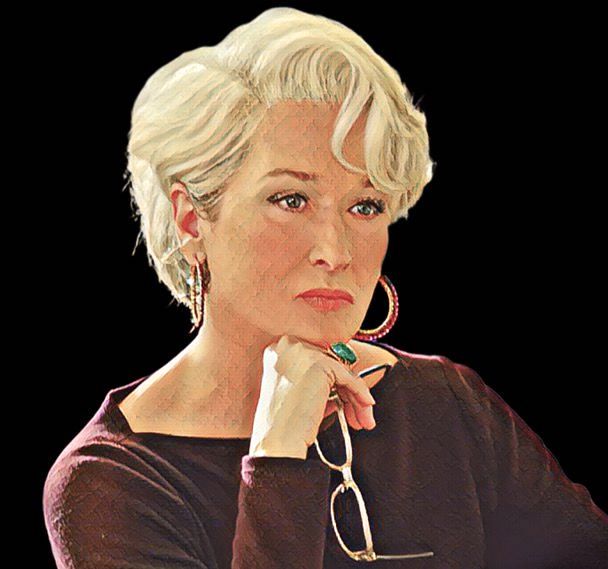
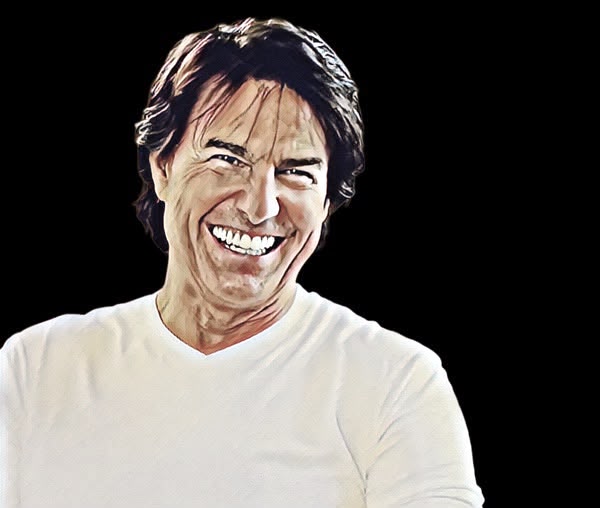
That may be the most revealing question. Not how many actresses over 50 or 60 are still working, because many are. How many remain commercial leads, romantic leads, funny, dangerous, sexually active, contradictory and complex without their age itself having to become the main subject of the story?
That is exactly what Hannah Waddingham and Octavia Spencer were doing in Ride or Die. They were not there to teach younger people anything, nor to “represent aging.” They were the stars of a spy comedy. One was an international assassin. The other discovered that perhaps she did not know her best friend as well as she thought. There was action, humor, conspiracy and female friendship. The characters’ age was part of who they were without needing to define them.
In the same way, The Boroughs dared to give older people what Stranger Things has always given teenagers: adventure.
Perhaps that is why the two cancellations feel so uncomfortable when placed side by side. Neither one, on its own, proves the existence of an ageist policy at the platforms. Productions are canceled for dozens of reasons, from budget to completion rates, retention, international strategy or their ability to attract subscribers.
But Ride or Die adds one piece of information that is difficult to forget. If Deadline’s sources are correct, its audience may have become part of the problem because middle-aged women were already inside the Amazon ecosystem. In other words, they watched, but perhaps they were not commercially new enough.
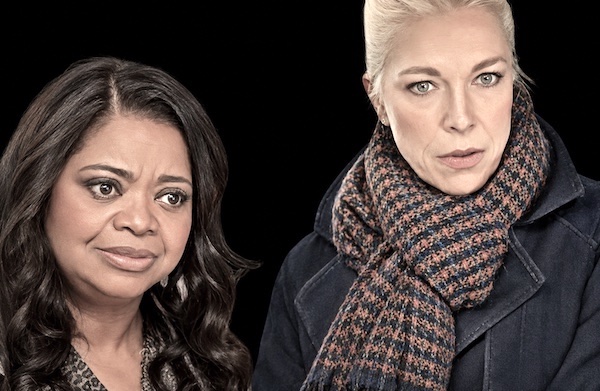
Streaming spent years talking about diversity and achieved important progress in what we understand as representation. And yet there is one kind of diversity we discuss far less: age.
Perhaps because aging is universal and, precisely for that reason, uncomfortable.
Or perhaps because the industry still finds older characters easier to accept when they remain at the margins. Parents. Grandparents. Mentors. Special appearances. Great actors celebrated for the careers they have already built.
The real test begins when they want to remain where they have always been.
At the center of the screen.
Descubra mais sobre
Assine para receber nossas notícias mais recentes por e-mail.

