
The title Youth contains a promise its protagonist cannot quite accept. The series borrows an observation commonly attributed to Victor Hugo: if 40 is the old age of youth, 50 is the youth of old age. It is a generous way of saying that another stage of life is beginning. Alex, however, makes a far less generous calculation. At 50, she believes she may have only ten years left as a sexually attractive person. The question driving Sharon Horgan’s comedy is not simply whether she will find someone. It is what happens to a woman when she begins to live as though her desirability has an expiration date.
Created, written, and starring Horgan, Youth premiered on HBO Max on September 20 with two episodes; the remaining six will be released weekly. Alex is a divorced literary agent trying to work, care for her aging parents, and look after her son Ruari just as she imagines he is about to leave home. She hopes this will give her room to reclaim a romantic life of her own. Instead, Ruari unexpectedly returns from university, her parents need more and more from her, and her ex-husband offers little help. The freedom Alex has been waiting for does not last even a week.

Horgan knows this kind of chaos. The Irish actor, writer, and producer helped create Pulling, wrote and starred in Catastrophe, and built Bad Sisters around women bound together by anger as well as love. Her characters say cruel things, make bad choices, and rarely find comfort in the uplifting messages television likes to offer middle-aged women. In Youth, she returns to that territory but replaces crime and dramatic events with an everyday question: when everyone still needs you, when does your life become your own again?
The supporting cast keeps Alex from becoming merely “the clumsy woman looking for a man.” Sharlene Whyte plays Sam, her friend and boss, in a relationship where intimacy and work do not always sit comfortably together. Aran Murphy (Cillian Murphy’s son, and his clone) plays Ruari, the son whose return home interrupts his mother’s plans and suggests a crisis she does not yet understand. Owen McDonnell plays Lorcan, her largely absent ex-husband and Ruari’s father. Rupert Friend is Patrick, her on-again, off-again partner, with whom intimacy seems easier to manage as long as neither of them demands a definition. Tim McInnerny appears as Michael, an older man Sam introduces to Alex. Damian Lewis makes a guest appearance as a version of himself, an actor with literary ambitions; Anne Reid plays a veteran author Alex must deal with at work.
The series finds its best comedy where all those obligations collide. Alex wants sex, and there is no reason to doubt her. But she often seems to insist that she wants only sex so she will not have to admit that she also wants to be chosen, known, and loved. Claiming to expect nothing is a convenient form of protection when you fear being told that nobody intends to stay. Horgan is especially good at showing the distance between the free woman Alex would like to be and the woman who, after a disappointing date, still goes home wondering what she did wrong.
That does not mean Youth has invented a new kind of protagonist. Television already knows the intelligent, neurotic, sharp-tongued woman who is hopeless at love. What makes Alex more interesting is her conviction that every mistake costs more now. A bad date at 30 can become a funny story. At 50, she seems to experience it as one fewer chance within a deadline nobody but Alex has set.
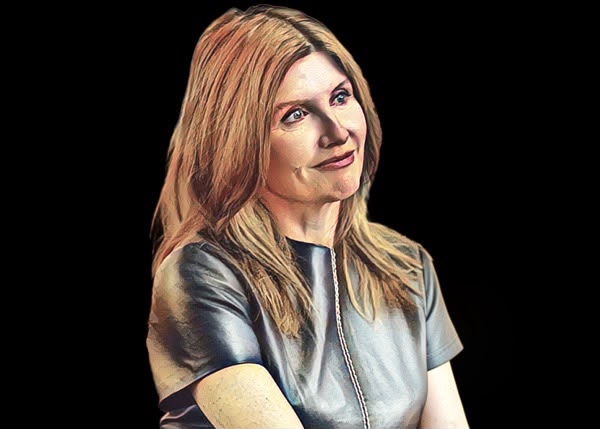
The series opens with inspiring images of women who achieved remarkable things after 50. Alex watches, but the message that there is still time does not seem to reassure her. She feels the opposite: that she must urgently make use of whatever time she has left. It is a recognizable pressure in a culture that sells female maturity as liberation while continuing to measure women’s sexual value against youth. Alex may say she does not care about that standard. Her haste suggests she still does.
The first two episodes have received a largely positive critical response. Reviewers have praised Horgan’s uncomfortable humor and her ability to bring sex, menopause, work, and family care together without turning Alex into a life lesson. There have been reservations, too: one Independent review argued that the production softens some of the writer’s usual edge. It is too early, especially for anyone following only the episodes released so far, to know whether the series will truly challenge Alex’s fear or continue to use it mainly as a source of comedy.
For now, I like Youth, but that uncertainty is precisely why I want to keep watching. Horgan allows Alex to be sexual, needy, capable, ridiculous, and exhausted at the same time, without requiring any one of those qualities to cancel out the others. I only hope that, before the end, she begins to question her own calculation. Perhaps 60 is not the limit of her desirability. Perhaps it is simply the age Alex learned to fear long before she got there.
Descubra mais sobre
Assine para receber nossas notícias mais recentes por e-mail.

