
When we think of David Lean, it is almost impossible not to think first of the desert. Peter O’Toole reduced to a tiny figure against the vastness of the sand in Lawrence of Arabia became one of epic cinema’s defining images, just as the bridge rising in the middle of the jungle did in The Bridge on the River Kwai. Lean died on April 16, 1991, 35 years ago, but perhaps his influence lies less in the sheer size of the films he made than in what he taught generations of filmmakers: a giant screen only matters if we know whom to look at within it.
Lean directed just 16 feature films over 42 years, a surprisingly small number for someone who left such an enormous mark on cinema. Before becoming a director, he worked as an editor, and that training may explain his style better than the word “epic” ever could. Spectacle in Lean was never simply a succession of beautiful images. Editing told us where to look, when to wait and, most importantly, when to leave the landscape behind and find the person lost inside it. That was already present long before he began commanding massive international productions.
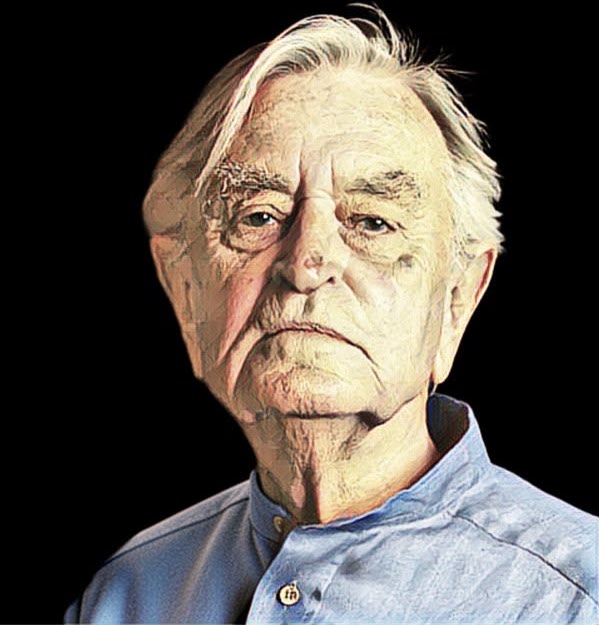
The opening of Great Expectations, from 1946, for instance, turns Dickens’s marshes into something almost expressionistic. Pip runs, tiny, through a hostile landscape, carrying flowers while the wind seems ready to swallow him whole. The David Lean who would later place men as specks against the desert was already there. It is no coincidence that Great Expectations was among the seven Lean films included in the British Film Institute’s 1999 list of the 100 greatest British films. Lawrence of Arabia, The Bridge on the River Kwai, Oliver Twist and In Which We Serve also made the list, alongside Brief Encounter and Doctor Zhivago. Few filmmakers have crossed genres, decades and scales with that kind of consistency.
It was with The Bridge on the River Kwai, in 1957, that the image of David Lean as the great director of monumental epics truly began to take shape. The film is monumental, of course, but its real story isn’t about building a bridge. It is about one man’s obsession. Colonel Nicholson, played by Alec Guinness, turns discipline, tradition and military pride into something progressively close to madness. He wants to prove British superiority to the Japanese by building the perfect bridge, even when that means helping the very enemy holding him prisoner. There is something deeply ironic about him: the discipline that allows Nicholson to survive is also the very thing that prevents him from seeing the absurdity of his own choices.
That tension between grandeur and blindness runs throughout Lean’s work. His characters want to move beyond the limits of their lives, transform the world or transform themselves, yet they often fail to see what everyone around them can already understand. Pip, Nicholson and T. E. Lawrence are dreamers, but they are also men imprisoned by their own ideas of who they should be. That recurring pattern matters because it shows that, beneath the scale of his films, Lean was less fascinated by huge historical events than by the way individual people responded to them.
It is in Lawrence of Arabia, however, that Lean reaches the fullest expression of that combination of spectacle and precision. One scene almost entirely sums up the way he thought about cinema. Lawrence lights a match in front of Claude Rains and, rather than extinguishing it with his fingers as he had done earlier, blows it out. Lean immediately cuts to the sun rising over the desert. Today, it is one of the most famous cuts in film history, but what is fascinating is that it was not originally conceived that way. The script called for a dissolve. After becoming interested in the more aggressive use of editing in Nouvelle Vague films, Lean abandoned the soft transition. A simple “dissolve” became “cut.”
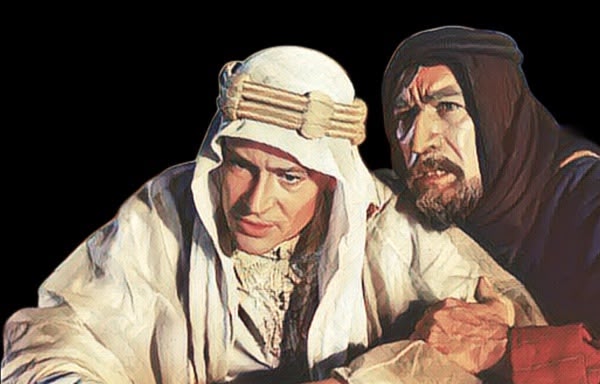
It is a small detail, but it says a great deal. David Lean could be commanding hundreds of extras, animals, massive crews and location shoots in the desert, yet he was still thinking like an editor. Grandeur came after precision. Steven Spielberg understood that very early. He was 15 when he saw Lawrence of Arabia and later said the experience was crucial to his desire to make films. Years later, already one of Hollywood’s most powerful directors, he met Lean and offered to produce anything he wanted to direct. George Lucas also counted Lawrence among his major influences and met Lean while he was still studying filmmaking. At the American Film Institute tribute to Lean in 1990, Spielberg said the film still made him feel small, while Martin Scorsese said Lean’s images stayed with him forever.
The lineage extends much further. Ridley Scott, Peter Weir, Michael Cimino, John Boorman, Brian De Palma, Sergio Leone, Spike Lee, Lawrence Kasdan and Jean-Jacques Annaud are among the filmmakers who have acknowledged Lean’s influence. John Woo once named Lawrence of Arabia among his three favorite films. It is difficult to think of many directors whose artistic descendants span such different styles, and that helps explain why Lean cannot simply be reduced to the man who made “beautiful” and oversized films. What his successors absorbed from him was above all a way of organizing space, character and emotion within the frame.
That lineage reaches directly to Christopher Nolan. He has cited Lawrence of Arabia among the films that impressed him when he was young and has placed David Lean alongside Hitchcock when discussing the tradition of British directors working within an essentially international cinematic language. There is much of that inheritance in Dunkirk, in Oppenheimer and in Nolan’s insistence on physical scale, real locations, large-format film and the idea that certain spectacles still need to exist in order to be experienced inside a movie theater. Nolan does not imitate Lean and has even pointed out differences between the way the two directors stage crowds, but he clearly belongs to that same lineage: filmmakers who believe scale only works when it is connected to human experience.
Lean did not merely teach filmmakers how to shoot a beautiful landscape. He showed that landscape itself could become a character. The desert in Lawrence, the jungle in The Bridge on the River Kwai and the marshes in Great Expectations are not simply decoration. They press down on the people within them, expose their fragility and make their obsessions appear larger or smaller depending on when Lean chooses to move the camera closer or farther away. That may be one reason his films have aged better than so many of the epics made in imitation of them. Scale was never synonymous with excess. It was a way of creating contrast.
There is also an unfinished story at the end of his career. After returning to filmmaking with A Passage to India, Lean began preparing an adaptation of Joseph Conrad’s Nostromo. At 81, the project was already facing financing difficulties and even required a replacement director to be formally attached in case Lean died during production. Robert Altman was his first choice for that role, with other names considered later. Before cameras could roll, however, Lean was diagnosed with a tumor in his throat, and the film never happened.
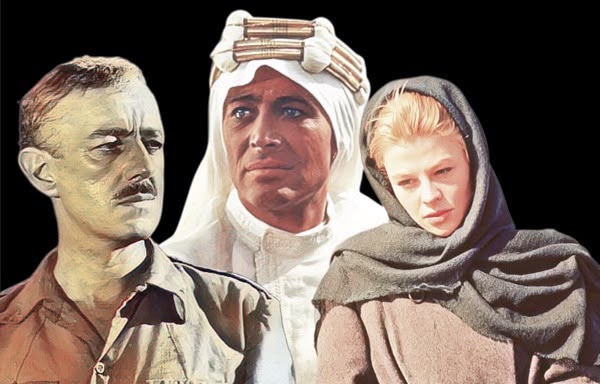
It is tempting to imagine what that final epic might have been, but perhaps Lean had already left his last work scattered throughout the films of those who came after him. Something of him can be recognized in the way Spielberg turns spectacle into emotional experience, in the way George Lucas places tiny characters against enormous worlds, in Ridley Scott’s horizons and in Christopher Nolan’s determination to keep treating the big screen as an essential part of cinema’s very language.
David Lean did not invent the epic. Long before him, Hollywood was already filling screens with crowds, battles and vast landscapes. What Lean understood was something more difficult: size alone never creates greatness. The desert only becomes truly immense when there is a man lost inside it.
Descubra mais sobre
Assine para receber nossas notícias mais recentes por e-mail.

