
The fifth episode of Dark Matter’s second season opens with hundreds of Jasons gathered around the one who is about to leave for another universe with Daniela and Charlie. For a moment, the scene seems to promise a confrontation, but they have come to say goodbye. One of the men leads the group and says he only wants to know that the others will be safe. When the family disappears into the Box, the series stays with him, one of the Jasons left behind.
It is a surprising choice for a season in which it has already become difficult to keep track of who is who. Alone on top of a building, this Jason looks out over a life in which he has lost Daniela, his son, and his home. He seems close to ending it all, but instead writes a plea in his notebook: to find a world where he can love and be loved. Then he enters the Box and goes looking, in Chicago, for someone we have not met before: his mother.

In that universe, her son died at sixteen. She is startled to open the door and find an adult Jason standing there, but welcomes him after he explains himself. They both cry as they embrace. For him, it is a chance to be with his mother again; for her, it is the impossible return of a son she has mourned for years. When they visit the teenage Jason’s grave, it becomes clear that this new life has begun in the shadow of a loss that will remain part of both their stories.
Jason does not recover the moment he walks through her door. At first, he drinks until he is sick and passes out on the street. His mother confronts him: she has already buried one son and does not want to lose another. From then on, he begins taking care of the house, the garden, and her. He starts reading again, makes furniture, turns his work into a business, and finds a measure of peace in a routine he never imagined for himself. He also takes in another Jason he finds living on the street, a man who has lost his twin children. The concern he showed for the others in the opening farewell becomes something he acts on.
This is Dark Matter’s saddest and quietest episode. Jason’s mother is deaf and communicates in sign language, giving their scenes a rhythm unlike the one we have come to expect from the series. More and more shows are willing to pause their main story for an episode devoted to one character’s experience, sometimes changing the language of the storytelling along with it. Here, so much rests on Joel Edgerton, who is wonderful at showing, with very little dialogue, everything this Jason has lost and everything he is beginning to find in that house.
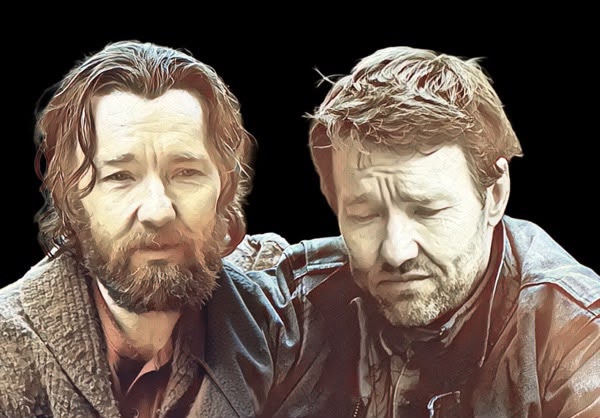
A conversation between mother and son reveals how she lived after her husband’s death. She dated two men, she says, but neither relationship felt right. She had twenty-three happy years with Jason’s father, while many people never get even one year like that. Jason thanks her for welcoming him and believing his story. Neither of them can undo what happened, but they have the chance to spend the years that remain together.
When his mother develops cancer, Jason stays to care for her. In all, six years pass in that universe. The life he came from, he says, has become a beautiful dream. That does not mean Daniela and Charlie have ceased to exist for him. It means the days in that house have become his life too, with their own routines, affections, and responsibilities.
His mother does not want him to be alone after she dies. While looking for a volume of Proust in a bookstore, Jason meets Maria, the woman who owns it, and opens himself to the possibility of loving again. He does not offer her an easy version of his past. He shows her the grave of the Jason who died at sixteen and then takes her to the Box. Maria is frightened and pulls away. It is hard to blame her: believing someone’s story is one thing; seeing the proof in front of you is another.
At his mother’s bedside, Jason signs a poem by Bilbo from The Fellowship of the Ring, the one in which he sits beside the fire and thinks of all he has seen. After her death, he reads the poem aloud at her funeral. Tolkien’s words accompany a man who has learned to recognize the beauty of the years they shared without suffering any less because those years have ended. Maria comes to the funeral and returns to him. Later, she finds the notebook Jason wrote in when he thought he had nothing left: “The love of my life. My son. My home. Please just let me find a world where I can love and be loved.”
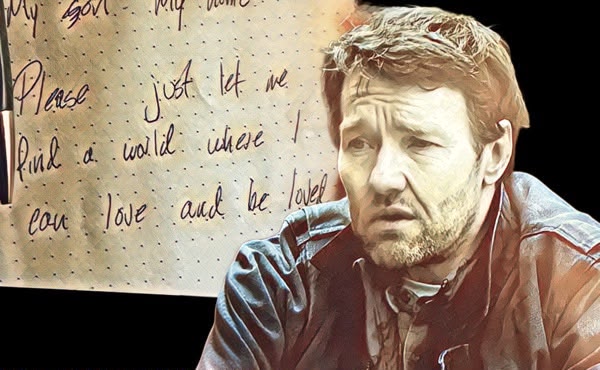
Near the end, Jason runs into the Daniela of that universe by chance. She does not recognize him and helps him choose flowers for Maria. For Daniela, it is an encounter of no consequence; for him, it is a chance to look at the woman he loved without turning away from the life he has built since. When he takes the elastic wedding band off his finger and puts it away, he is not erasing the family he lost. The notebook shows that they will always be part of him. Jason is simply accepting that he can also love Maria and stay in this world.
I do not yet know whether we will follow this Jason again, but he already seems to me the saddest and most honorable of them all. After watching so many men try to reclaim a life they believe belongs to them, we meet one who chooses to care for his mother, help another Jason, and give himself another chance. Dark Matter takes its most intimate pause to show that, among infinite realities, living can also mean this: staying beside someone for as long as you can.
Descubra mais sobre
Assine para receber nossas notícias mais recentes por e-mail.

