
Contains spoilers through the second episode of Slow Horses Season 6.
In Slow Horses, the slow horses are the agents everyone loves to call incompetent, yet they are the ones people turn to when those in power need someone to do the dirty work. They are also the first to take the blame when that work goes wrong. Peter Judd and Diana Taverner know the rule well. He has moved through politics, government and then business selling his influence; she has spent years trying to take charge of MI5. Their relationship was never built on trust or friendship. It began with damaging secrets and survived because each recognised in the other someone willing to do what it took to come out on top.
It starts in Season 1, with the kidnapping of Hassan Ahmed. Diana devises an off-the-books operation: she plants Alan Black among the extremists who are going to abduct Hassan and expects MI5 to rescue him, defeat the far right and claim the credit. But Black is exposed and killed, Hassan is placed in real danger, and the plan meant to enhance the Service’s standing threatens to destroy it. Robert Hobden, the journalist who works out what is happening, goes to Judd. The politician has ties to people in that world, and Diana approaches him when she needs to reach the kidnappers. She knows enough about his associates and his private life to put pressure on him. Judd, in turn, knows that the senior MI5 officer cannot publicly admit she helped put Hassan in that position.
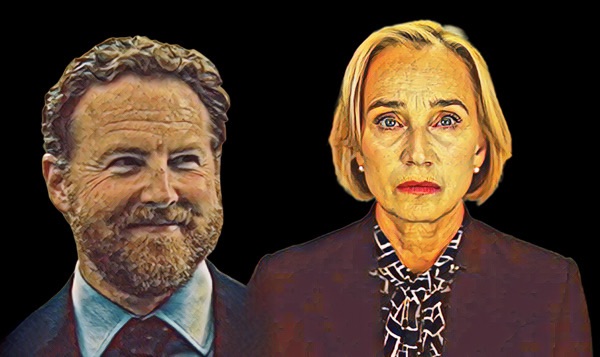
That encounter sets the tone for every conversation that follows. They can disagree, threaten each other and even work together, but neither stops calculating what the other stands to lose. Meanwhile, Diana tries to keep the operation from being pinned on her and sees Slough House as a convenient way out. Jackson Lamb and his agents are treated as expendable until they become indispensable to finding Hassan. The series’ pattern was already there in full: the decisions are made upstairs; the risks travel down.
In Season 2, Judd sets his sights on becoming prime minister and seeks Diana’s support. She wants to replace Ingrid Tearney as head of MI5. The arrangement suits them both, but it is a long way from a loyal alliance. Judd needs the weight of the intelligence services behind his political ambitions; Diana needs someone with the power to help her rise. Each feeds the other’s ambition, even when their interests no longer align.

Season 3 makes that even clearer. As home secretary, Judd authorises the so-called Tiger Team, a private team hired to test MI5’s security. Catherine Standish is kidnapped, River Cartwright is used to expose the agency’s weaknesses, and the exercise becomes a real crisis. Judd wants to embarrass Ingrid and open the door to the private security company involved in the operation. Diana sees an opportunity in the chaos of her own struggle with her boss, but she cannot control every player or the consequences. Once again, the agents at Slough House risk their lives in a battle for prestige waged by people who are unlikely ever to find themselves in the line of fire.
Judd is not central to the story in Season 4, and Diana still does not get the job she covets: Claude Whelan is chosen to run MI5. Season 5, however, brings Judd back in his new role as a fixer. He comes to Diana’s house to represent his clients’ interests, including those of a Libyan group seeking compensation for oil revenue lost after Gaddafi’s fall. When Libyan terrorists demand £100 million to call off their attacks, Diana discovers that the account designated to receive the money is linked to Judd. He admits that the group has been paying him for years and that he stands to collect a commission on the transfer.
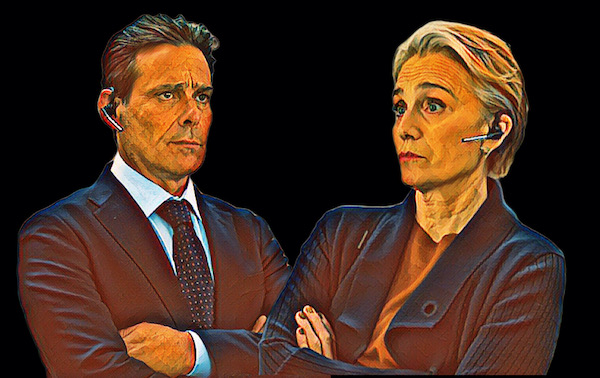
What happens next is even more revealing. Whelan, whose incompetence has helped make the crisis worse, agrees with Judd on a version of events that would hold Slough House responsible for the disaster. Judd would keep his profits; Whelan would keep his job. River has just saved the director’s life, and Lamb has helped capture Tara, but none of that would stop the slow horses’ office from being shut down. Lamb breaks their agreement by producing a recording capable of destroying Whelan. Diana finally takes charge of MI5, while Judd ends the season compromised by his ties to the Libyans.
That episode explains the money mentioned in Season 6. Diana uses what she knows about the payments Judd received from foreign interests to force him to hand over a large sum to MI5. She believes she has extracted his money to fund the Service’s operations. At David Cartwright’s funeral, Judd reveals the trap: the money he handed over did not come out of his own pocket. A wealthy friend paid it. In the next episode, that friend acquires a name and a face: Damien Cantor, the owner of a right-wing television channel, who uses the money’s origins to pressure Diana into giving him an interview. So far, the series has not explained which operation she used the money for, or established the full extent of Cantor’s involvement in the hunt for former Slough House agents. The £100 million paid to the Libyans was the ransom demanded by the terrorists; the money Diana later extracted from Judd was a separate payment.
The irony is that Diana thought she knew the rules of this game better than Judd. She had found his weak spot, named her price and turned the money to MI5’s advantage. Judd did what he always does: he found someone willing to pay for proximity to power and saved that information for later. Diana now holds the position she wanted, but she is also exposed to a form of blackmail she helped create. And while the two of them measure their strength against each other, it is a list of Slough House agents that circulates, former slow horses who are killed, and Lamb who must keep the survivors alive. In Slow Horses, the bill always comes due. What changes is who has the power to put someone else’s name on it.
Descubra mais sobre
Assine para receber nossas notícias mais recentes por e-mail.

