
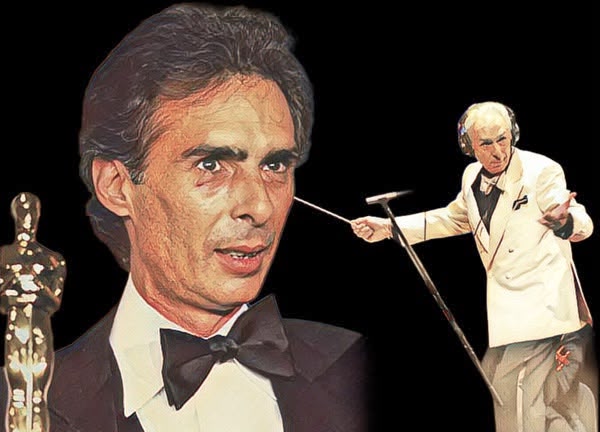
Sylvester Stallone was not the only unknown whose life changed with Rocky. When the film was released in 1976, Bill Conti was also far from being a household name. Fifty years later, it is nearly impossible to separate Rocky Balboa from those opening trumpets, although reducing the composer to “Gonna Fly Now” would mean overlooking a career that included James Bond, The Karate Kid, enormously successful television series, an Academy Award and nearly two decades conducting the orchestra at the Oscars themselves.
Born in Providence, Rhode Island, in 1942, Conti grew up in a musical family, studied piano from childhood and earned a scholarship to Louisiana State University as a bassoonist. He later attended Juilliard and lived in Italy, where he played in clubs, worked anonymously for other composers and began building a career in film. Before Rocky, he had already worked on Italian productions and collaborated in the United States with Paul Mazursky on films including Blume in Love and Harry and Tonto. Even so, when John G. Avildsen needed someone to score his small film about a Philadelphia boxer, Conti was hardly one of Hollywood’s most sought-after names.
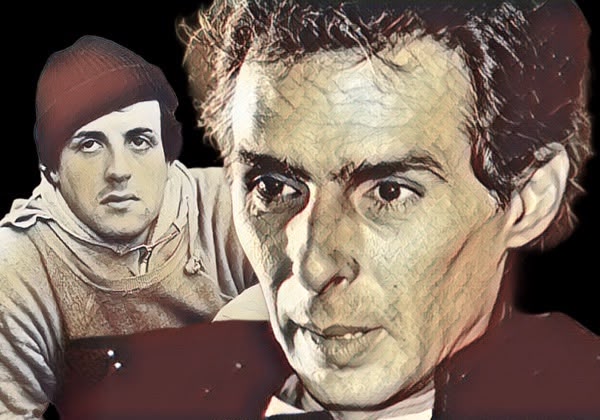
In fact, he was the third choice. Two composers had already turned the project down, largely because Rocky had such a tiny budget that there was little money available for an attractive deal. Conti accepted a $25,000 package from which he still had to pay the musicians, studio costs, tape, sheet music and every other expense involved in recording the score. Once everything was paid, he estimated that he had actually kept about $15,000. There is something particularly fitting about the fact that music which would eventually represent grandeur, heroism and triumph was born under exactly the same financial constraints as the film itself.
Conti recorded the entire Rocky score in a single three-hour session in Hollywood, using 39 musicians and six trumpet players. Neither he nor Avildsen was a boxing expert. In fact, neither man had ever attended a live fight when they began trying to figure out what the sport should sound like. They watched slow-motion footage of boxers while listening to Beethoven’s Eroica Symphony and realized there was something almost choreographic about the movement. Conti, however, had his own idea of what heroism sounded like: brass, powerful trumpets, volume and music capable of announcing that someone was heading into battle.
The relationship between the music and the film became especially important during the training montage. Avildsen originally needed about 90 seconds of music so he could edit the footage to a steady rhythm, but as he worked through the enormous amount of material that had been shot, he kept asking Conti for more. The composition grew along with the montage until it became the piece we now know as “Gonna Fly Now.” That almost handmade process perfectly mirrors Rocky itself: very little about it seemed destined to become monumental.
When the film turned into a phenomenon, Conti’s professional life changed along with Stallone’s. Rocky won the Academy Award for Best Picture, John G. Avildsen won Best Director and “Gonna Fly Now,” composed by Conti with lyrics by Carol Connors and Ayn Robbins, was nominated for Best Original Song. A few months later, the recording reached No. 1 on the Billboard Hot 100. Suddenly, a score recorded in three hours for a low-budget production was being heard across the country.
Conti returned to the franchise for Rocky II, Rocky III, Rocky V and, decades later, Rocky Balboa, but he quickly proved that his career would not depend on Stallone alone. In 1981, he entered another of cinema’s great franchises when he composed the score for For Your Eyes Only. The title song, performed by Sheena Easton, earned him his second Academy Award nomination for Best Original Song.
Two years later came the award Rocky had not brought him. Conti won the Oscar for Best Original Score for The Right Stuff, firmly establishing himself among Hollywood’s major film composers. Soon afterward, he encountered another character who, in some ways, spoke the same emotional language as Rocky Balboa: Daniel LaRusso. Conti composed the music for The Karate Kid and its sequels, once again working with Avildsen and once again accompanying the story of an underestimated young man trying to discover what he is capable of becoming.
On television, Conti built an equally significant career. He wrote the themes for Dynasty, Falcon Crest and Cagney & Lacey, as well as the score for North and South and many other productions. Yet perhaps the most curious relationship of his career is the one he developed with the Academy Awards. For decades, he served as the ceremony’s musical director and conductor, eventually leading the Oscar orchestra on 18 occasions. He also won three Emmys for his work on the broadcasts and received numerous other nominations.
There is a particularly lovely irony in that trajectory. The composer who landed Rocky partly because more established professionals did not want to take on a tiny movie with almost no money eventually became the man responsible for the music on the night Hollywood celebrates itself.
Perhaps Conti and Rocky worked so well together because their stories ultimately began to resemble each other. Both entered that film as unlikely bets and emerged forever connected to a very particular idea of courage. Stallone created the face of the underdog. Bill Conti created its sound.
Descubra mais sobre
Assine para receber nossas notícias mais recentes por e-mail.

