
There is something about Taylor Swift that has bothered me for a while, and maybe I had never quite managed to articulate why. It is not a lack of talent, because that would be absurd to say. It is not a failure to understand her own audience, because few artists seem to know so precisely who is listening to them and what those people expect. It is not simply a question of age, either. But as she approaches 37, Taylor still writes about love, abandonment, jealousy, revenge and rejection in an emotional voice that often seems tied to the teenager who once turned those feelings into fuel for her career.
And perhaps that is exactly the point. Taylor built an extraordinarily intimate relationship with her audience by turning her own romantic life into a kind of collective diary. The details mattered, the clues mattered, the ex-boyfriends mattered and, above all, it mattered to figure out who had hurt whom. For a long time, that felt almost like a natural extension of her age. You could listen to those songs and recognize the absolute intensity with which we love at 18, 20 or 22, when an unanswered message can seem capable of knocking the earth off its axis.
The problem is that time passes for everyone, including the narrator. And that is where I start to feel a slight disconnect. Not because an adult woman should stop suffering over love, feeling jealous, falling hopelessly in love or making terrible choices. Quite the opposite. Maybe adulthood is precisely the discovery that there is no age at which those things disappear. What changes, or should change, is the way we understand what we feel.

A teenager can genuinely believe that an ex-boyfriend is the great villain of her story. An adult woman may still think he was a jerk, but she usually knows that relationships are a little more complicated than that. She recognizes gray areas, shared responsibility, her own repeated patterns, the things she chose not to see. Maturity does not erase pain; it should add layers to it. That is the layer I sometimes look for in Taylor’s songs and do not find.
Perhaps it is unfair to expect a songwriter to evolve in exactly the direction we want her to. Artists are under no obligation to mature before us like characters in a novel. And there is another possibility, perhaps an even more interesting one: Taylor knows exactly what she is doing. Maybe that voice is not only hers, but the language she built with millions of women who began listening to her when they were teenagers too and still want to recognize that same emotional intensity in the songs. In that case, we are not talking about immaturity, but about a very conscious artistic — and commercial — choice. Taylor grew up, but perhaps the character Taylor Swift cannot grow at the same speed.
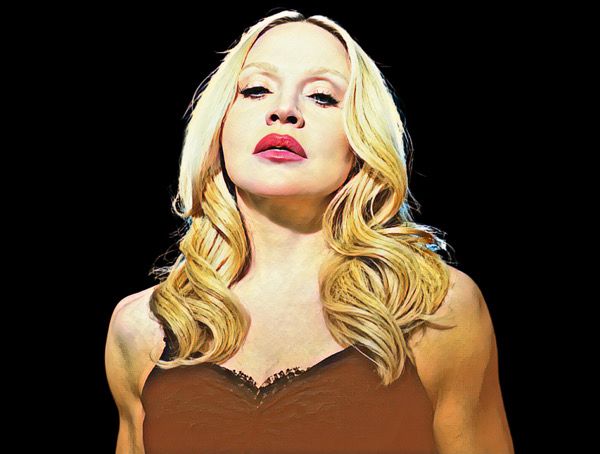
That makes me think of Madonna, for different reasons. Madonna spent her entire career challenging the idea that a woman should disappear as she ages, and in that sense she remains revolutionary. At the same time, it has always made me slightly uncomfortable to see her, for so many years now, insist on the word “girl,” on the posture of the rebellious girl, on youth as the central language of provocation. Not because a woman nearing 70 should behave in any particular way — God forbid — but because there is something strange about female freedom still needing to be presented as youth.
Why not “woman”?
Perhaps because “woman” carries a weight that “girl” does not. Woman means experience, age, responsibility, an adult body, the passage of time. Girl remains tied to promise, desire, possibility. It is lighter. More marketable. And perhaps more comfortable for an industry that has never quite known what to do with women who age without apologizing for it.
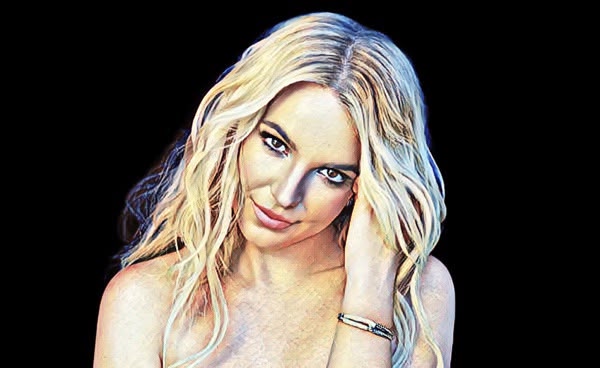
It is impossible not to think of Britney Spears singing I’m Not a Girl, Not Yet a Woman at 20. At the time, the song was about that in-between place between adolescence and adulthood. Today, I almost think of it in reverse. How many women in pop are ever truly allowed to reach the second half of that sentence?
Men do not face the same demand. Mick Jagger does not need to pretend to be 25 to walk onto a stage. Bruce Springsteen can sing about memory, loss, desire, death and the passage of time without anyone asking why he is not trying to seem younger. Men age, and their age is often absorbed into their mythology. For women, aging is still treated as a problem to be managed.
Perhaps that is why Taylor fascinates me so much. Because she is reaching exactly that point. She is no longer the girl from Nashville writing about the boy who failed to notice she existed. She is one of the most powerful women in the cultural industry. She controls her work, her narrative, her image and probably understands her audience better than almost any executive sitting inside a record label.
So when she chooses to keep writing from that emotionally youthful voice, perhaps the question is no longer whether Taylor Swift has matured. The question is whether we want her to. Because maybe part of her audience does not want to lose that girl. And maybe part of her knows that girl is still her most profitable, recognizable and beloved character.
That does not make the songs false. But it does make the question far more interesting. Perhaps the real conflict is not between maturity and immaturity. Perhaps it is between the woman who inevitably grows older and the pop star who discovered that, in order to remain eternal, she has to remain a girl.
Descubra mais sobre
Assine para receber nossas notícias mais recentes por e-mail.

