
There is still almost a year to go before August 31, 2027, when it will be 30 years since Diana’s death, so it is far too early to treat any decision as final. But the landscape is already beginning to take shape, and it is difficult to imagine a more emotionally complicated anniversary for Prince William. Reports suggest that he does not intend to take part in documentaries about his mother or, at least for now, create a public tribute of his own to mark the anniversary. At the same time, Harry is reportedly considering projects connected to Diana’s legacy, including the possibility of a documentary, and the contrast between the brothers’ approaches is already beginning to create a narrative of its own.
That is precisely where William finds himself in an almost impossible position. If he takes part in public tributes, he will inevitably be compared with his brother. If he does not, his silence may be interpreted as distance from his mother. If he says very little, some will see coldness. If he says too much, he will reopen a part of his life that he has spent almost three decades trying to protect. Whatever he chooses risks becoming a statement about Diana, Charles, Harry and the monarchy itself.
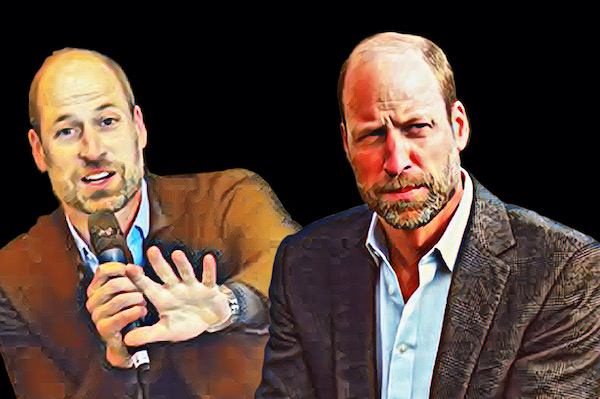
What may be most unfair is that William’s silence did not begin now. Since his mother’s death, he has always been far more private than Harry about his grief. There have been important exceptions, including 2017, the 20th anniversary of her death, when the brothers appeared together in a documentary and spoke about personal memories and what it meant to lose her so young. Since then, however, their paths have diverged not only in their lives, but also in the way each has chosen to speak about Diana.
Harry has made his connection to his mother a central part of his public narrative. She appears in interviews, speeches, projects, in Spare, and frequently in the way he explains his choices. There is nothing illegitimate about that. Diana was his mother, and her death shaped his life in ways no outsider could ever fully understand. The problem begins when that openness produces, particularly among some of his supporters, the idea that Harry is the true guardian of Diana’s legacy while William, by remaining inside the institution, has somehow become a representative of everything she fought against.
That interpretation oversimplifies Diana herself. She was deeply critical of the monarchy’s structure, the rigidity of the royal family and the way she felt she had been treated within it. That is documented in her own words, particularly in the recordings made for Andrew Morton. We do not need to invent a revolutionary Diana because she was perfectly clear about the things she wanted to change. But there is another part of the story that sometimes disappears: Diana never treated William’s future as king as a tragedy.
Quite the opposite. She seems to have believed that she could prepare him to perform that role differently. Diana wanted to show her son the world beyond palace walls and help him understand people, suffering, hospitals, homelessness and all the realities that had become part of her own work. She knew perfectly well what William’s institutional future would be and, rather than simply rejecting it, seems to have tried to broaden the way he would understand that role.
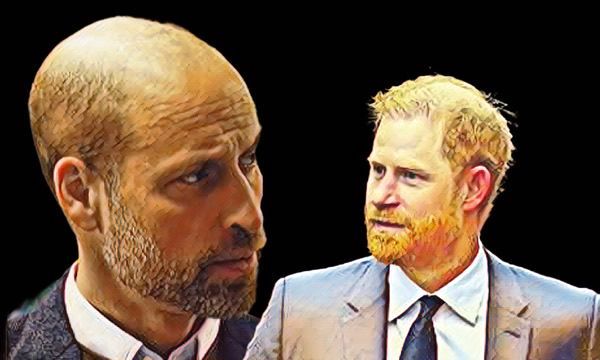
There is something almost painful about that now, because Diana did not necessarily want to destroy what William would one day inherit. In many ways, she seems to have wanted to transform it through him. She knew William would be king, and he knew it too, even if he apparently felt deeply uncomfortable with the idea as a child. That is why I have always found it strange when his decision to remain within the institution is automatically presented as a betrayal of his mother’s legacy.
It is perfectly possible to debate what William has or has not done within the monarchy. It is also fair to ask whether he truly represents the kind of change Diana might have wanted to see. But remaining on the path he was born into does not necessarily mean rejecting his mother. It may even mean fulfilling part of what she imagined for him.
And that may be the most important difference between the two brothers. Harry can claim very clear aspects of Diana’s legacy, such as her connection to humanitarian causes, her willingness to challenge convention and her fraught relationship with the press. William carries another part of that inheritance. He is the son Diana knew would become king and in whom, despite all her criticism of the institution, she appeared to place considerable trust.
Perhaps that is why William’s silence bothers people so much. It does not provide enough material to be easily interpreted. It does not allow us to know exactly what he feels, what he thinks about his mother today or how he would like her to be remembered. In an age when everything is expected to become a statement, an interview, a documentary, a book or a public position, silence can almost feel provocative.
But perhaps it is simply silence. It may be a choice of privacy, an act of self-preservation or an awareness that anything he says about Diana will immediately be placed beside something Harry has said and turned into another chapter in a conflict he may simply have no desire to feed. And it may still change, because there is almost a year to go before the anniversary.
William may decide to make a public tribute. He may choose an initiative connected to his mother’s causes without speaking personally about her. He may continue to say nothing. None of these possibilities will tell us exactly what he feels, because grief is not a public exercise in consistency, much less a competition between brothers.
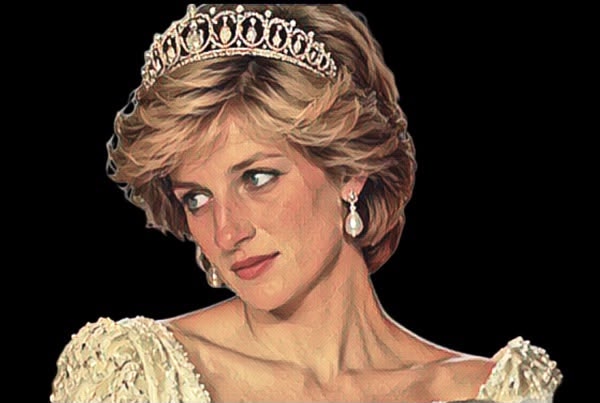
For almost 30 years, Diana has been biographed, dramatized, interpreted, defended, attacked, appropriated and turned into a symbol of almost everything. Now even her sons are measured by the way they choose to remember their own mother. Harry speaks about her often, while William almost always chooses not to.
Perhaps that is precisely why his silence has become so heavily loaded with meaning. But silence is not the absence of memory, nor is it necessarily the absence of love. Sometimes it is simply the way someone chooses to preserve what they do not want turned into a public narrative.
When we reach August 2027, perhaps it will be worth remembering that. Diana’s legacy does not belong to the son who speaks about her most loudly, nor to a public that continues trying to decide which of them represents her more faithfully. It also belongs to those two boys who lost their mother at 15 and 12 and who, three decades later, still have the right to remember her in completely different ways.
Descubra mais sobre
Assine para receber nossas notícias mais recentes por e-mail.

