
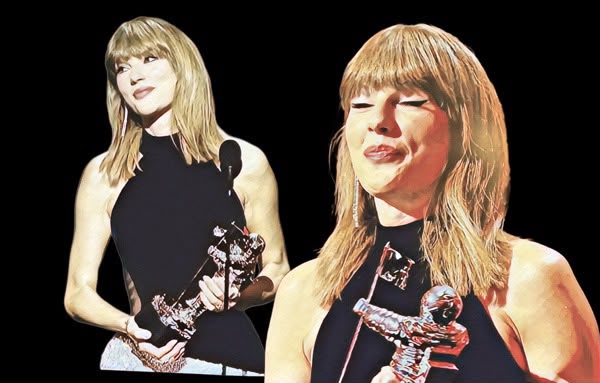
I am still surprised when Taylor Swift steps onto a stage and reminds us that she has been making music for more than 20 years. Somewhere in my mind, I can still see the girl who began appearing at country music awards before she conquered the world. Last night at the VMAs, we saw a 36-year-old woman, now married, with a career so enormous that every new prize comes with another tally of records. More than that, we saw an artist entirely sure of what she wants to say and how she wants to be heard.
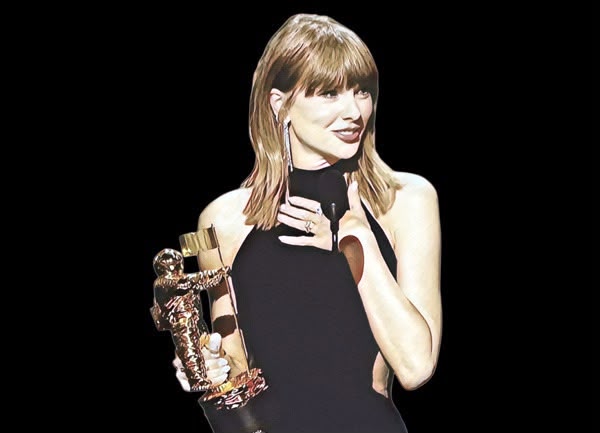
Taylor arrived with 11 nominations. She won Best Direction for “Opalite” and Video of the Year for “The Fate of Ophelia,” an award she dedicated to Dolly Parton. She also received the inaugural Artist Director Honors, a tribute to her work behind the camera that had been announced before the ceremony. She gave her thanks and then introduced “Patient Zero.” The order of events made its own argument: after hearing why Taylor matters to music video, we got to see her latest work.
I inevitably thought of the young woman Kanye West interrupted on the VMA stage in 2009. The incident seemed to announce to the world that she needed an introduction, delivered in the most humiliating way possible. Today, it is difficult to imagine anyone taking the microphone from Taylor Swift. Her speeches are clear and eloquent. She knows how to say thank you without losing sight of what she wants to communicate, and she understands exactly how much attention she commands. That assurance was built over a career in which she learned to turn public experiences, including the worst ones, into material for her own story.
Other artists have had passionate and remarkably loyal fans; Michael Jackson is an impossible example to overlook. What seems singular about Taylor is the ongoing conversation she maintains with hers. They search for clues, retrieve an old remark, recognize an object, debate a color and return to one song to reinterpret another. Taylor knows they do this, takes part in it and gives them more to work with. Sometimes she reminds me of an Agatha Christie who knows her formula so well that she can decide exactly when to leave a clue in plain sight and when to send everyone looking in the wrong direction.
That is why her videos are anticipated as events. The photography, choreography, humor and camera work have value of their own, but audiences also expect to discover what she has chosen to say about her life. Taylor seems to keep every receipt. A phrase spoken years earlier can return as a lyric; an image can suggest a different story once the viewer goes back to the beginning. Directing also means making those careful choices about what to show, what to suggest and what to leave unanswered.
“Patient Zero” extends that game. Dakota Johnson plays a woman involved with a man portrayed by Colin Farrell; Taylor appears as someone who has been in her position and recognizes the signs. The video turns the song’s warning into a darker story, with scenes from the relationship, a grave and the sense that an earlier experience still haunts the present. Its images are carefully constructed, while Emmanuel Lubezki’s cinematography gives the story an atmosphere that goes far beyond illustrating the lyrics.
Before the premiere, some fans connected the song to Sophie Turner and Joe Jonas. After seeing the video, many began to see Joe Alwyn in the male character. Others have pointed to Matty Healy. These are interpretations, not confirmations. Taylor has said that the idea for the song came from a friend who was contacted by an ex’s current girlfriend. That does not rule out her drawing on her own feelings or memories, but it does not give us a definitive key to the man in the video, either. What interests me is how she builds a story capable of sustaining all those readings.
After her six-year relationship with Joe Alwyn, I admit that I am still struck by the desire to find a final answer to what happened between them. At many points, The Tortured Poets Department seemed to point much more directly toward Matty Healy, although there were also songs associated with the end of Taylor’s relationship with Joe, particularly when London entered the picture. Now, with “Patient Zero,” the investigation begins again. Perhaps Taylor knows exactly whom fans will look for in each scene. Perhaps she also knows they will never need to agree.
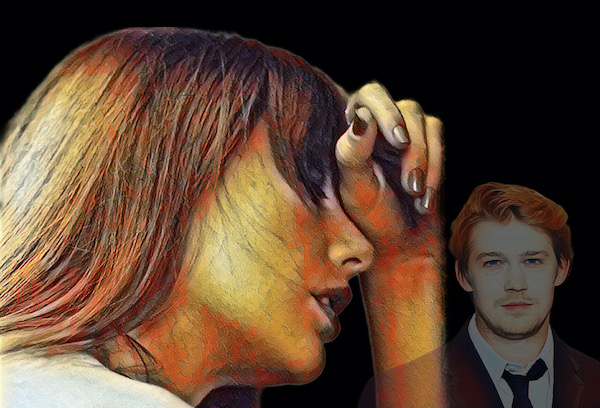
It is an admirable skill and, for anyone who passes through her life, perhaps a slightly frightening one. Jake Gyllenhaal remains linked to “All Too Well” more than a decade after a brief relationship. Joe Jonas knows how long these stories can endure, too. Taylor writes with a sharp memory, and her fans have an even greater collective memory. I would hate to live with the possibility of becoming a recognizable detail in one of her songs. As a viewer, though, I understand why it is so hard to look away.
Last night, “Patient Zero” premiered after Taylor received an award honoring her direction; her other trophies recognized earlier videos. Even so, the premiere explained the tribute better than any retrospective could. Taylor understands that a music video can have beauty, rhythm, and a story of its own, as well as a second life in the conversations of the people who watch it. When the credits end, her fans go back to the first frame and begin again. She knows they will.
Descubra mais sobre
Assine para receber nossas notícias mais recentes por e-mail.

