
TikTok has “discovered” Smalltown Boy. Or, more precisely, it found six irresistible words—“Run away, turn away, run away”—separated them from the story that made them so painful, and turned the chorus into a soundtrack for videos about departures, transformations, breakups, reinvention, and small acts of liberation. It is not exactly a misappropriation. The song really is about leaving. What has been lost in the edit is the reason why.
In Smalltown Boy, running away is neither an adventure nor an opportunity to begin a more interesting life. It is the last resort of a young gay man who understands that he will find neither protection nor belonging nor love inside his own home. The chorus that now sounds like an invitation to reinvent oneself was, in 1984, an instruction for survival. And perhaps that is precisely why it still works.
The Song Is by Bronski Beat
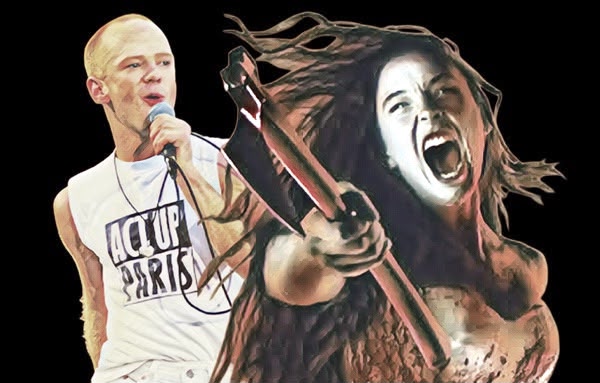
Although the voice is so distinctive that many people immediately identify it with Jimmy Somerville, he did not release Smalltown Boy as a solo artist. It was Bronski Beat’s first single. The trio consisted of Somerville, Steve Bronski, and Larry Steinbachek, three openly gay men at a time when the music industry still preferred to turn homosexuality into a secret, a code, or a carefully commercialized provocation.
The song was released in Britain in May 1984, reached number three in the UK, and topped the charts in Belgium and the Netherlands. This was not a marginal work circulating exclusively in gay clubs. It was a major popular hit telling millions of people the story of a young man emotionally expelled from the place that was supposed to protect him.
Somerville had grown up in Glasgow and moved to London as a young man, searching for the freedom and community he could not find at home. Before becoming famous, he was involved in the gay movement and worked on activist video projects. He himself described Smalltown Boy as semi-autobiographical. He was not inventing the experience of being watched, talked about, threatened, or forced to leave. He was turning an experience shared by thousands of young people into pop music.
The Video Said What the Lyrics Never Tried to Hide
Directed by Bernard Rose, who would later make Candyman, the music video leaves no room for the comforting interpretation that the song is merely about a generic young man misunderstood by his family.
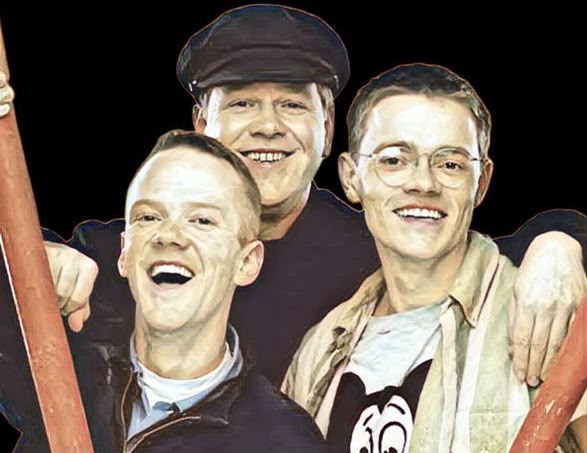
Somerville plays a boy who notices another man at a swimming pool. The gaze awakens desire, but also violence. He is followed and beaten by a gang, taken home by the police and, in the process, outed to his parents. His family’s reaction confirms that staying does not represent safety. He then packs his belongings into a suitcase and leaves by train. It is a complete story of desire, humiliation, and exile told in a few minutes, and broadcast on television in 1984.
There had, of course, already been gay artists and songs capable of speaking to LGBTQIA+ audiences. But much of that communication depended on codes recognizable only to those who needed to recognize them. Smalltown Boy placed a gay young man at the center of the narrative and showed attraction between men, a homophobic attack, and familial rejection. It did not turn his sexuality into a final revelation or insert a woman who would allow heterosexual viewers to conveniently reinterpret the story. The boy was gay. And he was running away because his town and his family would not allow him to exist.
Dancing Did Not Make the Pain Any Smaller
The artistic triumph of Smalltown Boy lies in the contradiction between what the body hears and what the story says. The electronic foundation belongs on the dance floor. The synthesizers move with the regularity of a train. But Somerville’s falsetto does not convey euphoria. It seems to carry vulnerability, shame, desire, and a sadness he can no longer conceal, all at once.
Bronski Beat was not using dance music to soften the politics. The band was using the space historically offered by gay clubs—among the few places where those bodies could experience freedom—to describe the price paid before reaching them.
The group’s debut album was called The Age of Consent. The title was a direct condemnation of legal inequality in Britain: sexual relations between men were subjected to an age of consent of 21, while the heterosexual limit was 16. The album’s inner sleeve even compared the laws of different countries. There was no attempt to separate music from activism.
The trio also became involved with Lesbians and Gays Support the Miners, the movement that brought the gay community together with miners striking against Margaret Thatcher’s government—an alliance later portrayed in the film Pride. Bronski Beat did not treat homophobia as an exclusively personal drama. The group understood that familial rejection, street violence, legal inequality, and economic exploitation belonged to the same structure.
Why Monster Brought the Song Back
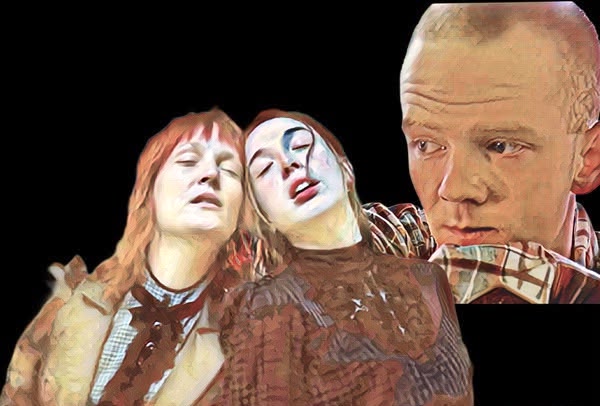
In Monster: The Lizzie Borden Story, Smalltown Boy plays during the sixth episode, when Lizzie and Bridget share a final dance. The scene expands to include, in a deliberately impossible fantasy, Aileen Wuornos and her girlfriend. Chronology ceases to matter. What connects these women is the experience—whether real or invented by the series—of existing outside what society is prepared to accept.
Lizzie Borden’s sexuality remains historically uncertain, and Ryan Murphy’s series turns speculation into melodrama. But the musical choice is precise within the fiction it has decided to create. The song is about people for whom love and safety cannot coexist at home, people forced to search for belonging elsewhere, and the temporary beauty of finding someone who recognizes their loneliness.
It was a particularly effective way to introduce Smalltown Boy to viewers who may never have heard of Bronski Beat. Its circulation on TikTok did the rest, although this is not the song’s first digital resurrection: it had already found a young audience on the platform during its 40th-anniversary celebrations in 2024.
The Chorus Changed Because the World Changed—but Not Enough
For someone discovering it now, “Run away, turn away, run away” may sound like advice about independence. For those who heard the song in the 1980s, especially as gay people living in small towns, it carried a terrifying confirmation: perhaps abandoning everything really was necessary to stay alive.
That difference does not invalidate its current use. On the contrary, it proves the song’s extraordinary ability to offer new ways out without losing the memory of the first one. A teenage girl may use the chorus to leave a relationship. Someone else may use it to move to another city. Another person may simply enjoy the beat and never pay attention to the lyrics.
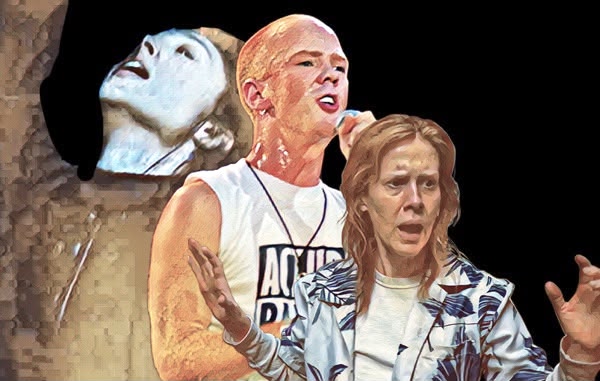
But all it takes is returning to the beginning of the song and looking at Jimmy Somerville’s face in the video. There is none of the excitement of someone who has chosen to explore the world. There is the sadness of someone who discovered too early that the world he knew did not want him.
TikTok has turned Smalltown Boy into a hit once again. Monster has restored to it a narrative of forbidden love and escape. But the song never needed to be artistically recovered. It has always remained intact: beautiful, danceable, and devastating.
What every new generation needs to recover is its meaning. Because Smalltown Boy is not simply a song about having the courage to leave. It is about the violence of not being allowed to stay.
Descubra mais sobre
Assine para receber nossas notícias mais recentes por e-mail.

