
Ever since Warner confirmed Game of Thrones: Aegon’s Conquest for theaters, with a 2029 release currently planned, one of the first reactions was inevitable: fans immediately started imagining who could play Aegon Targaryen. The fancasting is already well underway, with some obvious names and a few more interesting choices, but there may be a more important question to ask before choosing the face of the Conqueror: how exactly is this story supposed to fit into a single film?
For now, that is officially what we have. One feature directed by Owen Harris, written by Beau Willimon, with no confirmation that Aegon’s Conquest will be the first installment of a trilogy or even part of a larger film series. Warner has not explained how far into the chronology it intends to go, nor whether the story will focus only on the military campaign that took Aegon to the throne or also include the wars and political crises that followed. The problem is that reducing all of this to “Aegon conquers Westeros” makes the story sound much simpler than it actually is.
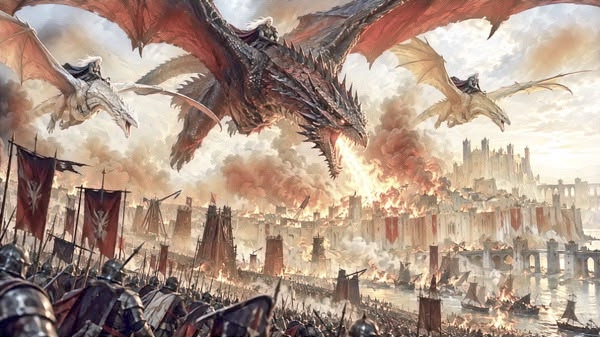
Aegon does not cross the sea on Balerion, defeat a handful of kings and end the movie sitting comfortably on the Iron Throne. The Conquest involves three Targaryens, three dragons and a chain of political and military decisions that completely reshape Westeros. Aegon arrives with his sisters and wives, Visenya and Rhaenys, each with her own personality, power and role in the campaign, and he must deal with territories that respond very differently to the threat before them. Some kings resist, some are destroyed, some houses change sides, others rise precisely because rival dynasties disappear, and an entirely new political order is being created while the wars are still unfolding.
Harrenhal alone requires room to breathe. The destruction of Harren the Black and his fortress immediately establishes what Balerion represents and what kind of war Westeros is about to face. Then come the alliances, the collapse of the old rulers of the Riverlands, the Field of Fire, likely one of the most spectacular sequences Warner could possibly bring to the screen, and Torrhen Stark’s march south, followed by a decision that will define how the Starks remember him for generations. All of this still has to lead into the creation of a kingdom that had never before existed as a political unit, and into the symbolic construction of Targaryen power itself. By the time the movie reaches that point, it already has enough material for two and a half hours. And we have not even reached Dorne.
That is why wondering about a possible trilogy is not as gratuitous as it may sound. Over the last twenty years, Hollywood has become very comfortable dividing large sagas into multiple films. The Lord of the Rings established the trilogy as a language of its own for prestige spectacle; The Hobbit pushed that logic to the extreme by turning a relatively short book into three films; Harry Potter, The Hunger Games and Twilight split their final chapters; and more recently, Dune showed how much a dense story can gain when cinema accepts that not everything has to be resolved in a single sitting. In other words, it would not be out of step with contemporary studio logic to imagine Warner announcing one film first while leaving room for something bigger.
None of that means there is a secret trilogy already planned. There is no confirmation of one. But narratively, the history almost offers that structure on its own. A first film could focus on the Conquest itself, beginning with Aegon’s decision to move against Westeros and ending with his coronation after six kingdoms submit. The story would have a clear beginning, progression and climax, while allowing Harrenhal, the Field of Fire and the submission of the North to carry the dramatic weight they deserve.
The problem is that ending there would create a sense of victory that the story immediately undermines, because Dorne does not surrender. And that is exactly the point at which Aegon’s Conquest changes its nature.
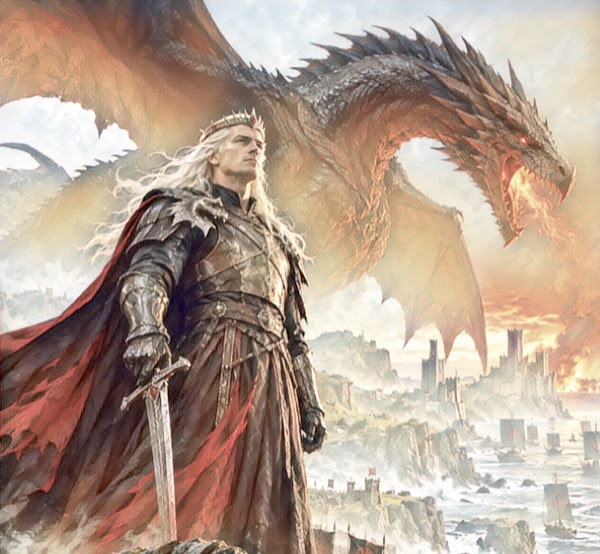
The war against Dorne is not simply another stage of the same campaign. Until then, Aegon faces enemies who, one way or another, accept a recognizable logic of war: armies, castles, kings and battlefields. Dorne simply refuses to fight on those terms. Its rulers abandon strongholds, disappear before the dragons, strike when they can, and turn geography and prolonged resistance into weapons of their own. For the first time, the dragons remain terrifying, but they no longer guarantee victory.
Dorne is also where the myth of Targaryen invincibility suffers its first major fracture. Meraxes falls, Rhaenys disappears, and Aegon responds with devastating violence that still fails to end the conflict. After years of war, what finally stops everything is not an army or another dragon, but a letter sent by Prince Nymor Martell. Aegon reads it, reacts in a clearly emotional way, flies to Dragonstone and accepts peace the following day. We have never known exactly what was written in that letter.
That does not feel like material that should be compressed into the final minutes of an already overloaded film. It feels like the center of another movie, because it changes Aegon completely. He is no longer simply the man who conquers; he becomes a man confronted with a limit he cannot destroy through force. Dorne introduces loss, failure and a deeply personal uncertainty that may be more interesting than any military victory.
And there would still be a third story to tell: what happens once Westeros has, for the most part, been conquered. Defeating kings and burning armies is one thing; governing territories that were historically independent, with their own cultures, laws, religions and rivalries, is another. Aegon and his sisters must turn military victory into dynasty, create a political structure and build an idea of unity capable of surviving beyond the three dragons that made the conquest possible. It is also here that the succession problems begin to emerge, problems that will explode after Aegon’s death and determine the future of House Targaryen.
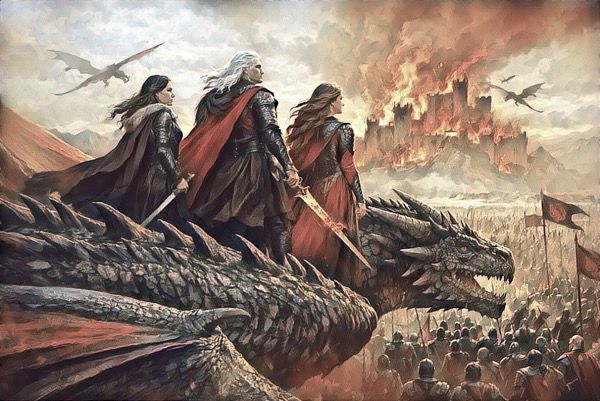
That is why a trilogy would not simply be a convenient way to stretch a franchise. The story itself supports that shape: the Conquest, the war against Dorne and, finally, the construction of the kingdom and the dynasty. It would even create an interesting evolution for Aegon as a character, beginning with a man who believes he can dominate Westeros, moving through the moment in which he discovers that there is a territory his dragons cannot subdue, and ending with something perhaps even more difficult: making sure that what he built survives him.
Warner may want none of this. Aegon’s Conquest may turn out to be a self-contained epic that compresses years of history into a single film. Cinema has done that many times, and it can work. But if that is the plan, the most important choice may not be who plays Aegon or how enormous Balerion looks on screen. It will be deciding which part of this story deserves to be called the Conquest and where the final full stop belongs.
Because Aegon himself fits perfectly into one film. The problem is that everything he conquered, lost, built, and left behind may not.
Descubra mais sobre
Assine para receber nossas notícias mais recentes por e-mail.

