
For those of us who love The Gilded Age, our young heroine has experienced a succession of discoveries and disappointments. Yes, when Marian Brook arrived in New York in the first season, her life had already undergone a transformation over which she had no control. Orphaned, without the financial security she thought she possessed, and forced to depend on two aunts she barely knew, she had to find her place in a household whose rules she had played no part in establishing. Since then, we have followed her attempts to reclaim the right to choose: whom to trust, whom to marry, where to work, and how far to challenge the people who took her in. Now, ahead of the fourth season, the actresses’ comments and the promotional images suggest that another significant experience is about to change her life.
Played by Louisa Jacobson, Marian was our gateway into that New York of the 1880s, divided between families who had inherited money and prestige and others who, like the Russells, possessed fortunes large enough to buy almost anything except society’s automatic acceptance. Living with sisters Agnes van Rhijn and Ada Brook, she had to learn these distinctions while questioning the usefulness of several of them. Her friendship with writer Peggy Scott and her growing closeness to the neighboring Russells expanded a world Agnes would have preferred to keep carefully contained.
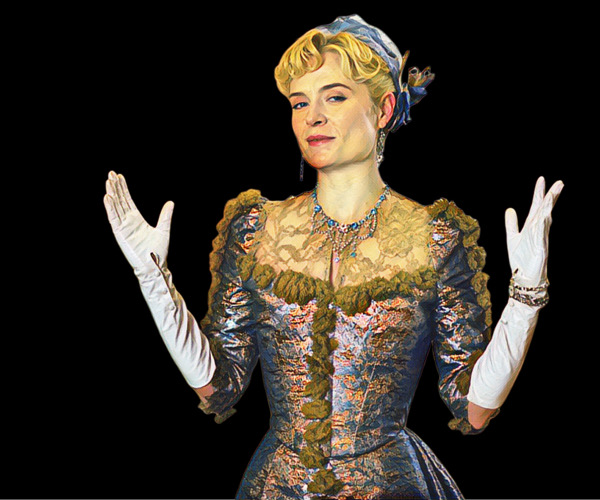
Marian does not always make it easy to root for her. She is naïve when we wish she would see the obvious, impulsive when a conversation would resolve a great deal, and stubborn precisely when Agnes seems to see disaster approaching. But there is a consistency to this young woman who loses her bearings and still insists on believing she can build a life of her own choosing. The fourth season seems ready to test that confidence in a way that will also affect her relationship with her aunts: Ada will struggle to support her, and Agnes will be the one who helps her.
Agnes Has Always Loved Marian. Her Methods Complicate Matters
Christine Baranski and Cynthia Nixon have built a family relationship in which we immediately recognize whom Marian will approach when she wants to be heard and from whom she will try to hide a risky plan. Ada offers comfort; Agnes examines the consequences. One provides companionship, while the other usually presents a fairly convincing list of reasons to give up. For a young woman who arrived in that house after losing her father, finding an ally in Ada was essential to feeling that she could disagree without jeopardizing her place in the family.
That never meant a lack of affection on Agnes’s part. She has been tender, concerned, and generous, even when her practical approach to caring turns an expression of affection into an order. Agnes understands the vulnerability of a woman without resources of her own and knows that marriage can determine far more than her romantic happiness. Her insistence on protecting Marian also comes from that experience, although it frequently leaves her niece little room to discover what she wants.
It is precisely this dynamic that promises to change. Baranski has revealed that Agnes will be the one who truly helps Marian through the new drama, emphasizing her willingness to do whatever is necessary for the family. Nixon, meanwhile, has said that her niece will take actions that go beyond what Ada can accept. Even the aunt who has always stood beside her will be surprised by her own limits.
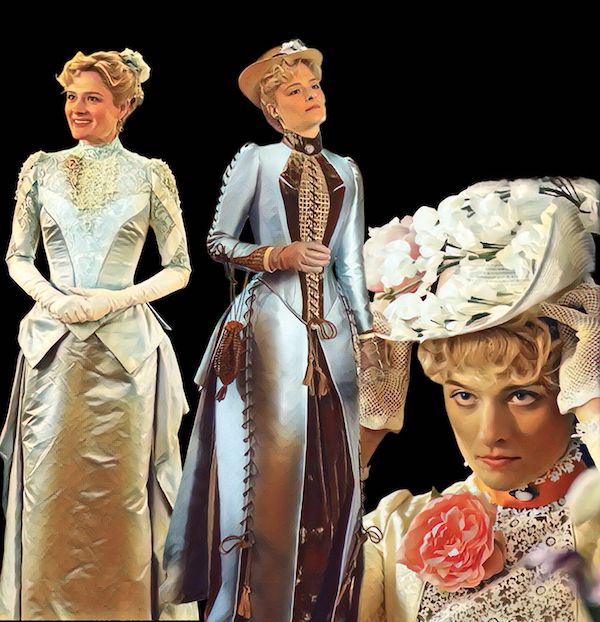

There is a rich possibility for all three characters in this reversal. Ada may discover that supporting Marian’s independence becomes harder when her choice challenges a deeply held conviction. Agnes may understand that, after a certain event, insisting on what should have been done serves little purpose. Her experience, so often used to try to prevent her niece from taking risks, would instead help her face the consequences.
For Marian, it would also be an opportunity to better understand the women who have become her family. Agnes’s affection has always been there, even when she experienced it as an attempt at control. Now she may need to recognize it in a situation where Ada’s familiar comfort will no longer be available in quite the same way.
Raikes, Dashiell, and the Future Marian Rejected
If Marian is about to challenge convention for love, it is worth remembering that she has come close before. In the first season, she nearly eloped with Tom Raikes, the lawyer who had handled her father’s affairs and seemed to offer some continuity between the life she had lost and the one she was trying to build. Agnes recognized his opportunism long before her niece did. We can complain about her satisfaction at being right, but in that instance, she had reason.
Raikes abandoned the marriage plan in favor of a more socially advantageous match. Marian had placed her trust in a man who seemed to know her outside the environment in which she now depended on other people’s approval. Discovering that he, too, was calculating the opportunities New York offered struck at something larger than a romantic expectation: she was ready to stake her future on a relationship whose meaning they did not share.


With Dashiell Montgomery, the widower to whom she subsequently became engaged, security was more tangible. There was respectability, a family, and a position her aunts could understand. But Marian began to realize that her allotted role had already been defined: she would be a wife and assume a maternal presence in his daughter’s life. Her suitability for that role seemed to matter more than discovering who she was and what she wanted.
Breaking off that engagement was an important decision. After believing in a promise Raikes had no intention of keeping, Marian also managed to reject a life she could have had but did not want. Larry Russell, played by Harry Richardson, offered another possibility. The son of her millionaire neighbors had grown close to her through friendship, familiarity, and a mutual understanding that allowed Marian to be known before being chosen as a wife.
Why Larry’s Lie Mattered So Much
The disappointment with Larry in the third season needs to be understood within that journey. He visited a brothel on the night of their engagement and lied about where he had been. For us, having witnessed the visit, it was possible to distinguish his presence there from what Marian imagined had happened. For her, discovering the lie undermined the credibility of the explanation that followed.
Was it rash to break off the engagement by letter, without properly hearing him out? Yes, there was a conversation they needed to have. But reducing her reaction to excessive prudishness overlooks the earlier wound. Raikes had seemed trustworthy, too. Marian already knew what it meant to believe in a man and discover that he was pursuing his plans differently.


The intervention of Jack Trotter, a former servant in her aunts’ household and now Larry’s business partner, helped clarify the episode. The couple’s reconciliation, however, does not erase what the crisis revealed. Larry needs to understand why he preferred to lie to the woman he loves, and Marian needs to discover how to trust again without expecting the relationship to guarantee protection from any suffering.
That is why greater intimacy between them would carry significance for the character. Marian would be choosing to believe in that love after doubting, breaking things off, and deciding to try again. Before any social risk, there is a very real emotional vulnerability in that closeness.
A Carriage in a Rainstorm and a Difficult Decision
Fans have been piecing together the clues for some time. One is the scene in which Marian and Larry are in a carriage, in heavy rain, after a night of dancing. The sequence was described during a set visit, and Louisa discussed the experience of filming in the mechanical vehicle, being tossed around as it moved. The romantic setting exists, although how far the encounter goes remains under wraps.
In the trailer, Larry says that Marian continues to amaze him, in a setting that seems to correspond to the place where we also see Enid Winterton and Oscar van Rhijn, Marian’s cousin. The presence of that pair, far more familiar with negotiating desire, appearances, and social convenience, adds interest to the possible outing. We still do not know whether everyone is attending the same occasion or what kind of establishment it is, but we see a Marian apparently willing to venture beyond her usual boundaries.
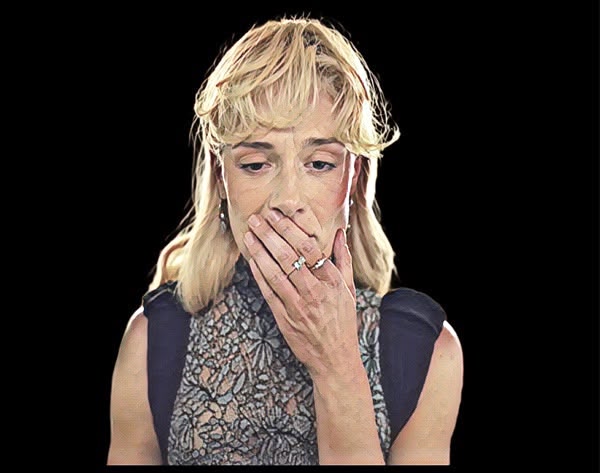
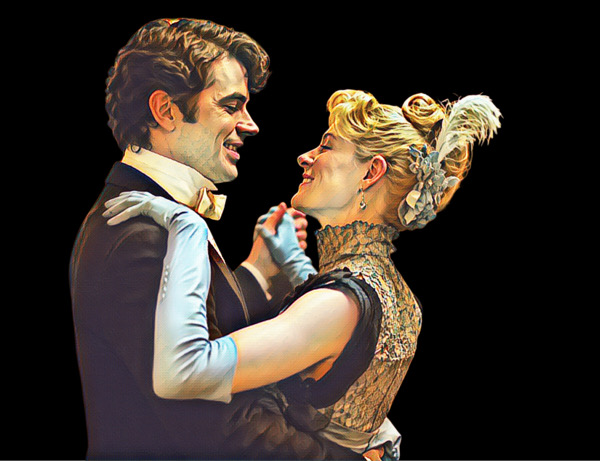
Another image prompted a different response: Marian with her hair partially down, her arms bare, a hand over her mouth, and an expression that might indicate surprise or concern. It is the kind of image that acquires countless interpretations within a carefully assembled campaign. The connection to a possible pregnancy emerged quickly, although the photograph does not reveal the reason for her distress.
Louisa has offered details that heighten the anticipation. The actress teased a very difficult event, in response to which Marian will try to control what she can, own her decision, and keep going. She also mentioned a serious event that could leave some people facing complete social ostracism, without identifying who would be involved. These comments suggest significant consequences, particularly when considered alongside the promised change in her relationship with Ada and Agnes.
That is what fuels the fans’ concern. Marian seems about to exercise a freedom she has been fighting for since the beginning, but she may discover that being ready to choose does not mean being prepared for everything that follows.
Sex Before Marriage and Pregnancy: What Would Make Sense?
The theory of intimacy before marriage has gained traction on Reddit, with some fans taking it further to a possible pregnancy. Others disagree and imagine a conflict connected to her work or another decision, but the association is easy to understand: sex before the ceremony could challenge Ada’s convictions; a pregnancy would add an urgency consistent with Agnes’s practical intervention.
Unlike what happened with Raikes, Marian does not need to elope to overcome opposition from the Russells. George and Bertha want the two together. A physical encounter could arise precisely from their confidence that their future is settled, their desire to be together, and the feeling that the ceremony will merely formalize something they have already chosen.

For that society, however, the formality carried very real consequences, particularly for women. A pregnancy would change the couple’s plans and allow us to see how Larry and the families react when the marriage they want takes place under circumstances they had not anticipated. Marian would need support, but also room to participate in decisions about her own life.
It would therefore fit the clues, provided it did not erase her development and turn her into a problem for others to solve. Sex and pregnancy remain two separate theories, and neither has been confirmed. Perhaps the most important point in Louisa’s comments is precisely Marian’s determination to own a decision, even when the event surrounding it is difficult.
The Freedom Marian Is Still Discovering
The story’s move to 1886 offers a symbolic connection to her past. Marian met Raikes in front of the Statue of Liberty’s arm and torch, then displayed in Madison Square. With the monument’s dedication, there is an opportunity to revisit that reference alongside Larry. A proposal in that setting has already been suggested as a theory, but returning to the symbol would be interesting even without one: Marian understands her own freedom differently after everything she has experienced.
The roughly two-year jump since the third-season finale also raises a question about the couple. Where will we find them? If they have not yet married, what has happened in the meantime? The images do not allow us to assume that their reconciliation froze the relationship at precisely the point where we left it.
Above all, there is a new job in Marian’s life. Her involvement in social work and the scenes with children suggest a purpose that expands her world beyond marriage. The arrival of Nurse Virginia Saville, played by Elizabeth Marvel and connected to the Neighborhood Settlement House on the Lower East Side, adds context to this path.

The work connects with a real movement supporting poor and immigrant communities. In 1886, the founding of the Neighborhood Guild, later called University Settlement, marked the emergence of the first settlement house in the United States. The similarities in period, location, and name make that institution a likely reference for the storyline, although we cannot yet treat it as an exact recreation or Virginia as a confirmed historical figure.
For Marian, this work may represent a way of building a sense of belonging through what she does. Louisa has noted how easy it is, looking back from the present, to forget how radical the desire to work and have a life of her own would have been for a woman of Marian’s social position. It is an ambition that could also create conflict with her aunts and with expectations of marriage, regardless of any pregnancy.
Larry seems to admire Marian’s willingness to surprise him. The fourth season may show how that admiration holds up when her choices require time, commitment, and some adjustment on his part. After so many attempts to find love, she is beginning to have other things she also wants to preserve.
Our apprehension comes from that journey. Marian has lost what she could not control, trusted someone who did not deserve it, rejected security she did not want, and returned to the man she loves after a lie. Now she may need to defend a choice Ada cannot accept and discover in Agnes a different kind of support from the one she expected. Her aunt has already recognized the wrong man before she did. Perhaps the time has come to show that she can also stand beside her without making it a condition that her niece has done everything right.
Descubra mais sobre
Assine para receber nossas notícias mais recentes por e-mail.

