
Be aware of the spoilers
The fourth season of The Diplomat arrived on Netflix this Thursday (October 15), determined to prove that it can still surprise us. And it does. Within the first few episodes, Debora Cahn sacrifices one of the story’s most important characters, Austin Dennison (David Gyasi), the British Foreign Secretary, who dies in a helicopter crash in India. His loss is more than just another narrative twist. It also symbolizes something I have been noticing since the series premiered: The Diplomat has increasingly more explosions, attacks, and conspiracies, but less and less diplomacy.
Dennison was not merely a potential love interest for Kate Wyler (Keri Russell). He was one of the few characters who genuinely seemed to understand the importance of restraint, dialogue, and negotiation. His relationship with the American ambassador was always defined by a combination of professional respect, attraction, and conflicting loyalties. Unlike Kate, who is frequently incapable of controlling her own emotions, Dennison understood that not every crisis needed to become a confrontation.
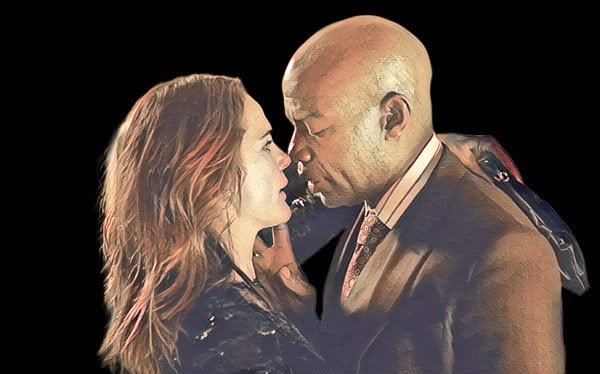
His death, revealed in the third episode, takes place offscreen, during a trip to Amritsar, India. There is no grand farewell, only the news of a tragedy that once again alters the story’s political balance. The decision is surprising precisely because it eliminates a character who served as a counterweight to everyone else’s impulsiveness. And, in a way, as one of the last reminders of what the series’ title is supposed to mean.
Since Kate arrived in England, we have witnessed an attack on a British warship, dozens of deaths, explosions, international conspiracies, a president involved in clandestine operations, a president dying, and her own husband becoming Vice President of the United States. Now, a Russian nuclear missile secretly recovered from the ocean floor threatens to further destabilize international relations.
All of this in just four seasons. The sheer number of crises would be enough to trigger a succession of wars and government collapses. Yet we almost never see the patient, discreet, and often frustrating work that lies at the heart of diplomacy.
And it is precisely the protagonist who bothers me most in this equation. Kate is supposed to be a brilliant diplomat, experienced in conflict situations, capable of negotiating with adversaries and finding solutions under extreme circumstances. Instead, she seems to operate permanently on the verge of a nervous breakdown. She shouts, loses her patience, confronts her superiors, defies protocol, and turns practically every conversation into a personal battle. She is literally explosive, and the series seems to mistake that intensity for political intelligence.
That does not mean The Diplomat is a bad series. Quite the opposite. Keri Russell remains excellent, Rufus Sewell is irresistible as Hal Wyler, and Allison Janney, joined by Bradley Whitford, brings even more talent to an exceptional cast. Debora Cahn has mastered pacing, rapid-fire dialogue, and the kind of twists that make us finish one episode immediately eager to watch the next.

International critics are enthusiastic. TV Insider awarded the new season five stars, while The Guardian and The Times praised the entertainment value of its combination of political chaos, humor, and tension. It is understandable. The series knows exactly how to hold our attention, particularly when it turns potentially absurd developments into seemingly urgent crises.
But entertainment and coherence are not necessarily the same thing.
Cahn worked on The West Wing, and comparisons between the two series are inevitable, especially now that Janney and Whitford are sharing the screen again. However, there is a fundamental difference. The West Wing also idealized American politics and frequently dramatized its conflicts. But its characters believed in the functioning of institutions, in dialogue, and in the possibility of building consensus. In The Diplomat, institutions seem to exist only to be circumvented, manipulated, or ignored.
The situation becomes even more evident in this fourth season. Grace Penn (Allison Janney) is now President, Hal Wyler (Rufus Sewell) has become Vice President, and Kate must deal with the consequences of a nuclear operation carried out without the knowledge of Britain’s allies. The Wylers’ marriage remains as turbulent as the international relations they are supposed to manage, while the growing closeness between Hal and Grace adds another personal dimension to a crisis that should already be complicated enough.
Dennison’s death reinforces this narrative choice. Rather than develop one of the story’s most interesting relationships, the series chooses to deliver another shock. It is undoubtedly a bold decision, but also a revealing one for a production that seems to need to constantly raise the stakes to keep its audience engaged.
Perhaps that is precisely what explains its success. The Diplomat has found an effective formula that combines political thriller and marital melodrama, treating betrayals, personal ambitions, and international disputes with the same sense of urgency. For those who love a good melodrama, there is hardly any reason to complain.
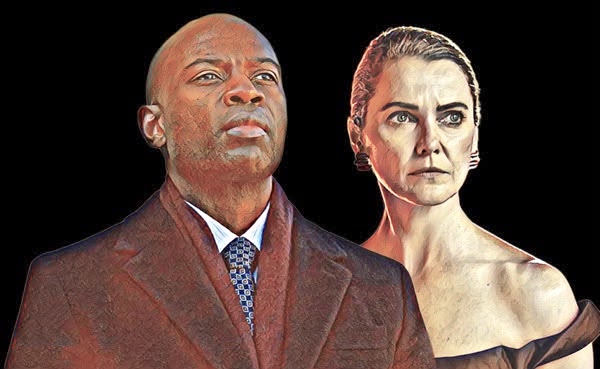
I will keep watching, naturally, and I recognize the talent involved. But I increasingly miss the series that could exist beneath all those explosions. Dennison was one of the few characters who reminded us that international politics also requires patience, discretion, and emotional intelligence. His absence may make the story more unpredictable, but it will hardly make it more diplomatic.
Kate Wyler arrived in London as a professional prepared to resolve crises. Four seasons later, she seems incapable of going a single week without becoming involved in another catastrophe.
And I am still waiting for the day when The Diplomat finally shows its protagonist practicing diplomacy.
Descubra mais sobre
Assine para receber nossas notícias mais recentes por e-mail.

