
Once upon a time, there was a beautiful, powerful woman obsessed with her own beauty. She had a magic mirror, an entire kingdom at her feet, and just one problem: a younger, prettier girl. When Snow White and the Seven Dwarfs premiered in 1937, Disney introduced the world to its first great villain and established a model that would endure for decades. The witch was a woman who refused to grow old, lose her beauty, or share her power. Nearly 90 years later, we are still fascinated by her. But perhaps the most interesting thing is realizing that, in the meantime, witches have changed. And so have we.
Curiously, Disney, responsible for some of the most famous princesses in film history, also created villains far more interesting than many of its heroines. After all, while princesses dreamed of true love, witches wanted power, youth, recognition, revenge, or simply the freedom to do whatever they pleased. They were vain, cruel, intelligent, funny, and absolutely unforgettable. They had personality, fabulous costumes, and frequently the best lines.
The Evil Queen and the Terror of Growing Old
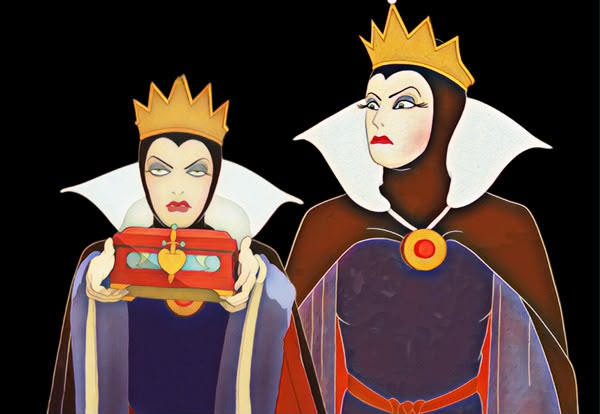
The Evil Queen in Snow White is not merely a jealous woman. She represents a fear society continues to cultivate: female aging. Her identity depends on being reassured that she is the fairest of them all. When the mirror stops providing that reassurance, young Snow White ceases to be a stepdaughter and becomes an intolerable threat.
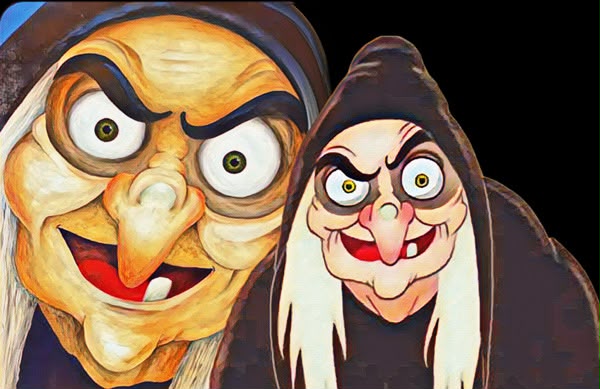
There is something profoundly psychological about this relationship. The Queen does not simply wish to eliminate her rival. She needs to destroy everything that exposes her own vulnerability. The mirror, after all, is not merely a magical object. It is the authority that determines her worth. And when she transforms herself into a hideous old woman to offer the poisoned apple, Disney creates a cruel irony: to preserve her youth, she assumes precisely the appearance she fears most.
It is also impossible to ignore the visual power of that transformation. For generations of children, the old woman holding the apple was more terrifying than many monsters in horror movies. Disney understood very early that fear does not necessarily depend on explicit violence. Sometimes, a smile, a voice, and a red apple are enough.
Maleficent: The Power of a Rejected Woman
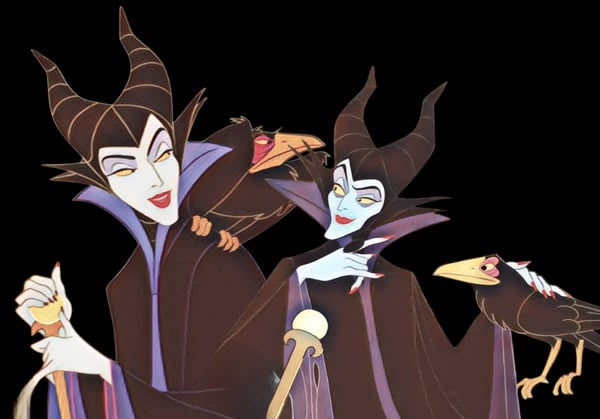
In 1959, Sleeping Beauty introduced an even more sophisticated sorceress. Maleficent did not need to ask a mirror whether she was beautiful. She knew exactly who she was, understood her power, and refused to be ignored. Her revenge begins because she was not invited to a celebration. Disproportionate? Obviously. But there is a symbolic dimension to that exclusion. Maleficent cannot tolerate being dismissed.
With her horns, black cape, aristocratic posture, and menacing voice, she remains one of the greatest visual creations in animation. Unlike the Evil Queen, she does not need to disguise herself as an old woman to inspire fear. Her power lies in her very presence. And she can even transform into a dragon, displaying a kind of strength no princess of that era would ever have been allowed to possess.
Decades later, Disney decided to revisit the character. In Maleficent (2014), Angelina Jolie plays a woman whose cruelty is reconsidered through the betrayal and violence she has suffered. The villain acquires a history, a wound, and, above all, a perspective of her own.
It is a fundamental shift. The woman once presented as the embodiment of evil becomes the protagonist. And the love capable of breaking the curse no longer depends exclusively on a prince. Disney was not merely retelling a fairy tale. It was acknowledging that its former villains might deserve to be heard.
Madam Mim and the Joy of Being a Witch
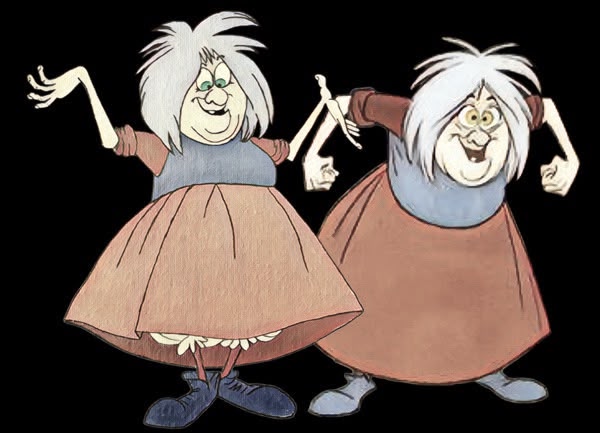
Not every Disney sorceress carries a tragic history, however. In The Sword in the Stone (1963), Madam Mim represents something entirely different: the pleasure of being wicked, eccentric, and outrageously entertaining.
Disheveled, dishonest, temperamental, and proud of her abilities, Mim has no intention of conquering a kingdom or recovering her youth. She simply wants to prove that she is more powerful than Merlin. Their magical transformation duel remains one of the most inventive sequences in classic Disney animation.
She belongs to a special category of villain: one who enjoys her own wickedness so much that we cannot help laughing along. She demands neither psychological understanding nor redemption. And perhaps that is precisely why she remains so irresistible.
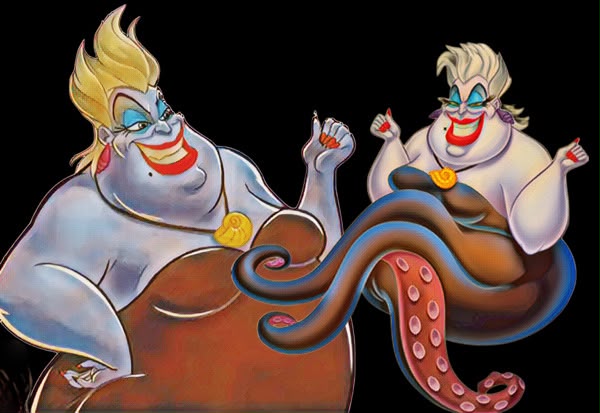
Ursula: The Woman Who Bargains With Desire
In 1989, The Little Mermaid introduced another extraordinary sorceress. Ursula is not a conventional woman, nor does she wish to appear as one. Extravagant, theatrical, voluptuous, and possessed of an enormous presence, she practically takes over the screen whenever she appears.
Visually inspired by drag queen Divine, Ursula became an icon whose appeal extended far beyond children’s entertainment. But her most interesting quality is not merely her appearance. It is the way she understands other people’s desires.
Ursula does not force Ariel to seek her out. The young mermaid comes voluntarily, driven by the desire to experience a different life. The witch identifies that desire, offers a solution, and demands a terrible price: her voice.
It is one of Disney’s most powerful metaphors. To pursue love and transform her identity, Ariel agrees to surrender her own means of expression. Ursula does not create the princess’s desire, but she knows how to exploit it. Her power lies in manipulating the emotional needs and fantasies of others.
And let’s face it, few villains have ever been so entertaining while doing it.
Mother Gothel: When Love Becomes a Form of Control
Although she is not a witch in the traditional sense, Mother Gothel, from Tangled (2010), clearly belongs to the same lineage as the classic sorceresses. Her obsession with youth revisits the Evil Queen’s defining theme, but adds an even more disturbing psychological dimension.
Gothel does not need to poison Rapunzel. She only needs to convince her that the world is dangerous, that nobody else can protect her, and that her survival depends on obeying her mother.
Here, the violence is not in a spell but in emotional manipulation. Gothel appropriates the maternal role to control the young woman and preserve the rejuvenating power of her hair. Love is presented as protection when, in fact, it functions as imprisonment.
She is a frighteningly contemporary villain. After all, there is nothing supernatural about guilt being used as an instrument of control.
The Sanderson Sisters and the Transformation of Witches Into Stars
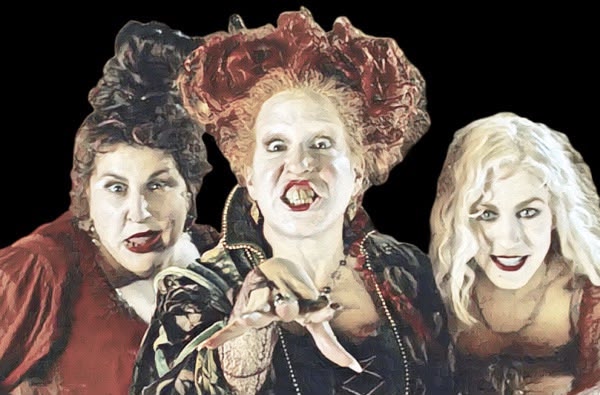
In Hocus Pocus (1993), Disney found another way to explore the mythology of witches. Winifred, Sarah, and Mary Sanderson are dangerous, cruel, and determined to regain their youth. But they are also three extraordinarily funny women.
Bette Midler, Sarah Jessica Parker, and Kathy Najimy turned the sisters into a celebration of excess, humor, and personality. The film was not a major theatrical success, but it found a second life on television and home video, eventually becoming a Halloween tradition.
It is fascinating to see how characters originally designed to frighten audiences became objects of affection. Today, the Sanderson sisters inspire far more fondness than fear. Audiences know they are villains, yet they want to revisit them, repeat their lines, and enjoy their chaos.
Disney had discovered something its classic animations had suggested all along: sometimes, audiences simply have more fun with the witches than with the heroes.

Wanda and Agatha: Witches Finally Take Center Stage
With Marvel integrated into the Disney universe, the transformation of sorceresses acquired another dimension. Wanda Maximoff, the Scarlet Witch, does not fit comfortably into the traditional division between heroine and villain. Her powers are immense, but her story is also defined by grief, loss, and an inability to accept reality.
In WandaVision, the desire to rebuild a family becomes a prison for other people. Wanda wants to recover what she has lost, but ends up imposing her fantasy on an entire town. Magic becomes the expression of grief she cannot process.
Agatha Harkness, meanwhile, represents an even more intriguing evolution. Initially introduced as an antagonist, she received her own series, Agatha All Along, in 2024. Played by Kathryn Hahn, she is sarcastic, ambitious, manipulative, and charismatic enough to win over audiences without having to become an exemplary woman.
This is an important difference from Disney’s earlier animations. Agatha does not need to abandon all her negative qualities to deserve a leading role. She remains morally ambiguous, entertaining, and dangerous. Her story also opens the door to themes such as motherhood, loss, desire, and belonging.
And perhaps this is the greatest achievement of contemporary witches: the freedom to exist without being required to represent only good or evil.
After All, Have Witches Changed, or Have We?
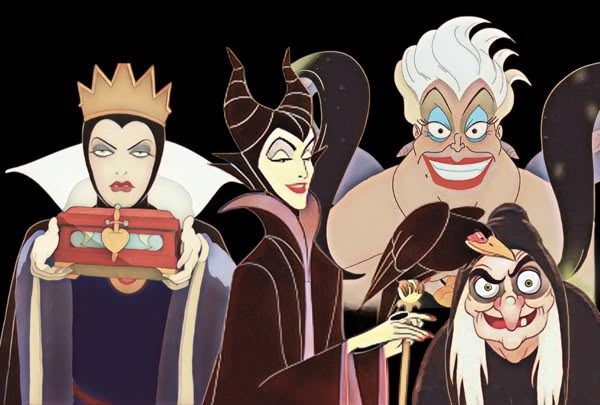
For decades, fairy tales taught us that ambitious, independent, vain, or powerful women were threatening. Princesses were young, beautiful, kind, and frequently passive. Witches had plans, desires, and initiative. One needed to be rescued; the other drove the entire story.
Of course, this opposition was never quite as simple as it appears. Maleficent is genuinely cruel in the original animation, Ursula manipulates Ariel, and the Evil Queen attempts to murder a teenage girl. There is no need to absolve these characters to recognize their strength.
But contemporary audiences see them differently. Today, we can identify issues beneath their wickedness that go far beyond evil itself: fear of aging, the need for recognition, resentment, rejection, possessive motherhood, the desire for autonomy, and the inability to cope with loss.
That does not mean every witch is a misunderstood victim. Some are simply wicked. And that is perfectly fine. Fiction also needs women who are allowed to be terrible without requiring a traumatic explanation.
What makes this evolution so fascinating is that Disney, which helped establish the archetype of the monstrous sorceress, eventually contributed to transforming her into a symbol of fascination, complexity, and, in some cases, identification.
Nearly 90 years after Snow White, perhaps princesses still sell us the dream of a happy ending. But witches are the ones asking the more interesting questions.
And between us, who has never found Maleficent far more fascinating than Sleeping Beauty?
Descubra mais sobre
Assine para receber nossas notícias mais recentes por e-mail.

