
After two seasons of laying the groundwork, The Lord of the Rings: The Rings of Power finally seems ready to deliver what it promised from the beginning: Sauron’s transformation into the Dark Lord we know from J.R.R. Tolkien’s mythology. And judging by the official trailer for Season 3, premiering on Prime Video on November 11, there won’t be much time to catch our breath. Finally! Because despite being visually spectacular, the series has spent far too much time building mysteries that audiences familiar with Tolkien already knew the answers to, while postponing the events that actually matter. Now there are no more secret identities, disguised seductions, or major revelations about who’s who. Sauron is ready to conquer Middle-earth. And the One Ring will finally be forged.
The story jumps forward five years after the fall of Eregion, which brought the second season to a close. That’s enough time for Sauron to reorganize his forces, expand his influence, and turn a growing threat into a war that almost all of Middle-earth appears to be losing. The trailer is grand, dark, and packed with battles, terrifying creatures, and familiar characters. But what really stands out is Sauron’s confidence. Played by Charlie Vickers, he seems absolutely convinced of his victory. He no longer needs to seduce the Elves under a false identity or manipulate Celebrimbor into forging the Rings of Power. Now he wants to rule. And he is willing to destroy anyone who tries to stop him.
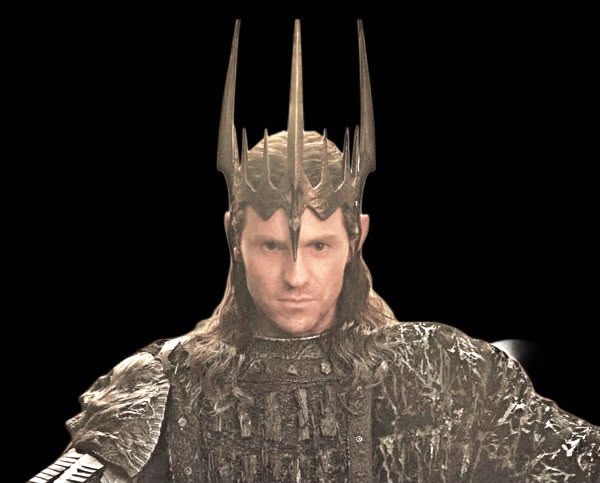
Sauron Finally Becomes the Dark Lord
In the footage, Sauron appears seated on his throne, surrounded by symbols of power and destruction. Gone is Halbrand’s ambiguity and Annatar’s false generosity. The character seems to have abandoned any need to convince others that his intentions are noble. It’s an interesting evolution, especially since Charlie Vickers built his portrayal of Sauron around manipulation, seduction, and the ability to recognize other people’s weaknesses. In Season 3, that intelligence remains, but it is now backed by devastating military power.
Orcs march, creatures enter the battlefield, and the last free regions must prepare to resist. Khazad-dûm, Lindon, and Rivendell are among the places under threat. The difference is that Sauron no longer seems interested in earning anyone’s trust. His goal is submission. And to achieve it, he must complete his greatest weapon.
The image of Sauron slipping the One Ring onto his finger is naturally one of the trailer’s most important moments. In Tolkien’s books, the Ring is secretly forged in the fires of Mount Doom, in Mordor, to control the bearers of the other rings. It is the culmination of a plan for domination that transforms objects seemingly associated with preservation and power into instruments of enslavement.
The series has spent two seasons preparing for this moment, particularly through the relationship between Sauron and Celebrimbor. The Elven smith’s death closed one chapter. The creation of the One Ring opens another. But one question remains: will we witness its forging in the opening episodes, or will it be reserved for the season’s defining moment? And how will the Elves react when they realize they have been deceived? After all, in Tolkien’s mythology, when Sauron puts on the One Ring, the bearers of the Three understand his true intentions. From that moment on, the war is no longer merely about territory. It becomes a battle against absolute control.
The Nazgûl Begin to Emerge
Another important clue in the trailer is the presence of shadowy figures that immediately bring the Nazgûl to mind: the nine Men who received rings and eventually became wraiths, entirely subordinate to Sauron’s will. Season 2 ended with Sauron in possession of the Nine Rings intended for Men. Now we are beginning to see the consequences.
What will be most interesting is not simply watching these creatures emerge, but understanding the process of corruption. How did originally powerful men, kings, or warriors gradually surrender their identities? Among the new characters is Khamûl, played by Zubin Varla, a figure known from Tolkien’s mythology and associated with the Ringwraiths. The series has an opportunity to explore an origin that Peter Jackson’s films approached primarily through horror.
But there is an obvious risk. Explaining too much about something terrifying precisely because of its mystery. And The Rings of Power has already demonstrated a certain difficulty resisting the temptation to explain absolutely everything.
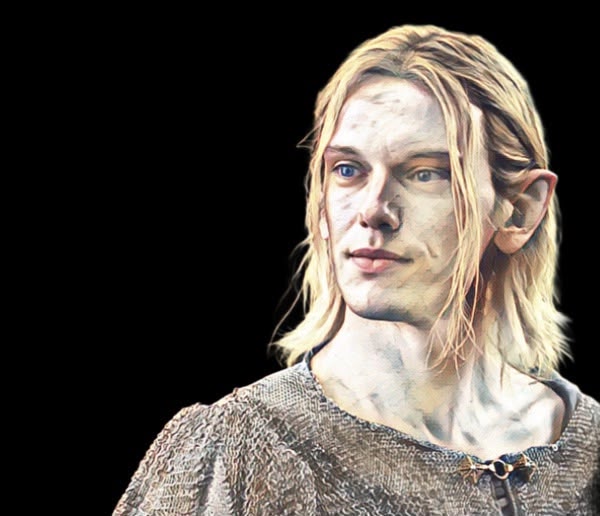
Celeborn Is Back. What Does That Mean for Galadriel?
Perhaps the most emotionally significant revelation is the return of Celeborn, Galadriel’s husband, played by Stranger Things star Jamie Campbell Bower. His absence has raised questions since the first season. Galadriel believed he had disappeared during the war, but anyone who has read Tolkien knows that Celeborn plays a fundamental role in Middle-earth’s future. His return was inevitable.
The trailer confirms their reunion, including moments of intimacy between them. But after so many years apart, how will they rebuild their relationship? And more importantly, who is Galadriel now?
There is a delicate issue the series will have to address. For two seasons, Galadriel and Sauron shared a relationship built on attraction, distrust, manipulation, and betrayal. The production deliberately encouraged that tension, which became one of the most discussed elements of the story. Now, with Celeborn back, Galadriel will have to confront not only her past but also the identity she has constructed during her husband’s absence.
Celeborn cannot simply appear as a romantic obstacle between Galadriel and Sauron. That would reduce an important figure in Tolkien’s mythology to an almost soap-operatic function. He needs his own story, his own strength, and above all, a purpose beyond being the husband who returned. This is one of the season’s greatest dramatic opportunities.
Sauron vs. the Balrog? Now That’s a Surprise
Among the most spectacular images is the apparent confrontation between Sauron and a Balrog. And the sequence immediately raises a question: why would two creatures who served Morgoth be fighting each other?
In Tolkien’s mythology, both Sauron and the Balrogs are Maiar, spiritual beings corrupted through their service to the first Dark Lord. But that does not mean there is a relationship of obedience between them. The Balrog of Moria is an ancient, devastating, and virtually uncontrollable force. The series had already foreshadowed its awakening in the depths of Khazad-dûm, threatening the survival of the Dwarves.
Now, the possible confrontation with Sauron suggests a struggle for power or an attempt to bring the creature under his control. But is this a real encounter? A vision? A symbolic representation? We don’t know yet. What we do know is that Simon Pegg will voice the Balrog, a curious choice for an actor frequently associated with comedy, although he also has dramatic experience.
More important than discovering who would win such a battle is understanding how far the series intends to rearrange Tolkien’s chronology to create its own confrontations. Because adapting a story is one thing. Completely transforming the relationships between characters and events is another.
Númenor Is Moving Closer to Destruction
While Sauron expands his power, Númenor seems determined to contribute to its own tragedy. The trailer shows a politically divided society, with Pharazôn consolidating his influence and the Faithful resisting growing hostility toward the Elves and their traditions. Elendil, Isildur, and Anárion appear connected to the resistance, while the arrival of Anárion, played by Andrew Richardson, completes an important part of Elendil’s family.
Anyone familiar with Tolkien knows that Númenor’s fate will be tragic. The kingdom, once a symbol of human power and prosperity, will ultimately be destroyed by ambition, fear of death, and Sauron’s manipulation. The trailer suggests that we are entering the stage where this decline becomes irreversible.
The question is how much of that story will unfold now. The series has already significantly compressed the chronology of the Second Age, bringing together events originally separated by centuries. This allows major characters to coexist, but it also creates a challenge: giving each tragedy the weight it deserves.
Pharazôn, above all, needs to be more than an ambitious politician. It is his obsession with power and immortality that will make him particularly vulnerable to Sauron’s influence. And there is a cruel irony in his story: the harder he tries to escape death, the more he will contribute to the destruction of everything he wishes to preserve.
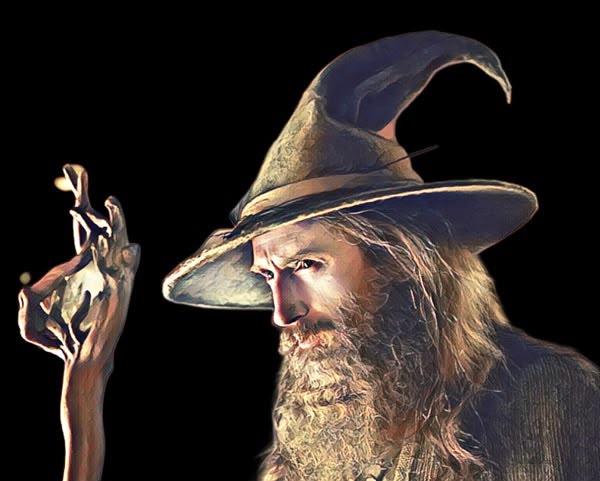
Gandalf Finally Joins the War
Season 2 officially revealed that the Stranger was Gandalf, bringing one of the show’s longest-running — and most unnecessary — mysteries to an end. Now, played by Daniel Weyman, he appears ready to take a much more active role in the conflict. The trailer shows the wizard using his powers and facing threats that seem to bring him increasingly closer to Sauron.
It is one of the adaptation’s most significant creative liberties. In Tolkien’s traditional chronology, Gandalf arrives in Middle-earth as one of the Istari long after the events of the Second Age. The series has decided to introduce him earlier and involve him in the war against Sauron.
It could work dramatically, particularly if the show explores his wisdom and compassion instead of turning him into just another powerful wizard casting spells. But it also confirms that The Rings of Power is constructing its own version of events, rearranging characters and historical periods to develop a more concentrated narrative.
The Dwarves of Khazad-dûm Face Their Own Downfall
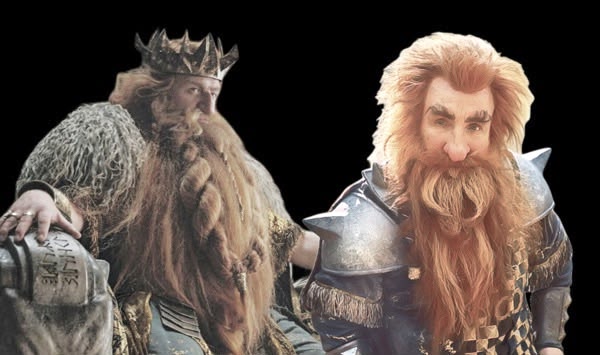
The Dwarves’ situation also looks desperate. The Balrog remains a threat, while family conflicts and political disputes jeopardize the kingdom’s stability. Durin IV, played by Owain Arthur, must deal with the consequences of previous events, while the arrival of Thrain, portrayed by Eddie Marsan, introduces a new family tension.
In the show’s version, Thrain is introduced as Durin IV’s older brother, another adaptation specific to Tolkien’s genealogy. The trailer also suggests that some Dwarves may move closer to Sauron, although the circumstances remain unclear.
It is an interesting development because the Dwarves, unlike Men, do not become wraiths controlled by the Rings of Power. The rings intensify their greed and desire to accumulate wealth, but they do not erase their free will in the same way. Corruption takes a different form, slower and perhaps even closer to human weaknesses.
The tragedy of Khazad-dûm, however, is already known. And the series continues moving toward it.
Could Season 3 Finally Be The Rings of Power’s Best?
There is an interesting contradiction at the heart of The Rings of Power. Audiences know Sauron’s fate, know that the One Ring will be created, and know that his defeat will not be permanent. They also know the future of Galadriel, Elrond, Isildur, and Gandalf. Even so, the series still needs to build suspense.
During its first two seasons, that approach did not always work. Too many mysteries, hidden identities, and parallel storylines frequently slowed the narrative. The revelation of Sauron’s identity, followed by the Stranger’s, took time away from developing the conflicts that truly matter.
The new trailer suggests a change of direction. We are no longer trying to figure out who the characters are. We are watching what they will do when faced with events that seem inevitable. And there is something particularly tragic about that perspective: we know the heroes will manage to resist, but we also know how much they will lose along the way.
Galadriel will find Celeborn, but she will not recover the Middle-earth she once knew. Númenor will be destroyed. Men will succumb to the rings. The Dwarves will face their own downfall. And Sauron, even after his defeat, will remain a threat for thousands of years.
Visually, Season 3 promises massive battles, impressive creatures, and landscapes that justify the production’s ambition. But the real test will be something else entirely: turning spectacle into emotion. Because The Lord of the Rings was never simply a story about armies, monsters, or magical objects. It is a story about the temptation of power, the corruption born from the desire to control the world, and the resistance of those who seem far too small to stand against it.
I admit that after two uneven seasons, I remain somewhat skeptical. The series has talent, money, a fascinating universe, and extraordinary characters, but it hasn’t always known what to do with all of them. The trailer, however, is promising. Perhaps because the show finally no longer needs to hide the story it is telling.
Sauron is ready. The question now is whether The Rings of Power is ready too.
Season 3 premieres on November 11, 2026, on Prime Video, with four episodes. Two more arrive on November 18, followed by the final two on November 25.
Descubra mais sobre
Assine para receber nossas notícias mais recentes por e-mail.

