
This article contains spoilers through the ninth episode of Season 2.
What would you do if you could discover the life you might have lived after making a different choice? Find someone you lost, give a relationship another chance, discover whether that opportunity you turned down would have made you happier? Dark Matter turned these questions into science fiction, but what moves me most about the series is precisely what feels familiar amid so many impossible realities. The difficulty of accepting a loss. The frustration with who we are. The fantasy that, somewhere, there is a life in which everything finally falls into place.
From the beginning, the writing and Joel Edgerton’s presence have given this story a human weight. His Jason Dessen can be a brilliant scientist, a devoted husband, a selfish man, someone capable of offering shelter or abandoning another person. The same face moves through experiences that reveal different possibilities of being. And in the second season, this multiplication has expanded beyond a question of identity into a discussion of responsibility. What do we do with what happens to us? How far does suffering explain our choices? At what point does the pursuit of our own happiness begin to destroy someone else’s life?
For those who do not follow the Apple TV production, the premise needs some explanation. Jason is a physics professor who lives with his wife, Daniela, played by Jennifer Connelly, and their son, Charlie. He is abducted by a version of himself who followed another path: he invested in his scientific career and built a box that allows people to travel between universes. This other Jason, whom we call Jason 2, achieved professional success but longs for the family he never built. And he decides to take the place of the man who has it.
It is an act of violence born from a familiar fantasy. Believing that happiness lies in what someone else possesses. Here, with an additional cruelty: that someone else has your face.
Psychoanalysis offers ways of thinking about this story because it questions the very idea that we fully know what we want and why we do what we do. Our choices involve conscious desires, but also conflicts, defenses, experiences, and expectations we do not always recognize. This makes freedom more complicated than simply having many options available. We can walk through countless doors and continue organizing our lives around the same impasse.
Desire Does Not Work Like an Address
Inside the Box, travelers find a corridor with countless doors. Each can lead to a different reality. To access this state, they need a substance that enables the experience of superposition within the series’ fictional logic. But the decisive element of the journey is something else: the destination is connected to the mental state of whoever opens the door, including their fears, expectations, and material they do not consciously control.
At first, Jason and Amanda, the psychologist played by Alice Braga, try to understand how this navigation works. Describing a place is not enough. Thinking about going home does not guarantee arrival, either. Anxiety, terror, and the associations passing through their minds interfere with the search. Gradually, they learn to pay attention to what they feel, to prepare before opening a door, and to seek an emotional connection with their destination. The image of a house carries less weight than the experience of belonging they are looking for within it.
This is where the metaphor becomes particularly interesting from a psychoanalytic perspective. We can articulate a desire with absolute conviction while remaining unaware of part of what we are pursuing through it. Someone says they want a relationship, but perhaps they also expect confirmation of their worth. Someone else wants professional recognition and discovers that no achievement can silence an old feeling of inadequacy. The Box gives visible form to this distance between what we believe we want and what participates in our choices without our noticing.

This does not mean the series is proposing a recipe for positive thinking. In life, of course, fear and anguish do not produce catastrophes through mental force. The possible connection lies elsewhere: what we do not recognize in ourselves can also influence how we interpret a situation, form relationships, and repeat familiar paths.
In Remembering, Repeating and Working-Through, published in 1914, Freud describes how certain conflicts reappear in actions and relationships without the person recognizing that they are repeating something from their history. This repetition can feel like an entirely new experience while preserving a familiar pattern. Change requires a process of working through; receiving an explanation of one’s behavior is not enough to transform it.
We can bring this idea into our reading of navigation through the Box. Changing worlds does not guarantee a change in how we relate to others. The setting may be different, the partner may be different, the opportunity may seem unprecedented. Even so, we may continue seeking the same impossible reassurance or trying to avoid the same frustration.
That is why learning to navigate the Box has something in common with learning to listen to oneself. Yet understanding our own functioning more clearly does not offer absolute control over existence. Jason and Amanda become more experienced, find connections, and learn to steer some of their journeys. They remain subject to loss, missed encounters, and the consequences of what they do.
Knowing the mechanism does not eliminate the conflict.
Where Would Point Zero Be?
There is another trap in this promise of infinite possibilities. Searching for the right reality can become a search for the moment before suffering. The place where everything could still have turned out differently. But where does it begin?
Before Jason built the Box? Before he decided to invest in science? Before he met Daniela? Before a death in the family? Every attempt to locate the origin encounters a history already underway. And every intervention affects people who also have desires, experiences, and decisions of their own.
We may call one character Jason 1 and another Jason 2 to follow the plot. This numbering, however, does not establish a hierarchy of humanity. Each experiences his own life as central. Every Daniela has a history. Every Amanda exists beyond the role she plays in a Jason’s life.
The absence of a point zero also resonates with analysis. Understanding the history of suffering can be fundamental, but it does not return us to the instant before it. Recognizing a repetition opens the possibility of changing our relationship with it. It does not erase what happened or restore an intact person waiting somewhere in the past.
The working-through Freud describes helps us understand this distinction. An experience can acquire another meaning and cease to determine certain responses without being undone. The work takes place in the relationship we manage to establish with our history and with what continues to operate from it in the present.
There is a loss in this realization. There is also a possibility of freedom: the future does not have to depend on recovering a life that can no longer be lived exactly as we imagined.
The Jason Who Found His Mother
One of the season’s most beautiful episodes follows a Jason who must confront this question. Unable to recover his family, he finds a reality in which his mother is still alive. There, however, she lost her son when he was 16.
Their meeting brings together two people marked by different absences. He lost his mother in his history; she lost her son in hers. Neither can literally return to the other what was lost. Even so, they manage to build a relationship.
This Jason also takes in another version of himself, whom he finds abandoned and destitute. The difference between the two does not lie in some essential superiority. One found support; the other had been destroying himself in loneliness. By taking him home, Jason offers another man the care that helped him carry on. The series gives concrete form to a social question: what would have happened to us without the people who sustained us?
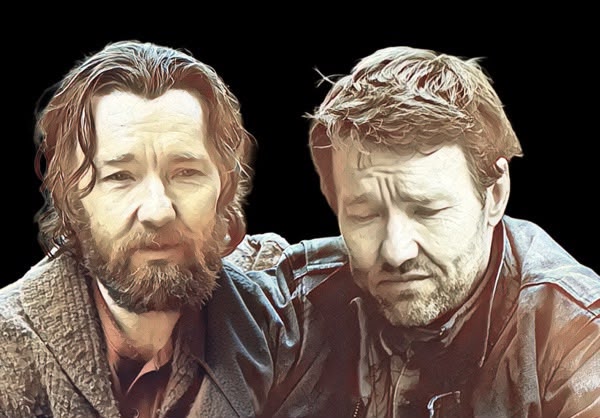
This gesture moves me because it expands the story beyond the individual achievement of finding a new chance. Jason does more than find shelter. He helps make that place a shelter for someone else.
Winnicott offers an important contribution to this reading. In The Capacity to Be Alone, published in 1958, he presents an apparent paradox: the capacity to be alone develops from the experience of being alone in the presence of someone reliable. The ability to sustain one’s own existence is rooted in a supportive relationship whose presence can, over time, be internalized. Autonomy and connection are not incompatible experiences.
The connection with Jason is a reading of the scene, rather than a clinical explanation of the character. But it allows us to recognize what the episode portrays so delicately: finding someone who welcomes us can change our capacity to face suffering. The care we receive can also become care we offer.
Another possible reading concerns the work of mourning. In Mourning and Melancholia, published in 1917, Freud describes the psychic work demanded by the loss of someone loved or something that occupies a fundamental place in our lives. The reality of absence is not assimilated all at once. Memories and expectations connected to what has been lost must be worked through in a painful process that can restore our availability for other emotional investments.
Working through a loss involves finding ways to continue living with an absence that will not be undone. The loved person can remain in memory, in our feelings, and in our history while new investments become possible.
By building a life with his mother and allowing himself to move toward a romantic relationship with Maria, this Jason does not have to declare that Daniela and Charlie no longer matter. His life acquires other bonds. The past continues to exist, but it no longer occupies all the available space by itself.
We can extend this reflection, as a reading of the series, to the lives we imagined we would have. We also suffer over the future that never happened: a family we did not build, an interrupted career, a relationship that never became what we hoped it would. The Box keeps these possibilities within the reach of fantasy and makes saying goodbye an even more difficult task.
And the new relationship will also be subject to time and farewell. Even in the reality that offers him shelter, he does not find immunity from suffering. He finds a life worth living despite it.
Amanda and the Desire to Be Loved
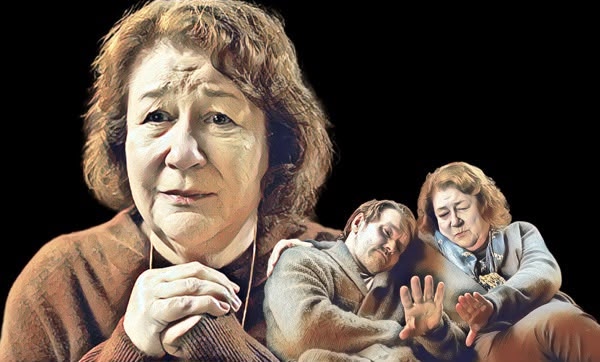
The eighth episode returns to this tenderness with Alice Braga at the emotional center of the story. There is something profoundly sad about watching a woman capable of understanding so much about others acknowledge how deeply she wanted to be loved by someone who did not offer her the same.
The Amanda we know was involved with Jason 2. She helped him, invested in him, and participated in his life and work. Her training as a psychologist did not protect her from the experience of waiting for a love that never came.
This detail deserves attention. Knowing how to name a conflict does not place us outside it. We can intellectually understand many of our experiences and still remain caught in what we expect from someone. Recognizing another person’s unavailability and managing to reorganize our lives around that recognition are different movements.
It is a distinction that Freud’s text on working-through also helps sustain. Understanding can begin a process, but change must work through resistances and ways of relating that do not disappear once they are given a name. This does not mean claiming that Amanda necessarily repeats a history the series has not shown us. It means recognizing that psychological knowledge and subjective transformation are not equivalent.
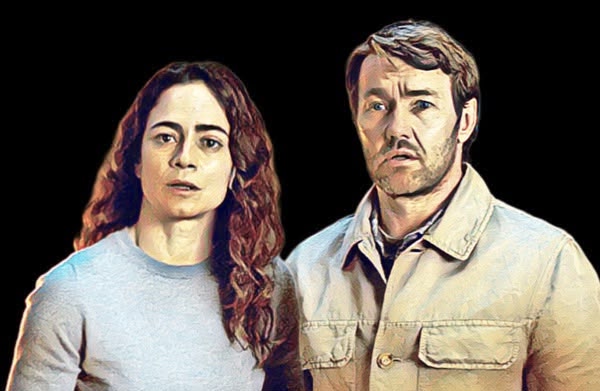
Amanda also encounters possibilities of herself in other realities. Lives with different choices, different relationships, and different forms of belonging. The experience makes visible a potentially painful question: how many lives do we imagine we should have lived before recognizing the one we can still build?
In episode eight, the welcome they receive at Laurel’s house allows an Amanda and a Jason to interrupt their journey. This injured Amanda and this Jason belong to a branch of the journey; we should not automatically confuse them with the characters we follow in the other storylines. Their independent existence is precisely what gives the episode its power. They, too, have a right to a story.
Recovery, shared daily life, and affection create something that was not part of the original plan. Amanda needs to recognize what she wants for herself. Jason needs to discover what his insistence on leaving is still trying to preserve. When a relationship becomes possible, it involves recognizing a particular person with whom an experience has been shared, and a life that can be built in the present.
Laurel’s house can also be read in light of the importance Winnicott attributes to the environment and to sustaining relationships. Rest, protection, and the presence of someone reliable create conditions in which the characters can experience something beyond reacting to a threat. Once welcomed, they can begin asking what they want to do with their lives.
It was one of the moments that moved me most this season. In a series capable of opening doors to infinite worlds, watching people find reasons to stay carries enormous weight.
Other People Do Not Exist to Complete Our Lives
Perhaps the most persistent ethical question in Dark Matter lies in the way each character treats the people they encounter. Jason 2 sees the other man’s family as a happiness available for occupation. His suffering becomes a justification for kidnapping, lying, and imposing his presence. He wants the outcome of a shared history without having lived that history and without accepting that Daniela can choose. It is a fantasy of repair that dispenses with other people’s autonomy.
In everyday life, obviously without multiverses, we can also expect someone to correct an old lack: a partner who will finally make us feel good enough, a child who will accomplish what we could not, recognition that will compensate for every earlier humiliation. The problem arises when the person ceases to be recognized as someone with an existence of their own and becomes responsible for repairing us.
Melanie Klein helps deepen this discussion. In Love, Guilt and Reparation, published in 1937, she examines the coexistence of loving and destructive feelings and the desire to repair the harm directed toward those we love. In her thinking, reparation involves concern for the other, recognition of damage, and the possibility of care. This differs from trying to make guilt disappear through an omnipotent solution, as though we could restore everything without recognizing what happened.
This distinction allows us to ask what Jason 2 is trying to repair when he occupies another man’s life. Is he willing to care for the people involved, or is he trying to eliminate his own frustration? Can he recognize the violence he has caused, or does he expect the happiness obtained afterward to make his actions acceptable?
Daniela makes this cost particularly visible. Having her husband’s face or claiming to love her is not enough. Trust depends on a history, on gestures, on the possibility of recognizing who is standing before her. After so many violations, her difficulty trusting has consequences that no Jason can resolve by demanding to be believed.
Her experience prevents a comfortable reading in which everything comes down to the suffering of a man trying to recover his family. The family suffered, too. It changed, too. It also has the right to decide.
Being Good Remains a Choice
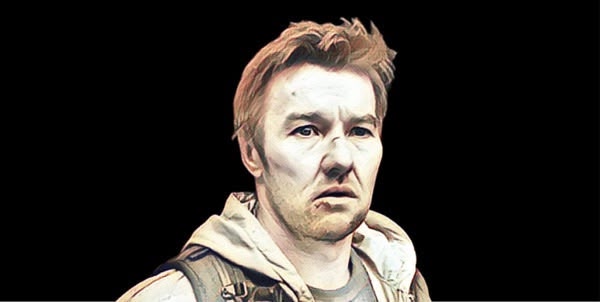
Joel Edgerton sustains these differences without having to turn each Jason into a character entirely unrelated to the others. There is an unsettling familiarity among them. We can recognize the man we love following in the footsteps of another whom we condemn.
This becomes particularly disturbing when the Jason we follow begins acting in ways that bring him closer to Jason 2. Protecting the family can become a convenient justification for crossing boundaries. The fear of losing someone can feed an obsession that ultimately drives that very person away.
Circumstances matter. Support matters. Trauma matters. None of these elements eliminates responsibility for what we do.
A psychoanalytic reading can help us abandon the fantasy of an entirely coherent identity. We can love and feel angry with the same person. Want their presence and resent what they ask of us. Be generous in one situation and deeply selfish in another. Recognizing this ambivalence allows us to pay attention to what we do with it.
In Kleinian theory, integrating love and hostility directed toward the same person is an important aspect of emotional development. The person who frustrates us can also be the person we love; the aspects we reject in ourselves coexist with our capacity for care. This integration makes possible a more sustained concern for the harm we may cause.
The multiplication of Jasons offers a particularly expressive image of this difficulty. Fiction distributes across several bodies possibilities that, in human experience, can coexist within one person. A caring man is not protected from acting cruelly. Someone who has caused suffering can recognize what they have done and try to act differently. That possibility requires work and responsibility, rather than automatic absolution.
The danger lies in believing that declared love, by itself, guarantees the goodness of our actions.
Our Best Versions Can Recognize a Limit
That is why the meeting of Jason, Amanda, Ryan, and Blair around the possibility of disabling the Boxes has a significance that extends beyond a scientific solution. They bring together experiences of loss, guilt, and violence to consider what can be done about a problem already endangering countless lives. In the ninth episode, a shutdown plan emerges; its execution and costs remain unresolved.
I like to think that some of these characters’ best possibilities come together there. This has less to do with moral purity than with the ability to recognize that their desires cannot be the sole measure of their decisions.
Amanda and Ryan bring what they have learned through suffering together. Blair insists on the need to stop the danger. Jason must consider the reach of what he helped make possible. Each depends on the knowledge and experience of the others.
We can recognize in this gathering a connection with reparation as Klein understood it: suffering and guilt find a possibility of transformation into concern and action. Instead of merely wishing that nothing had happened, it becomes necessary to consider what can still be cared for. This is a reading of the encounter whose power lies precisely in the movement from an individual pursuit toward a shared responsibility.
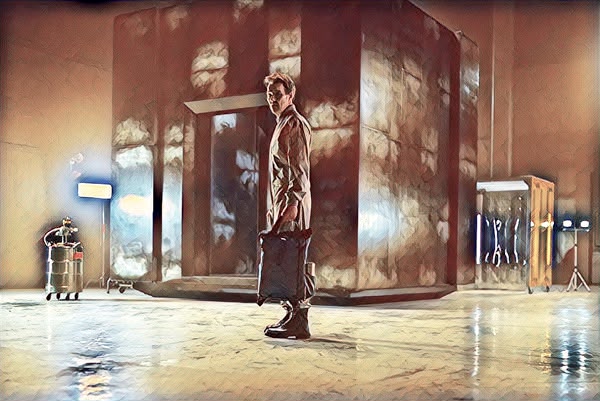
The very idea of closing the doors demands a painful renunciation. The Box allows people to escape a threat, find shelter, and see someone they have lost. Shutting it down may also prevent encounters. There are people on the other side, including Daniela, whose situation makes it impossible to celebrate the solution as though everyone were already safe. That is what gives the decision its weight. Recognizing the need for a limit does not eliminate the pain of establishing it.
The Box can represent many things: the fantasy of omnipotence, the pursuit of a life without frustration, the promise of repairing every loss, the difficulty of accepting a choice while another possibility remains open. Its doors offer destinations and also postpone goodbyes.
Freud helps us think about repetition and the work demanded by loss. Winnicott allows us to recognize the importance of support in enabling someone to sustain their own existence. Klein illuminates ambivalence and the possibility of transforming guilt into care. These contributions come from different moments and perspectives within psychoanalysis, finding points of connection with the series without reducing it to an illustration of theory.
Dark Matter moves me because it allows some doors to lead to care. A mother welcomes a son she never saw grow up. A man supports another version of himself. A woman begins to recognize that she deserves to exist beyond the love she hoped to receive. Wounded people manage to think together about what they can do for others.
None of these experiences requires the past to be erased. They require it to find a place within a life that continues.
Perhaps the series’ most difficult question emerges precisely when we have learned to open the doors more skillfully. If we can reach so many places, what will make us choose one of them? With whom do we want to stay? And which possibilities are we willing to say goodbye to in order to care for the life we have found?
Descubra mais sobre
Assine para receber nossas notícias mais recentes por e-mail.

