
Some songs seem to belong to a particular era. Others manage to transcend generations without losing their identity. And then some acquire a meaning even their creators could never have predicted. Season of the Witch, released by Donovan in 1966, belongs to that last category. Six decades later, it is almost impossible to hear its opening chords without thinking of mystery, magic, witchcraft, and Halloween. Curiously, the song was not written to celebrate witches or accompany horror stories. It emerged from something perhaps even more disturbing: the feeling that the world was changing and nobody knew exactly whom to trust.
In 1966, the counterculture was beginning to transform popular music. Folk, which had helped establish artists such as Bob Dylan and Joan Baez, was discovering new possibilities through electric rock and psychedelia. Experiments with LSD, the rejection of traditional values, and the search for alternative forms of spirituality fueled the imagination of a generation that believed it was witnessing a cultural revolution. Donovan, a Scottish singer-songwriter initially associated with the folk tradition, was at the center of that transformation.
But while much of psychedelic music celebrated freedom, color, and the expansion of consciousness, Season of the Witch seemed suspicious of it all. There was something dark beneath that universe of discovery. And Donovan managed to turn that feeling into music.
The Dark Side of Sunshine Superman
Season of the Witch was released in August 1966 on Sunshine Superman, one of the defining albums of Donovan’s psychedelic period. Produced by Mickie Most, the record marked an important transformation in his career, incorporating electric guitars, unconventional instruments, and arrangements that expanded the possibilities of British folk.
The title track presented a luminous, almost euphoric universe, filled with references to pop culture and psychedelic imagery. Season of the Witch, however, seemed to reveal the other side of that experience. Suspicion replaced confidence. Instead of absolute freedom, there was the unsettling impression of being watched.
Musically, the contrast is fascinating. The song unfolds through a repetitive structure sustained by electric guitar, bass, drums, and organ. There is no need for a grand melody or dramatic changes to create tension. Repetition produces an almost hypnotic trance, while Donovan’s voice seems to move between curiosity and unease.
For nearly five minutes, atmosphere matters as much as words. The music seems to move forward without ever finding a definitive escape, as though the listener were trapped inside a recurring thought. That hypnotic quality is an essential part of its identity and helps explain why it has aged so remarkably well.
Curiously, although the song was released by a British artist, it was recorded in Hollywood during the American sessions for Sunshine Superman. The production brought in musicians associated with the local scene, reinforcing Donovan’s transition toward electric rock. The album was released first in the United States, while contractual disputes delayed its British release until 1967.
The Paranoia Behind Witchcraft
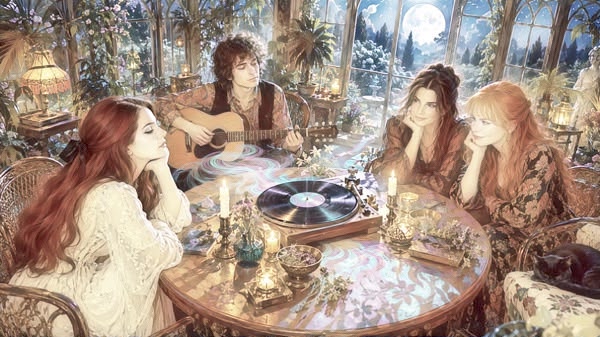
The most interesting aspect of Season of the Witch lies in how its lyrics suggest threats without ever clearly identifying them. Donovan observes the world around him and senses that people seem different, identities are unstable, and something strange is happening.
There are no descriptions of rituals, spells, or women persecuted for witchcraft. The word witch functions much more as a metaphor for a state of mind.
The song emerged during a period when the counterculture’s promise of freedom was beginning to coexist with political tensions, social conflicts, and growing distrust of institutions. The Vietnam War, surveillance of protest movements, and the transformation of youth culture created an atmosphere in which freedom seemed accompanied by new forms of fear.
It is tempting to interpret the song as anticipating the end of the 1960s’ innocence. The violence that would mark the decade’s final years had not yet reached its peak, but the feeling that something was wrong was already present.
Donovan did not need to explain exactly what was happening. The composition’s strength lies in its ambiguity. Danger may come from outside, but it may also exist in the perception of the person observing it.
This is one of the qualities that connects Season of the Witch to psychological horror. We do not always need to see a threat to experience fear. Sometimes, it is enough to realize that a familiar environment no longer feels safe.
How the Song Became a Classic
Season of the Witch did not become a cultural phenomenon solely because of Donovan’s original recording. Its open structure, hypnotic repetition, and unsettling atmosphere allowed musicians from very different backgrounds to find new interpretations of the composition.
Among the most important is the recording by Al Kooper and Stephen Stills, released on the 1968 album Super Session. Longer and more expansive instrumentally, it transforms the original tension into a psychedelic blues-rock experience characterized by improvisation.
Vanilla Fudge also explored the song’s dramatic possibilities, while artists such as Joan Jett, Dr. John, Robert Plant, and Richard Thompson helped keep the composition alive across different decades.
This diversity reveals something important: Season of the Witch has never depended entirely on one particular musical aesthetic. It can sound like blues, psychedelic rock, dark folk, or an almost gothic experience. What survives is the feeling that something threatening exists beneath the surface.
And few songs create such an immediately recognizable atmosphere.
When Cinema Discovered Season of the Witch
The song did not need to be written as a Halloween anthem to find its place in cinema. Long before witches returned to the center of popular culture, Season of the Witch was already being used to suggest unsettling environments, ambiguous behavior, and dangers that did not always need to appear on screen.
Donovan’s recording appeared in films as different as Gus Van Sant’s To Die For (1995), The Wackness (2008), and The Other Guys (2010). These productions do not belong strictly to the world of witchcraft, but they found in the song’s atmosphere a way to add unease to their images. In Blues Brothers 2000 (1998), Dr. John’s interpretation brought the composition into a different musical territory.
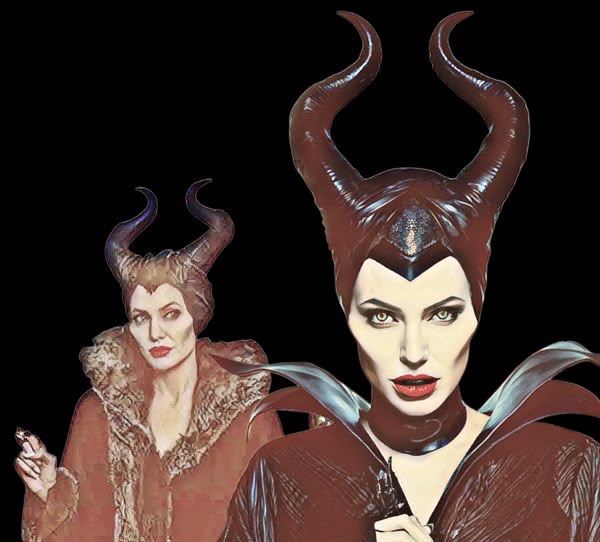
Its connection with the supernatural became increasingly evident through productions such as American Horror Story: Coven in 2013, when witches returned to a prominent position in television’s imagination. Meanwhile, the trailer for Maleficent: Mistress of Evil in 2019 found in the composition a perfect soundtrack for the return of Angelina Jolie’s character. A darker, more cinematic arrangement accompanied images of magic, threats, and conflicts between powerful women.
The case of Maleficent is particularly revealing. Donovan’s song is not about witches in the traditional sense, but its title and atmosphere seem tailor-made for a character who evolved from a classic Disney villain into a more ambiguous figure, shaped by resentment, power, and a desire to protect.
This ability to acquire new meanings explains why the composition remains so attractive to filmmakers and trailer editors. It does not need to explain the story. A few chords are enough to establish that something is not quite right.
Lana Del Rey and the Rediscovery of Magic
In 2019, Lana Del Rey recorded a new version of Season of the Witch for Scary Stories to Tell in the Dark, directed by André Øvredal and produced by Guillermo del Toro.
The choice seemed inevitable. Lana had built much of her musical identity around American nostalgia, melancholy, romance, and the darker side of seemingly perfect images. Her interpretation added an ethereal, almost ghostly dimension to a composition that already carried a natural sense of unease.
While the original recording belongs to the psychedelic universe of the 1960s, Lana’s version sounds as though it emerged from a disturbing dream. Her voice transforms paranoia into seduction, as if danger were being announced by someone who already knows how the story will end.
The song’s presence in the film was particularly meaningful. Set in 1968, the story establishes a connection with Donovan’s era, while Lana’s reinterpretation brings the composition to another generation.
But the story did not end there. In 2026, precisely as the composition celebrates its 60th anniversary, Lana Del Rey’s version returned to prominence in promotional material for Practical Magic 2, the sequel that reunites Sandra Bullock and Nicole Kidman as sisters Sally and Gillian Owens.
The choice seems especially appropriate. The world of Practical Magic is built around a tradition of women who have inherited extraordinary powers, but also a family curse. Magic is a promise of freedom and, at the same time, an inheritance from which nobody can completely escape.
It is fascinating to think that a song originally associated with the paranoia of the 1960s can now accompany a story about sisterhood, love, and the transmission of female power across generations. The meaning of the music has changed, but its ability to create unease remains.
Alanis Morissette and a New Season of Witches
Lana Del Rey was not the only artist to rediscover Season of the Witch. In September 2026, Alanis Morissette released her own interpretation of the composition, featured in the trailer for Yaga, an AMC+ series inspired by Baba Yaga, the mysterious figure from Slavic folklore.
Starring Carrie-Anne Moss, Noah Reid, Clark Backo, and Hudson Williams, the production transports the myth into a contemporary mystery about disappearances, secrets, and magic. The series is scheduled to premiere on October 23, just before Halloween.
Alanis’s version reinforces one of the song’s fundamental qualities: its ability to adapt to different female voices and new interpretations of the supernatural. If Donovan transformed distrust into psychedelia and Lana Del Rey added an almost seductive melancholy, Alanis finds another way to explore the tension.
The timing is extraordinary. Sixty years after its release, Season of the Witch simultaneously accompanies the return of a franchise about witch sisters and the arrival of a new television interpretation of Baba Yaga.
It is not simply nostalgia. It demonstrates that the music continues to provide a remarkably effective language for representing what we cannot entirely explain.

The Witch as a Cultural Symbol
There is a reason why the title Season of the Witch has acquired such power in the popular imagination. The witch is one of the most enduring figures in Western culture, surviving through centuries as a representation of fear, transgression, forbidden knowledge, and, more recently, female autonomy.
At different moments in history, women considered dangerous, independent, or simply different were associated with witchcraft. Popular culture transformed this figure into both a threat and a symbol of resistance.
Donovan’s song does not directly explore this discussion, but its ambiguity allows the title to be continually reinterpreted.
It is fascinating to observe how a composition born from the distrust and instability of the 1960s eventually became associated with a celebration that transformed the supernatural into entertainment. Halloween, witches, ghosts, and monsters came to inhabit a cultural universe in which Season of the Witch found a second life.
Cinema also helped popularize the phrase. The title appeared in productions such as Halloween III: Season of the Witch (1982) and George A. Romero’s Season of the Witch (1972), although neither film was an adaptation of the song. The shared wording reinforces how deeply the expression became embedded in the language of horror, independently of Donovan’s composition.
But perhaps the explanation for its longevity is simpler: Season of the Witch creates a sense of danger without needing to show anything at all.
Sixty Years Later, the Spell Remains
In 2026, Season of the Witch celebrates its 60th anniversary in a world very different from the one in which it was composed. Psychedelia is no longer a revolution, electric folk no longer causes scandals, and Halloween has become an enormous commercial event fueled by films, television series, music, and social media.
And yet the song remains remarkably relevant.
Perhaps because its true subject was never witchcraft, but distrust. The impression that we are surrounded by people whose intentions we cannot know, that the familiar world can suddenly change, and that danger does not always have an identifiable form.
A song born during a period of cultural transformation continues to resonate in a society marked by insecurity, misinformation, and a persistent sense of instability.
Of course, there is also the pleasure of simply listening to it. That insistent guitar, the dark organ, Donovan’s voice, and a rhythm that never seems to reach a definitive conclusion make the composition an extraordinary musical experience.
But there is something even more fascinating about its journey. A song that was never really about witches ended up becoming one of the most evocative ways to announce their arrival.
Sixty years later, the season of the witches still begins when Donovan starts singing.
Descubra mais sobre
Assine para receber nossas notícias mais recentes por e-mail.

