
The final trailer for Dune: Part Three, released on October 27, confronts Paul Atreides with the consequence he tried to avoid and helped bring about: the liberator has become an oppressor. His conquest of the throne, celebrated by his followers as the fulfillment of a prophecy, paved the way for an imperial order sustained by war. This is where Denis Villeneuve begins his farewell to Arrakis, with the film opening in Brazilian theaters on December 17.
For anyone who has read Dune Messiah, that transformation is hardly a betrayal of Frank Herbert. The more interesting question is how the filmmaker intends to arrive there. The footage released so far points to an adaptation that preserves the novel’s political conflict while rearranging relationships and possibly events to conclude the journey begun in the first two films.
Warning: the following comparison includes spoilers for Dune Messiah and references to Children of Dune.
Paul Recognizes What He Has Become
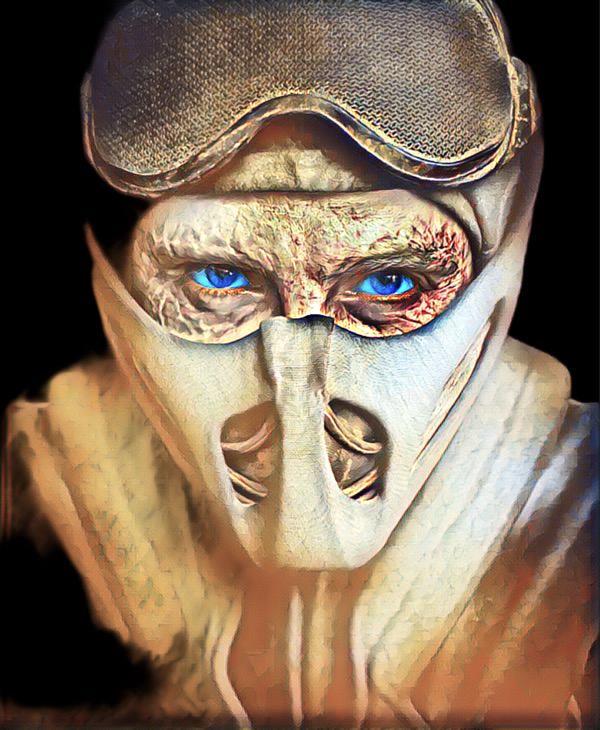
The preview presents a Paul marked by years in power and conscious of his estrangement from Chani. His admission that he has become the oppressor she swore to fight offers the key to the final chapter: defeating the Harkonnens did not dismantle the machinery of domination. Paul took command of it. The trailer combines that realization with the threat of a conspiracy against the emperor.
This direction is consistent with Herbert’s intentions. In his introduction to an edition of Dune Messiah, Brian Herbert explains how the novel dismantles the heroic myth built around Muad’Dib. The tragedy involves both the leader’s decisions and the religious and political structure that makes his authority almost impossible to question.
The expectation of a dark conclusion therefore has a literary foundation. The challenge will be to preserve Paul’s responsibility even as the narrative shows his enemies plotting against him. Being the target of a coup does not erase the violence committed in his name.
Chani Is the Most Important Change
The rupture between Paul and Chani was already established at the end of Dune: Part Two. In the books, she remains by his side after his political marriage to Irulan. In Messiah, their relationship remains central, while the difficulty of producing an heir becomes part of the struggle over the dynasty’s future.
The third film begins from a different situation. The official synopsis itself describes the reappearance of a long-lost love and places Chani at the center of the mystery surrounding a conspiracy. This confirms that Villeneuve needs to develop the consequences of the separation he created on screen, rather than simply reproduce the novel’s domestic arrangement.
The difference gives Chani a more explicit role in political opposition. Her resistance may make visible what Paul’s rise costs the Fremen. Still, it is too early to claim that she has fully joined a conspiracy or that every image of confrontation belongs to the same situation. The trailer offers a dramatic direction; it does not reveal the complete sequence of events.
That caution is particularly necessary in a story involving prescience, visions, and the manipulation of identity. A scene may anticipate a possible future, conceal its context, or suggest a relationship that the film’s editing will explain differently.
Scytale and Hayt Make Trust a Problem
Robert Pattinson plays Scytale, a member of the conspiracy against Paul and a Face Dancer capable of assuming other people’s appearances. That ability makes identity a political vulnerability: recognizing a face does not mean knowing who is standing before you. It also fuels theories about the images of Chani, but the possibility of impersonation remains a theory, not a confirmed revelation.
Jason Momoa’s return has another explanation. He plays Hayt, a ghola of Duncan Idaho produced by the Bene Tleilax. The character’s presence, confirmed in the official material, preserves a fundamental element of Messiah: someone connected to Paul’s emotional past returns under circumstances that make his loyalty uncertain.
For the emperor, the problem goes beyond security. Hayt offers the possibility of reconnecting with someone he has lost, but he may also be a weapon designed to exploit that very desire. The conspiracy penetrates Paul’s private life because his attachments are among the few ways to reach someone protected by so much power.
Paul’s Children Raise a Question About the Timeline
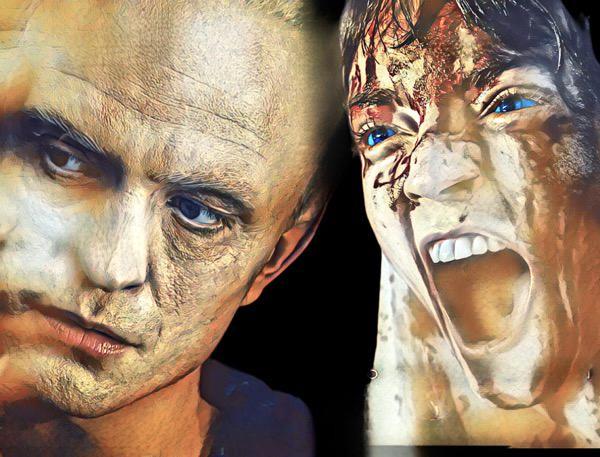
The trailer introduces Leto II and Ghanima, Paul and Chani’s twins, played by Nakoa-Wolf Momoa and Ida Brooke. Their appearance in the new footage is one of the campaign’s most significant revelations.
In the book, the twins are born near the end of Messiah. In Children of Dune, the story moves forward nine years and follows them as central characters. Seeing them portrayed by older actors therefore raises a question: will the film move beyond their birth, include an epilogue, or show the children in visions? None of those possibilities can be treated as confirmed by the trailer alone.
One change to the timeline has already been announced: the film takes place 17 years after Part Two, while Messiah begins approximately 12 years after the first novel. That longer interval also accommodates an older Alia, played by Anya Taylor-Joy. It does not, however, explain the twins’ ages on its own: the timing of their birth remains an aspect of the adaptation that needs clarification.
What to Expect from the Ending and What We Still Do Not Know
In the novel, the conspiracy culminates in Paul losing his sight, Chani dying in childbirth, and his departure into the desert. It is an ending deeply connected to the failure of his attempt to control the future. Those events provide the literary reference point, but we cannot yet say that Villeneuve will reproduce them in full or in the same order.
The battles and sandworms featured in the publicity promise cinematic scale, while the official material keeps the consequences of Paul’s reign and his relationship with Chani at the center of the story. The most reasonable expectation is a political and family tragedy, even if the adaptation expands the action.
Part Three concludes Villeneuve’s cycle, even if the books continue. The director has said he considers it possible to leave elements for other filmmakers to develop, although he does not intend to direct those continuations. That leaves a door open; it does not confirm another film.
The test for this farewell will be the meaning assigned to Paul’s downfall. Herbert constructed a story in which the ruler’s personal suffering does not cancel out the collective disaster of his reign. Villeneuve can change the route, expand Chani’s role, and rearrange the timeline. Preserving that tension will be essential if the ending is to confront the promise that brought Paul to power—and the price paid by those who believed in it.
Descubra mais sobre
Assine para receber nossas notícias mais recentes por e-mail.

