
There is an almost cruel responsibility that comes with adapting Pride and Prejudice. Jane Austen wrote a novel that has survived more than two centuries without losing its irony, intelligence, or extraordinary ability to expose human contradictions. To make matters even more complicated, two adaptations have become virtually untouchable references: the 1995 miniseries starring Colin Firth and Jennifer Ehle, and the 2005 film with Matthew Macfadyen and Keira Knightley. Netflix knows that simply introducing a new Elizabeth Bennet and Fitzwilliam Darcy will not be enough. It needs to convince audiences that there is still something to add to a story everyone believes they know by heart.
The first full trailer, released on Wednesday, October 28, suggests that the streaming giant has found a rather clever visual solution: embracing the cinematic aesthetic of the 2005 film without abandoning its promise of fidelity to the original novel. And I must admit, the cinematography is absolutely divine.
The green fields, natural light, delicately illuminated interiors, and slightly disheveled hair immediately evoke the world Joe Wright created 21 years ago. The Bennets’ home even looks somewhat more luxurious than the wonderfully chaotic, almost rustic property in the film, but it retains the impression of a family actually living in its surroundings rather than merely parading through immaculate historical sets.
Historians and purists may complain about certain details, just as they did with the 2005 version. But there is a difference between historical accuracy and the ability to transform a period into an emotional experience. Wright’s film understood that perfectly, and the new series appears to be following the same path.
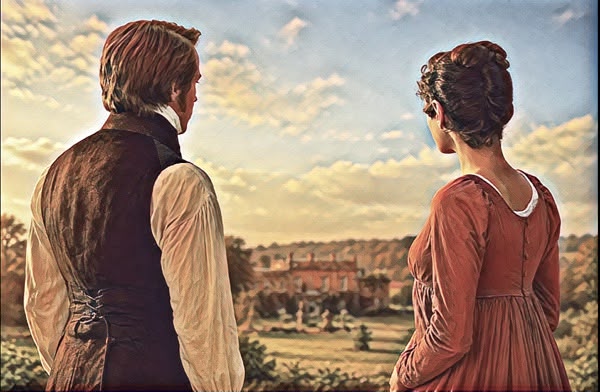
Jack Lowden Between Two Darcys
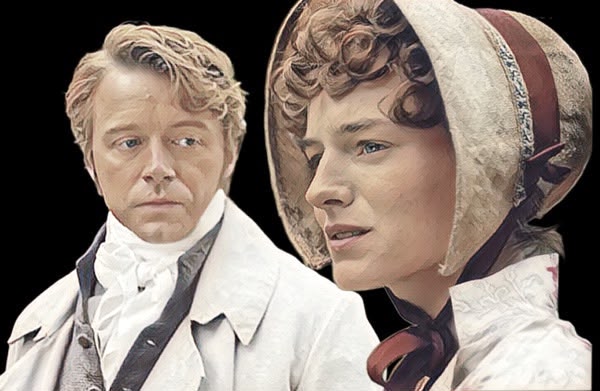
As we have discussed before, Jack Lowden is probably the actor facing the greatest challenge in this production. Emma Corrin needs to win audiences over as Elizabeth, but Lowden will have to contend with two particularly difficult ghosts.
Colin Firth turned Darcy into a proud, snobbish, initially almost unpleasant man whose emotional transformation gradually emerged. Matthew Macfadyen preferred a socially awkward, shy character who seemed uncomfortable with his own feelings. The former needed to recognize his class prejudices; the latter seemed to need to discover how to express what he felt.
Judging by the trailer, Lowden is looking for a middle ground. His Darcy is withdrawn, restrained, and apparently unwilling to reveal much emotion, but he does not seem to reproduce either Firth’s arrogance or Macfadyen’s vulnerability entirely. It is an approach that could work, especially because Austen’s character is far more complex than the familiar image of an aristocrat incapable of declaring his love.
Darcy must realize that his social position does not make him morally superior to others. Elizabeth, meanwhile, must acknowledge that her intelligence and confidence in her own judgment can also lead her to mistaken conclusions. The romance depends on both characters undergoing this transformation, something that is occasionally lost when adaptations concentrate almost exclusively on romantic tension.
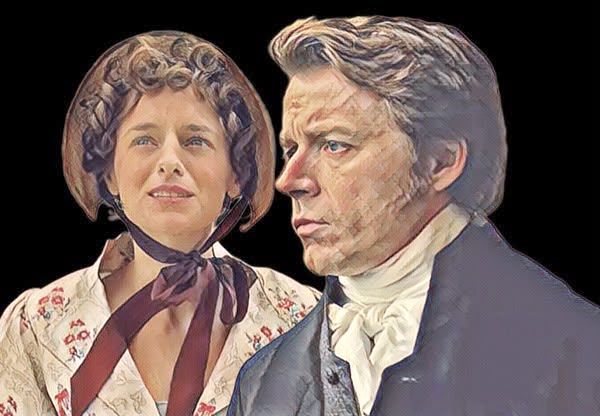
Emma Corrin May Surprise Us
Emma Corrin, meanwhile, is already beginning to convince me that they might actually outshine Keira Knightley. And that is saying something.
Knightley delivered an Elizabeth full of energy, spontaneity, and almost contemporary irreverence, while Jennifer Ehle had created a character closer to Austen’s restrained elegance and irony. Corrin appears to be taking another approach, combining a more introspective presence with the liveliness required to portray a woman who observes the world around her with often disconcerting intelligence.
The trailer suggests a less exuberant Elizabeth, but not necessarily a less defiant one. It will be interesting to see whether this restraint preserves the character’s humor, because Lizzy’s appeal is not simply that she challenges social conventions. It is that she believes she understands people perfectly, until she discovers that she, too, can be wrong.
There is, however, one choice I am not particularly enthusiastic about: the image of Jane and Elizabeth sitting on the roof of their house, discussing the future. I understand the desire to translate the sisters’ intimacy into a visual language more familiar to contemporary audiences, but the scene feels like one of those devices period adaptations use to advertise their modern sensibilities.
Austen does not need her characters placed in visually modern situations to demonstrate how relevant their concerns remain. Her women were already sufficiently interesting, independent-minded, and aware of the limitations imposed by the society in which they lived.
Olivia Colman Already Seems to Have Stolen the Show
If there is one presence that feels absolutely perfect in the trailer, it is Olivia Colman as Mrs. Bennet. Hearing her deliver some of the character’s most recognizable lines is enough to appreciate how wonderfully natural Austen’s dialogue can sound in the hands of an actress capable of mastering comedy without turning everything into caricature.
Mrs. Bennet is frequently portrayed as an inconvenient, exaggerated, and hysterical woman, but her obsession with marrying off her five daughters has a very concrete foundation. Without a male heir, the family estate is destined to pass to another relative, leaving the girls’ futures dependent on financially advantageous marriages.
It is precisely this combination of comedy and desperation that makes the character so fascinating. Olivia Colman has the ability to restore the humanity of a woman who appears ridiculous largely because she openly expresses anxieties that everyone else prefers to disguise.
Rufus Sewell, as Mr. Bennet, completes a particularly promising pairing. His character is admired for his sarcasm and intelligence, but there is considerable irresponsibility behind the way he retreats into his library and observes his family with detached amusement. Paternal neglect is one of the novel’s most interesting underlying themes, and with two actors of this caliber, it deserves to receive the attention it warrants.
A More Inclusive Austen
Another interesting detail is that the trailer does not appear to make the cast’s diversity its main selling point, although it is clearly present in the production. Daryl McCormack, an actor of Irish and African-American descent, plays Charles Bingley, while Anjana Vasan takes on the role of Mrs. Gardiner.
McCormack’s casting as Bingley is particularly significant because the character belongs to the wealthy class whose arrival disrupts the social life of Hertfordshire. His presence in an adaptation promising historical fidelity will undoubtedly generate discussions about representation and authenticity, especially among Austen’s more demanding readers.
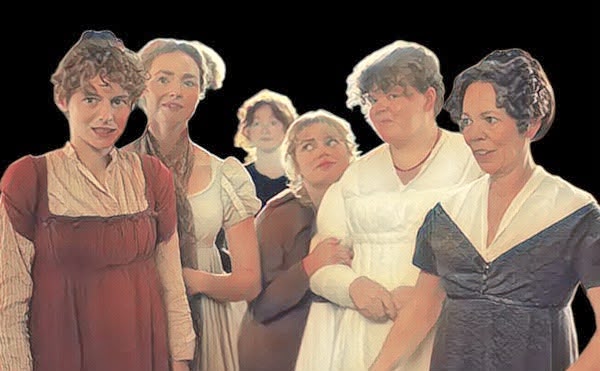
There is also greater diversity in body types among the Bennet sisters, including a character whose figure differs from the slender ideal so frequently associated with heroines in period dramas. These are subtle choices, but they signal a desire to update the visual representation of the society portrayed in the novel.
Naturally, such changes do not guarantee a better or worse adaptation. What matters is that they do not become more important than the social relationships, economic conflicts, and prejudices that sustain the narrative. Austen was a merciless observer of the hierarchies of her time, and a more diverse cast may open interesting possibilities, provided the series does not attempt to transform a profoundly unequal society into a contemporary fantasy of inclusion without consequences.
Has Netflix Understood Jane Austen?
Dolly Alderton, who wrote the six episodes, has said that she intends to remain faithful to the novel while taking advantage of the miniseries format to develop characters and storylines that often receive less attention in previous adaptations. Directed by Euros Lyn, the series is scheduled to premiere on December 3.
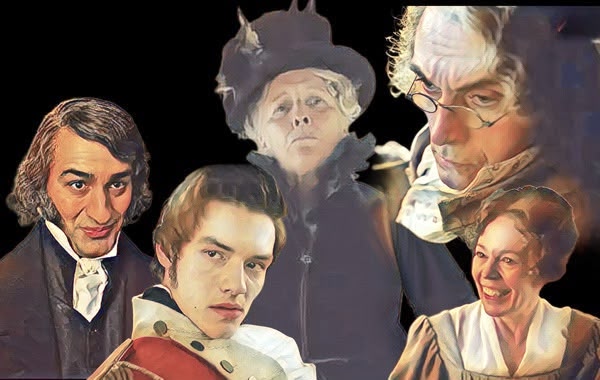
It is an interesting promise, particularly because Pride and Prejudice is not simply about the relationship between Elizabeth and Darcy. There is an entire society surrounding them, with its ambitions, frustrations, petty cruelties, and strategies for survival. Wickham’s opportunism, Lady Catherine’s arrogance, Mr. Collins’s sycophancy, and even Jane’s passivity are essential parts of the story.
The casting of Fiona Shaw as Lady Catherine and Louis Partridge as Wickham also raises expectations. Shaw has the commanding presence required to portray a woman utterly convinced of her own superiority, while Partridge possesses the youthful charm essential to a character whose pleasant appearance conceals considerably less admirable intentions.
The trailer, naturally, prefers to sell the romance. And there is nothing wrong with that. The cinematography is gorgeous, the costumes are beautiful, and the tension between the protagonists appears carefully constructed. But the question remains: how can another adaptation justify its existence when the story has already received such memorable interpretations?
The 1995 miniseries had the time to develop Austen’s social irony, while the 2005 film turned the romance into an almost overwhelming cinematic experience. Netflix seems determined to bring these two qualities together, adding a contemporary sensibility to its portrayal of the characters.
It could work beautifully. Visually, at least, the production has already won me over. Olivia Colman promises to be irresistible, and Emma Corrin may be about to deliver a memorable Elizabeth Bennet. As for Jack Lowden, I remain curious to discover whether his Darcy can finally step out of the shadows of Firth and Macfadyen.
After all, Pride and Prejudice is not merely the story of two people who fall in love despite their differences. It is the story of two intelligent people who must discover just how wrong they have been about themselves and the world.
And that remains Jane Austen’s true genius: making readers fall in love while dismantling, with extraordinary irony, everything we think we know about love.
Descubra mais sobre
Assine para receber nossas notícias mais recentes por e-mail.

