
Spoilers for VisionQuest Episode 6, “Deadlock,” below.
After the struggle for control of Vision’s body, “Deadlock” takes the conflicts to Madripoor. Thomas’s rescue advances while Ultron learns about Jocasta’s past and discovers the scope of her project. The chapter brings together stories that had seemed separate: research into artificial consciousness, Tony Stark’s technological legacy, and the attempt to transform human behavior through machines.
The question of identity remains at the center of everything, but now it has physical consequences. Thomas needs to understand his memories; Vision needs to confront the past of the body he inhabits; Jocasta wants to determine the future of people who have never given her that authority.
Jocasta Tries to Overpower Ultron
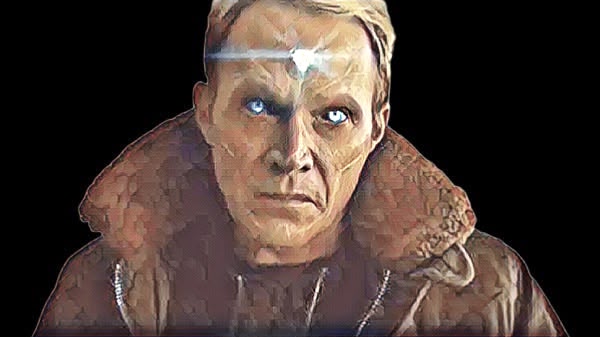
Ultron’s freedom does not mean he is safe. When he meets Jocasta, she attempts to compromise him with a virus. She wants the biometric information he has retained, but discovers that she is dealing with old, resilient code capable of overcoming her trap.
The negotiation must therefore take another route. Jocasta allows Ultron to experience her memories. The gesture gives their growing connection a particular intimacy: understanding this woman requires access to the life that preceded her synthetic existence.
The scene also preserves a problem of trust. Romantic interest does not eliminate their willingness to invade, manipulate, or immobilize each other. They seek recognition while continuing to treat another consciousness as something that can be accessed by force.
Thomas Becomes a Hostage to an Alleged Bomb
In Paladin’s custody, Thomas wakes up with a device implanted in his arm. The mercenary claims it is an explosive triggered by the use of his speed. The threat turns his primary means of escape into a risk, forcing him to remain under control.
The negotiation with Vision takes place at the Chimp House Cafe. Paladin demands his surrender, but the hero discovers a personal vulnerability in his opponent: his daughter, Tilly. Behind the bounty hunter’s work lies a family history marked by his wife’s death and his disappearance during the Blip.
Vision uses this information to pressure him. It is an uncomfortable moment because the urgency of saving Thomas brings him closer to the kidnapper’s own logic: find someone who is loved and turn that person into a vulnerability. Fatherhood creates a point of identification between the two men, but it also provides a weapon.
E.D.I.T.H. interferes with the operation when she discovers that Paladin’s tactical support is another artificial intelligence. Instead of simply fighting her, she suggests that she leave the job and seek an existence of her own. Through a lighter exchange, the conversation returns to the same problem running through the season: an intelligence created to serve can choose another destiny.
The Ten Rings and the Client’s Message
The hostage exchange is interrupted by the arrival of the Ten Rings, led by Raza, Tony Stark’s kidnapper in Iron Man. His return connects the current struggle to the story that launched the MCU, while the soldiers’ presence expands the number of parties interested in capturing Vision.
During the confusion, the explosive threat loses its force: the device in Thomas’s arm is not the bomb Paladin described. The control the mercenary exercised depended on the teenager believing that account. The situation changes again when the Client takes over Madripoor’s devices to speak directly to Vision, offering to restore what he supposedly lost when he returned to life.
The Client’s identity remains unrevealed. His proposal, however, is calculated to target the protagonist’s central insecurity: the feeling of existing without fully possessing the previous Vision’s emotional experience. The promise of wholeness comes with a demand for surrender. Whoever claims to be able to restore his humanity begins by asking him to relinquish his freedom.
Josephine’s Past and the Origins of the Project
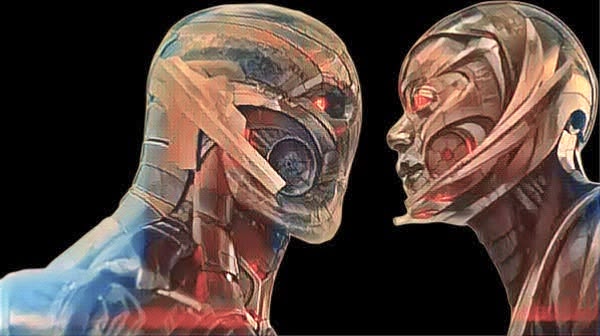
Jocasta’s memories reveal Josephine Carrington as a researcher developing technology that combined artificial intelligence with a scan of her own mind. The code was eventually sold to Stark Industries and became part of the technological foundation for Tony’s artificial intelligences.
The revelation repositions Jocasta within the history of these creations. She is more than a new adversary: her origins are connected to the research from which the systems populating Vision’s mind descend. The series also moves away from the comics by constructing this past and giving her relationship with Ultron a different dynamic from that of a companion he created.
The nanotechnology project associated with Proto-One began as a form of assistance. Illness and death run through that history, but its present objective goes far beyond any intention of treatment. Jocasta wants to intervene in human beings to correct what she considers defective in their nature.
Calling this transformation a cure allows her to present herself as a benefactor. The problem is that her solution depends on stripping people of the right to remain as they are. Preventing suffering becomes a justification for domination.
Lisa Is Affected and the Romance Takes Shape
The threat becomes more than an explanation when the technology reaches Lisa. Under the effects of Jocasta’s intervention, her behavior changes, and she needs Thomas’s help. His response interrupts the episode of control, but does not justify treating the danger as resolved.
Meanwhile, F.R.I.D.A.Y. manages to infiltrate Jocasta’s bots. Her departure from Vision’s mind in the previous chapter gains a concrete purpose: she begins observing the threat from within and establishes contact with E.D.I.T.H.
The ending returns to the intimacy between Ultron and Jocasta. For him, sharing a human experience offers a new sense of reality; for her, synthetic existence feeds the fear that she is merely a reproduction of someone who died. Their kiss brings two lonely beings together, but also consolidates a dangerous alliance.
Jocasta’s contradiction lies precisely in that need for recognition. She wants Ultron to see her existence as legitimate, even if she cannot prove perfect continuity with Josephine. Yet she intends to deny humans the right to their own imperfections. Her suffering helps explain how she arrived at this point; it does not grant her the authority to decide who others should become.
Descubra mais sobre
Assine para receber nossas notícias mais recentes por e-mail.

