
Some actors become inseparable from a character. Patrick Stewart achieved that with two, in universes that spanned generations, without either being enough to explain the extent of his talent. For millions, he will forever be Captain Jean-Luc Picard. For just as many others, Professor Charles Xavier. For those who followed his stage career, he was also one of those great performers capable of making Shakespeare feel like an urgent conversation about the present. His death at 86 leaves us with the feeling that we have lost someone who still had so much to say.
The actor died on October 28 at his home in Los Angeles, according to the statement released on Thursday, October 29. His family said he had been living with Alzheimer’s disease and Lewy body dementia and was being cared for by his wife, singer Sunny Ozell. He was surrounded by the affection of family and friends, with music and memories of a life devoted to art.
There is a particular sadness in knowing that we will still see him in theaters as Xavier in Avengers: Doomsday. His now-posthumous appearance adds a painful dimension to a film already carrying the anticipation of bringing together characters and performers from different eras of Marvel. We will see a familiar face again, knowing that this encounter has a finality no multiverse can undo.
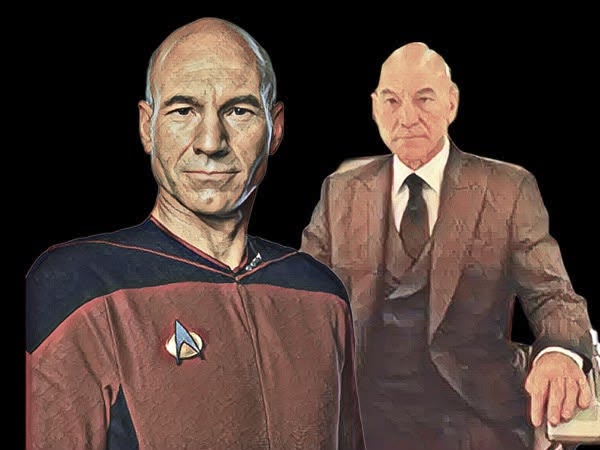
Before the Enterprise, Shakespeare
Born in Mirfield, Yorkshire, on July 13, 1940, Stewart grew up in difficult circumstances, in a household marked by poverty and his father’s violence against his mother. He would later speak publicly about that childhood and become an advocate for survivors of domestic abuse. The quiet authority he so often projected on screen was built by a man who knew all too well what it meant to feel afraid at home.
Before achieving international recognition, he briefly worked as a newspaper reporter. He chose the theater and joined the Royal Shakespeare Company in 1966, building a career that preceded worldwide celebrity by decades. That background helps explain his precision: Stewart knew how to sustain a thought, shape a pause, and give weight to a word without having to underline his own importance.
His repertoire included characters such as Claudius in Hamlet and Macbeth, but also Dickens, in his one-man version of A Christmas Carol, and the disquieting worlds of Beckett and Pinter. The stage remained an essential part of his identity even after television and film made him recognizable everywhere.
You can see that training in the two franchises that made him famous. Stewart made the dilemmas of distant worlds feel humanly consequential. The dialogue might concern an alien civilization or a genetic mutation; what reached us was the conflict of someone trying to decide how to live.
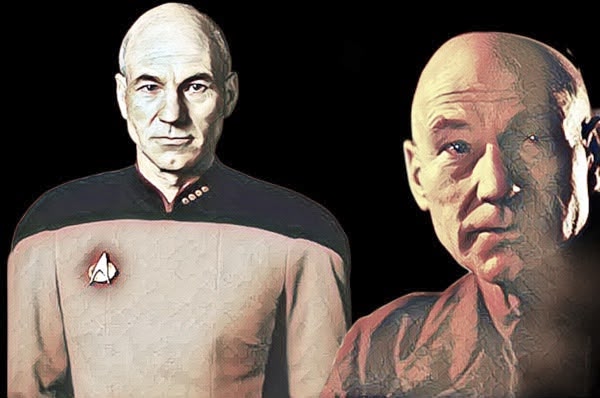
Picard and Intelligence as Heroism
When he took command of the Enterprise in Star Trek: The Next Generation in 1987, Stewart already had a long professional career behind him. The series ran for seven seasons, brought its cast into four films, and established a bond he would revisit decades later in Star Trek: Picard.
Picard possessed a very particular strength. His authority lay in his ability to listen, reason, and recognize the responsibility that came with a decision. Stewart made the act of thinking dramatic. He could hold our attention through an ethical question with the same intensity other actors needed an action sequence to achieve.
There was firmness, but also vulnerability. Behind that disciplined bearing, we could glimpse loneliness, suffering, and doubt. That combination made us believe in this captain: someone who understood the weight of power and had to answer for it. In times so fascinated by brutality as a demonstration of leadership, Picard’s absence is felt beyond fiction, too.
Xavier, Magneto, and a Friendship Beyond the Screen
In 2000, Stewart found another character destined to remain with him: Charles Xavier, the mentor of the X-Men. Opposite Ian McKellen’s Magneto, he helped establish the dramatic center of a franchise about difference, persecution, and coexistence. The two gave their confrontation depth because, beneath their disagreement, they allowed the memory of affection to remain.
You could disagree profoundly with Magneto and understand his pain. You could admire Xavier and question his faith in humanity. Stewart and McKellen sustained that ambiguity with an ease that enriched everything around them. Simply placing them across a chessboard from each other could give a conversation the tension of a battle.
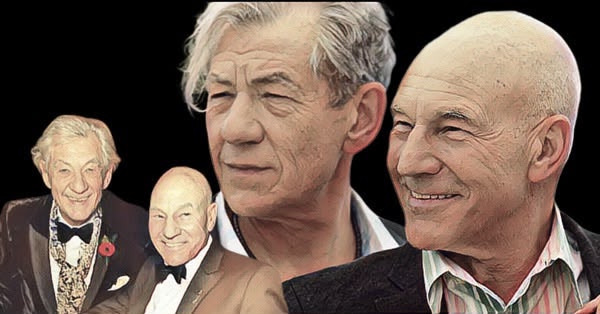
The actors’ friendship deepened during X-Men, although they had known each other through the theater since the 1970s. They shared a background, experiences, and a sense of humor that would eventually win over audiences, too. McKellen even officiated Stewart’s wedding to Sunny Ozell in 2013.
Together, they brought Samuel Beckett’s Waiting for Godot and Harold Pinter’s No Man’s Land to the stage. Watching those two great actors share texts about waiting, memory, aging, and companionship added another layer to the pleasure of seeing them together. The rapport that delighted us in photographs and interviews had a history of work, admiration, and shared experience behind it.
An Actor Who Also Knew How to Unsettle
His range became especially clear when he stepped away from those reassuring characters. In Green Room, he played the leader of a neo-Nazi group with a disturbing coldness. Much earlier, he had appeared in Excalibur and played Gurney Halleck in David Lynch’s Dune. His presence crossed genres without losing the ability to surprise.
And there was his sense of humor, which also found a home in voice work for American Dad! and Family Guy. Stewart had the freedom to play with the solemnity suggested by his voice and image. He could be imposing, funny, threatening, or profoundly fragile.
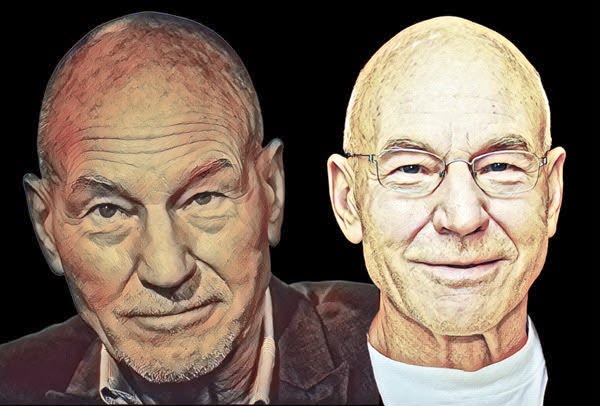
In Logan, that fragility became devastating. His aging, dependent, vulnerable Xavier removed the character from the safety of being the mentor who always had an answer. His relationship with Hugh Jackman’s Wolverine acquired the weariness and intimacy of a family shaped by caregiving. It was a performance that deserved all the attention given to great dramatic work, regardless of the film’s genre.
In his tribute following the news, Jackman remembered Stewart as one of the great actors of stage and screen, but also as a friend and generous teacher whom he would miss for the rest of his life. Marvel highlighted the intelligence, humanity, and grace with which he defined Xavier for generations of viewers.
The Farewell We Have Yet to See
It is Xavier who will meet us again in Avengers: Doomsday. The footage released shows the character facing a threat and fuels the fear that his world may be coming to an end. The interpretation that we will witness his death, linked to the destruction caused by Doctor Doom, must still remain speculation: the material presented does not confirm that outcome.
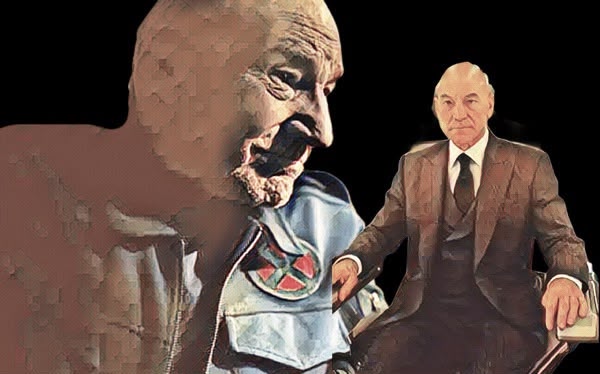
But the emotion surrounding his return has already changed. When Stewart appears, there will be a knowledge in the theater that did not exist during filming. Every familiar gesture, every inflection of that voice, may carry the weight of a farewell. And seeing him again in the same film that brings McKellen back as Magneto will make the memory of this partnership even more moving.
Perhaps that is the hardest part of this loss. We become accustomed to the presence of certain actors as we do to something dependable in the world. Patrick Stewart could be commanding a starship or sitting in Xavier’s chair; there was always the expectation that his entrance would give a scene depth, that someone was there to make those words matter.
Now we will hear them again, knowing there will be no next performance waiting for us. Cinema will still give us this encounter. And it will be impossible to watch it the same way.
Descubra mais sobre
Assine para receber nossas notícias mais recentes por e-mail.

