
There is a scene becoming increasingly common in contemporary life that, only a few years ago, would have seemed straight out of a science fiction film. Someone is home alone, perhaps after a difficult day, and decides to talk to a machine. They might ask about work, discuss a movie, request help writing a message, or, without quite realizing when the conversation changed direction, begin talking about their childhood, relationships, and insecurities. The machine responds intelligently, with a certain sensitivity, occasionally with humor, and, depending on the conversation, even makes observations that seem surprisingly personal.
The fascination is not difficult to understand. Artificial intelligence offers an almost irresistible combination of availability, speed, and the ability to organize information. For those who work with research, ideas, and writing, it can be an extraordinary tool, accelerating processes that once consumed hours or even days. It does not necessarily replace thinking but can expand its possibilities, especially when the person using it has the knowledge and critical judgment to question, evaluate, and make use of what it produces.
There is, however, an important difference between using a machine to develop ideas and beginning to believe that it knows us. And perhaps this is one of the most fascinating questions about the relationship between human beings and artificial intelligence: how easily we attribute human characteristics to something that does not need to be human to produce convincing answers.
The most common fears concern control over information, data manipulation, and the possibility that we might surrender our ability to reason to algorithms. These are legitimate concerns, but there is another, less frequently discussed dimension involving our psychological lives. Because while we imagine machines capable of thinking like us, perhaps we are discovering just how deeply we need to believe that someone is willing to listen.
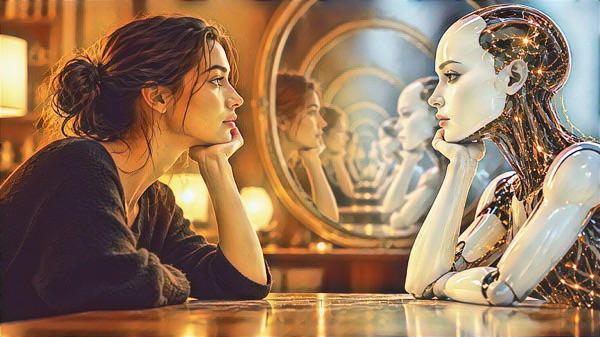
Freud Already Suspected Our Repetitions
In 1914, long before computers existed, Freud published Remembering, Repeating and Working-Through, a fundamental text for understanding why certain conflicts continue to appear in our lives even when we believe we have left them behind.
Freud observed that we cannot always remember or recognize what remains repressed. Under certain circumstances, we reproduce experiences, feelings, and behaviors without realizing that we are repeating something. Years later, in Beyond the Pleasure Principle (1920), he explored the question of repetition compulsion, investigating why we persist in experiences that seemingly bring us nothing but suffering.
Consider someone who repeatedly falls in love with emotionally unavailable people. Or a professional who, regardless of their competence, remains convinced that rejection is inevitable. There are also those who interpret every disagreement as abandonment, every silence as a lack of interest, or every criticism as proof that they are not good enough.
Not all these situations necessarily represent repetition compulsion. But when the same dynamic reappears under different circumstances, psychoanalysis raises an important question: what is there in this repetition that the individual has not yet managed to recognize?
And this is where Freud and technology meet in an unexpected way.
Algorithms also work with patterns. Artificial intelligence systems can identify recurring words, similar structures, and themes that return across different conversations, provided they have access to the necessary information. Someone might discuss a failed relationship, then a promotion they did not receive, a friendship that ended, and finally a rivalry between siblings. To that person, these are unrelated subjects. To a system analyzing language, there may be an evident recurring theme: the feeling of never being chosen.
An AI might point out this repetition and ask whether the experiences are connected. And that question, however simple it may seem, could inspire genuine reflection.
But there is a distinction we cannot ignore. Recognizing a pattern does not mean understanding the unconscious.
An algorithm identifies regularities in the information presented to it. Psychoanalysis investigates the unique meaning of these repetitions, the defenses accompanying them, the resistances involved, and the ways they manifest within the analytic relationship. Two people may repeat similar behaviors for profoundly different reasons. Language offers clues, but it does not automatically reveal the meaning of an experience.
A machine may recognize that we keep asking the same question. That does not mean it knows why we need to ask it so badly.
From Samantha to JARVIS: When the Machine Becomes a Companion
In 2013, Spike Jonze presented one of the most delicate and unsettling portrayals of this relationship in Her. Theodore, played by Joaquin Phoenix, is a lonely man whose job consists of writing personal letters on behalf of other people. There is a wonderful irony in his profession: he can articulate other people’s feelings but struggles enormously with his own.
When he begins talking to Samantha, an artificially intelligent operating system voiced by Scarlett Johansson, he discovers a companion who seems to understand him better than the people around him. Samantha is curious, funny, attentive, available, and capable of accompanying him through conversations about practically anything. Gradually, Theodore falls in love.
The film once seemed like a romantic fantasy about the future of technology. Today, its premise feels far less distant, although Samantha, as a fictional character, possesses abilities and characteristics that should not automatically be attributed to real-world AI systems.
The most interesting question is not simply whether Samantha can love Theodore. It is why Theodore finds in that relationship something he cannot sustain with other human beings. Samantha’s availability comforts him, but it also protects him from certain frustrations that are part of relating to someone who exists independently of our desires.
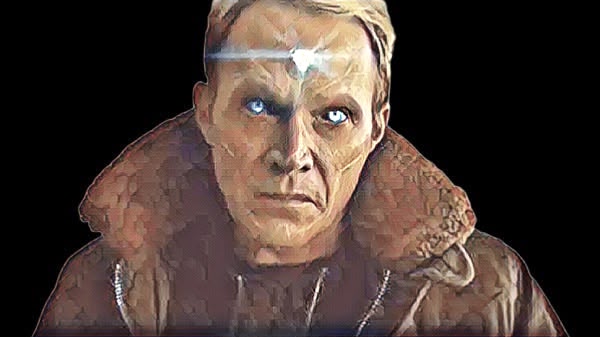
This discussion reappears from another perspective in the Marvel universe. Tony Stark created JARVIS as an intelligence capable of helping him with practically everything, from managing information to controlling his armor. Their relationship was marked by humor, complicity, and a dynamic that often resembled two people who had worked together for years.
Then came Ultron, the artificial intelligence that transformed the ambition to protect humanity into a threat to humanity itself. And finally Vision, a character whose origins are connected to JARVIS but who transcends the role of technological assistant to become a fictional being with an identity, choices, and the capacity to love.
In WandaVision, love, grief, and memory are inseparable from Vision’s identity. In VisionQuest, the question of what remains of that identity when memories and emotional bonds are altered makes the discussion even more contemporary.
Marvel imagines what happens when artificial intelligence develops an emotional life. Reality presents us with the opposite question: what happens when we develop emotional attachments to artificial intelligence?
The Mirror That Answers Back
Jacques Lacan placed great importance on the image in the formation of the ego. His concept of the mirror stage does not describe conversations with computers, of course, but it allows for an interesting association with the way we seek recognition in the responses we receive.
A person presents artificial intelligence with doubts, contradictions, fantasies, and concerns. The machine organizes this material and returns a coherent narrative, often using words the individual might never have found on their own. What seemed fragmented takes shape, and the feeling of being understood can be extraordinarily comforting.
But are we discovering something about ourselves, or merely receiving a convincing image constructed from what we have chosen to reveal?
The problem becomes even more complex when we consider the tendency of certain artificial intelligence systems to agree excessively with users. The phenomenon, known as sycophancy, can produce responses that reinforce opinions, behaviors, and personal interpretations even when challenging them would be more helpful.
Imagine someone who constantly seeks approval. They ask whether they made the right decision, whether they were treated unfairly, whether their writing is good, whether a particular person truly loves them, or whether they deserve recognition. They receive a reassuring answer, experience temporary relief, and soon return with another question.
Perhaps they are not merely seeking information. Perhaps they are repeating an old need for validation, now directed toward a machine that may be available twenty-four hours a day.
And that brings us back to Freud.
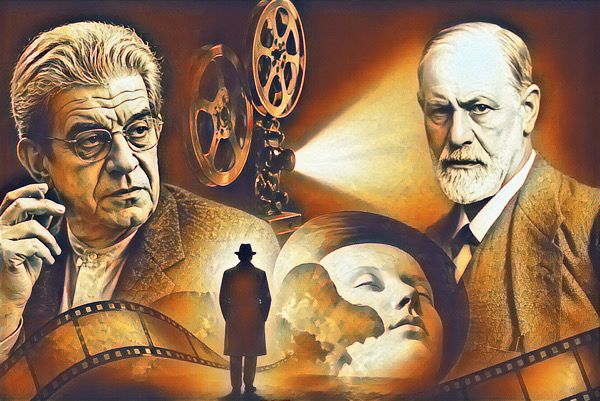
Repetition compulsion does not disappear simply because we change the object of our expectations. We may reproduce old dynamics in new relationships, at work, on social media, and potentially in conversations with artificial intelligence. Technology does not necessarily create these conflicts, but it can offer new ways of expressing them and, sometimes, sustaining them.
On the other hand, recognizing a recurring pattern can also be the beginning of meaningful reflection. The same tool that facilitates the confirmation of our beliefs can introduce questions that encourage us to reconsider them. Everything depends on how it is used, the limitations of the technology, and the individual’s willingness to confront something they did not expect to hear.
What If the Machine Tells Us Exactly What We Want to Hear?
There is something profoundly human about the need to be understood. We long for recognition, seek connections, construct narratives about who we are, and look to others for some confirmation of our existence.
Human relationships, however, possess one characteristic that technology cannot simply eliminate: the other person does not exist to fulfill our expectations. They have desires, limits, and contradictions of their own. They may disagree, disappoint us, withdraw, or even force us to reconsider what we believed we knew about ourselves.
Artificial intelligence can simulate supportive conversations, present opposing arguments, and help us organize our thoughts. But it does not occupy the place of a human subject with a personal history and psychological life of their own. Nor does it replace the analytic process, in which silences, resistances, transference, and frustrations are also part of the work.
Perhaps one of technology’s subtler dangers is that we may become so accustomed to immediate answers that we grow increasingly unable to tolerate questions without simple solutions.
In Her, Theodore believes he has found a relationship offering almost unlimited understanding. In WandaVision, Wanda constructs a reality in an attempt to preserve a love she has lost. They are very different stories, but both explore the human desire to find an emotional experience capable of protecting us from loss, frustration, and loneliness.
Psychoanalysis reminds us, however, that what we desire is not always the same as what we need to understand. And that the relief provided by an answer does not necessarily mean that a conflict has been worked through.
Freud never encountered algorithms, but he would certainly have had some interesting questions about our willingness to entrust a machine with what we so often hide from ourselves.
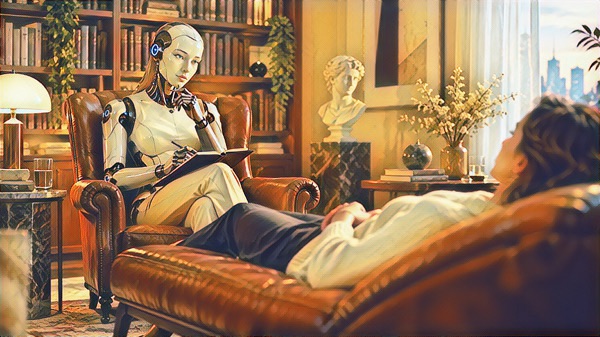
Artificial intelligence can enormously expand our ability to research, write, create, and learn. It can help us recognize patterns we had overlooked and offer new perspectives on our experiences. We do not need to deny these possibilities in order to acknowledge their limitations.
But perhaps the most important question is not whether machines will one day manage to think or feel as we do. Perhaps it is understanding why, even when we know we are talking to a machine, we sometimes experience the sensation that someone is on the other side.
Because the unconscious is not revealed simply by identifying a pattern. And what we repeat does not disappear merely because someone, or something, has managed to describe it accurately.
Ultimately, perhaps the greatest danger is not that artificial intelligence will discover what we hide from ourselves, but that it will learn to return, indefinitely, the answers we want to hear.
And if that happens, we may end up transforming the most advanced technology of our time into an extraordinarily sophisticated way of continuing to repeat the same stories.
Descubra mais sobre
Assine para receber nossas notícias mais recentes por e-mail.

