
Witches have always been among the most fascinating characters in fiction. Long before superheroes, major fantasy franchises, and shared cinematic universes, they dominated stories in which magic, desire, revenge, and power went hand in hand. Some were born villains; others became heroines. And then some never bothered choosing a side. Let’s face it, they are often the most interesting ones.
Movies and television helped transform the image of the witch. From the terrifying old woman of fairy tales to the independent woman who commands extraordinary forces, the sorceress evolved from a mere threat into a symbol of knowledge, autonomy, and resistance. But that does not mean they have all become models of virtue. Fortunately, some remain delightfully wicked.
For this Halloween, I decided to bring together 20 of the most powerful witches in movies, television, and animation. This is not a mathematical competition to determine who would win a magical duel. After all, comparing Wanda Maximoff’s powers with those of Maleficent or a witch from the Harry Potter universe would be nearly impossible. The selection considers the extent of their abilities, the influence they exercise within their respective worlds, and, above all, their importance in pop culture.
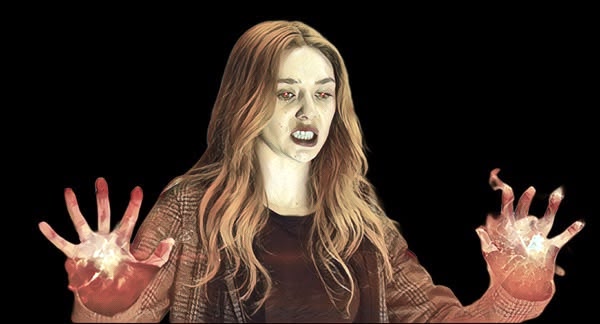
1. Wanda Maximoff — The Scarlet Witch
Marvel: WandaVision and Doctor Strange in the Multiverse of Madness
Elizabeth Olsen transformed Wanda Maximoff into one of the most complex characters in the Marvel Cinematic Universe. The Scarlet Witch does not merely manipulate energy and matter; she can alter reality itself. In WandaVision, her grief traps an entire town inside a domestic fantasy. It is an extraordinary power, but also a terribly destructive one.
Wanda takes first place because her magic transcends the traditional boundaries of witchcraft. She can rewrite the world around her. And perhaps her greatest tragedy is that she cannot control her own emotions, even though she can transform almost everything that exists.
2. Maleficent — The Power of a Rejected Woman
Sleeping Beauty and Maleficent
Few characters are so instantly recognizable. The Maleficent of 1959 established one of the definitive models of the powerful sorceress: elegant, threatening, resentful, and capable of casting a curse that not even the fairies can completely undo.
Her transformation into a dragon remains one of the most impressive displays of power in classic animation. Decades later, Angelina Jolie brought new dimensions to the character, transforming an absolute villain into a figure shaped by betrayal and loss. The power remained; the meaning of evil changed.
3. Jadis — The White Witch
The Chronicles of Narnia
Played by Tilda Swinton, Jadis is one of the great sorceresses of literary and cinematic fantasy. Her ability to plunge Narnia into a seemingly endless winter demonstrates magical dominance that extends far beyond individual spells.
She rules through fear, seduction, and the promise of power. Cold, calculating, and authoritarian, she represents a form of magic that seeks not balance but submission. There is something profoundly terrifying about a woman capable of turning an entire world into a frozen kingdom.
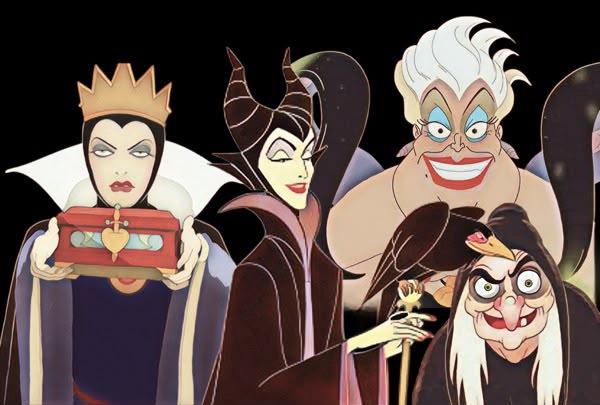
4. Willow Rosenberg — The Witch Who Almost Destroyed the World
Buffy the Vampire Slayer
Willow began as Buffy Summers’ shy, intelligent, and insecure friend. Gradually, however, her talent for magic grew until she became one of the most powerful beings in that universe.
The character’s evolution, portrayed by Alyson Hannigan, is one of television fantasy’s finest explorations of female power. When grief and rage take control, Dark Willow becomes a global threat. Her story reveals something essential: possessing extraordinary powers does not necessarily mean having the emotional maturity to manage them.
5. Yubaba — The Witch of Contracts
Spirited Away
Hayao Miyazaki created one of animation’s most extraordinary witches. Yubaba runs a bathhouse for spirits, controls her workers through magical contracts, and can take away their names, altering the identities of those under her authority.
Her power does not depend solely on spectacular spells. It lies in her ability to control rules, relationships, and destinies. Yubaba is frightening because she understands the strength of the structures she commands. And because, even in a universe filled with fantastic creatures, she exercises a very recognizable kind of authority.
6. Sabrina Spellman — The Witch Between Two Worlds
Sabrina the Teenage Witch and Chilling Adventures of Sabrina
Few witches have enjoyed so many lives in pop culture. From Melissa Joan Hart’s funny, awkward teenage Sabrina to the darker version portrayed by Kiernan Shipka, the character has crossed generations and different ways of representing witchcraft.
In Netflix’s reinterpretation, Sabrina confronts demons, supernatural entities, power struggles, and choices with consequences that reach far beyond her own existence. Her defining characteristic, however, remains the conflict between two worlds: the human and the magical. She wants to belong to both without surrendering her identity.
7. Agatha Harkness — The Survivor
WandaVision and Agatha All Along
Kathryn Hahn achieved something rare: turning an antagonist into an even more interesting protagonist. Agatha Harkness is powerful, manipulative, sarcastic, and profoundly aware of her abilities.
Her magic involves absorbing powers, mastering ancient spells, and demonstrating an extraordinary ability to survive the consequences of her own choices. But Agatha stands out above all for her intelligence. She understands other people’s desires and vulnerabilities and knows how to exploit them. Her strength lies not only in magic but in the experience of someone who has spent centuries learning how to play the game.

8. Cordelia Goode — The Supreme
American Horror Story: Coven and Apocalypse
Played by Sarah Paulson, Cordelia begins as an insecure woman frequently diminished by her own mother, Fiona Goode. Her transformation into the Supreme reveals one of the most interesting character journeys in American Horror Story.
Cordelia develops the exceptional powers associated with leading her coven, but her greatness extends beyond supernatural abilities. Unlike Fiona, she learns that exercising power does not have to mean destroying those around her. She is a witch whose true strength also lies in her capacity to protect.
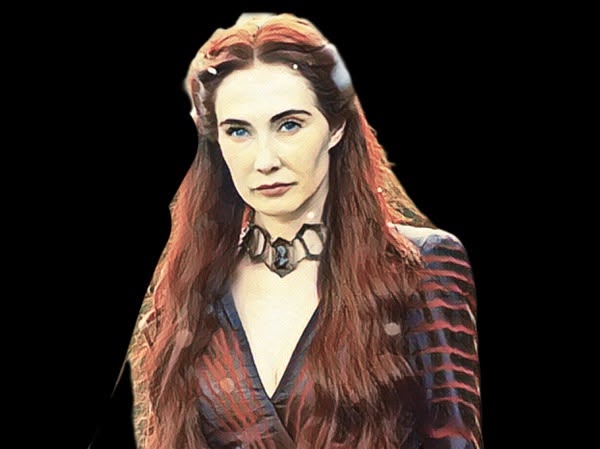
9. Melisandre — The Red Woman
Game of Thrones
Melisandre, played by Carice van Houten, is a priestess whose magic is deeply connected to religion, faith, and the interpretation of prophecy. She can give birth to an assassin made of shadow, manipulate appearances, and perform rituals capable of defying death.
She is also one of the most dangerous characters precisely because she believes her actions serve a higher purpose. Her magical power is extraordinary, but her conviction can be even more frightening. Melisandre demonstrates how absolute certainty can transform faith into an instrument of violence.
10. Yennefer of Vengerberg — The Price of Power
The Witcher
Yennefer is one of the most formidable sorceresses on the Continent. She masters different forms of magic, participates in political conflicts, and demonstrates a devastating ability to manipulate energy.
But her story is also defined by the price she pays to achieve beauty, influence, and recognition. The version played by Anya Chalotra brings questions of identity, autonomy, and motherhood to the forefront. Yennefer wants power, but she does not want it to determine entirely who she must become.
11. The Halliwell Sisters — The Power of Three
Charmed
Prue, Piper, Phoebe, and, later, Paige Halliwell turned Charmed into one of television’s greatest fantasy phenomena. Individually, each possesses extraordinary abilities, including telekinesis, molecular immobilization, premonitions, empathy, and magical teleportation. Together, however, they achieve something far greater.
The Power of Three is the essence of the series. Their strength lies in family unity, ancestry, and the ability to confront demons and supernatural threats that none of them could defeat alone. Charmed was also important for presenting witches who worked, fell in love, argued, suffered, and tried to balance everyday responsibilities with the obligation to save the world. Perhaps that is precisely why they remain so beloved. The magic was extraordinary, but the relationship between the sisters was always the true heart of the story.
12. Samantha Stephens — The Witch Who Could Do Anything
Bewitched
Elizabeth Montgomery created one of television’s most beloved witches. Samantha could transform objects, alter situations, and solve practically any problem with a simple twitch of her nose.
And what did she do with all that power? She tried to live as a conventional American housewife, frequently accommodating her husband’s wish that she refrain from using magic. Viewed today, Bewitched offers a delightful examination of female roles in the 1960s. Samantha may simply have been too powerful for that model of marriage. And that was always the show’s true conflict.
13. Ursula — The Sorceress of Desire
The Little Mermaid
Ursula is one of Disney’s greatest villains. She does not need to control an entire kingdom to exercise her influence. All she needs is to understand what others desire and offer them a seemingly irresistible contract.
Her magic allows her to transform, imprison, and manipulate others. And when she gains possession of King Triton’s trident, she acquires an even more threatening level of power. But it is her perverse emotional intelligence that makes Ursula so memorable. She knows exactly what Ariel wants and how much the young mermaid is willing to sacrifice to obtain it.
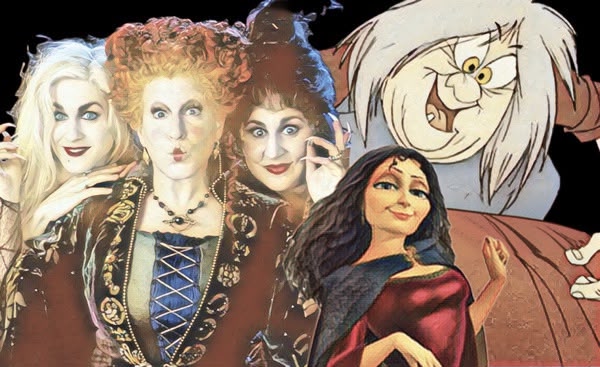
14. Winifred Sanderson — The Leader of the Sisters
Hocus Pocus
Bette Midler turned Winifred into one of cinema’s most entertaining witches. Authoritarian, vain, and extraordinarily temperamental, she leads the Sanderson sisters with a combination of cruelty and humor.
Winifred masters spells, possesses an extraordinary magical book, and manages to return centuries after her death through witchcraft. Her main objective is to regain her youth, even if that means sacrificing children. Not particularly charming, obviously. But few villains manage to be so frightening and so funny at the same time.
15. Hermione Granger — Intelligence as Magic
Harry Potter
Hermione was not born into a traditional wizarding family, but she became one of Hogwarts’ most brilliant students. Her ability to master complex spells, understand magical theories, and improvise solutions in extreme situations frequently surpasses that of far more experienced characters.
Played by Emma Watson, Hermione demonstrates that knowledge is also power. Her magic does not depend on prophecies or extraordinary bloodlines. It depends on study, discipline, curiosity, and courage. And that makes her one of the most important witches of her generation.
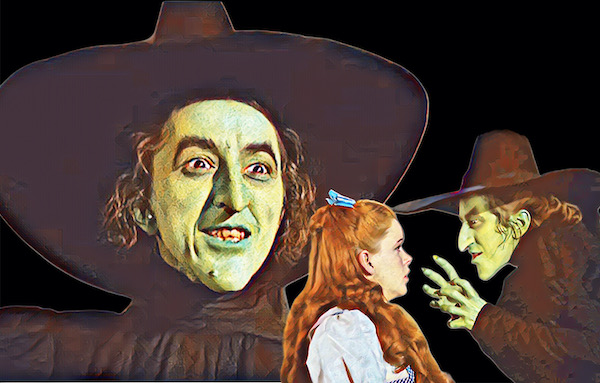
16. The Wicked Witch of the West — The Original Archetype
The Wizard of Oz
The character played by Margaret Hamilton in 1939 helped define the cinematic image of a witch: green skin, a pointed hat, a flying broomstick, and an unforgettable cackle.
Her power involves spells, surveillance, creatures under her command, and the ability to terrorize Oz. But her importance extends beyond supernatural abilities. She became a visual and cultural archetype.
With Wicked, her story acquired new interpretations, particularly through Elphaba. The woman we were taught to fear came to be seen as misunderstood, persecuted, and transformed into a public enemy. One of pop culture’s most fascinating reversals.
17. Morgan le Fay — The Sorceress of Arthurian Legend
The Different Adaptations of Camelot
Before many of contemporary fantasy’s great sorceresses, there was Morgan le Fay. Present in Arthurian legends and reinterpreted countless times in movies and television, she is a figure associated with magical knowledge, ambition, and power struggles in Camelot.
Her abilities vary depending on the adaptation, but include enchantments, illusions, and the manipulation of supernatural forces. Morgan deserves a place on this list not only because of what she can do, but because of the influence her image has exerted on virtually every great sorceress who followed.
18. Fiona Goode — Power as Obsession
American Horror Story: Coven
Jessica Lange transformed Fiona Goode into one of television horror’s great female characters. The Supreme of the New Orleans coven, Fiona possesses exceptional magical abilities, but her true obsession is preventing her own power from fading.
The possibility of aging, dying, and being replaced is intolerable to her. Fiona is almost a contemporary descendant of the Evil Queen from Snow White. Her vanity and fear of loss are mixed with cruelty, humor, and an irresistible presence. A character who dominates every scene.
19. Regina Mills — The Evil Queen Who Found Another Story
Once Upon a Time
Played by Lana Parrilla, Regina Mills begins as a version of the Evil Queen from fairy tales, but develops a far more complex journey throughout the series.
She can cast powerful curses, manipulate memories, and alter the destinies of entire communities. Yet her transformation is the most interesting aspect of the character. Regina demonstrates that power does not have to remain forever associated with revenge. Her journey toward redemption does not erase the past, but allows her to choose a different future.
20. The Grand High Witch — Terror Behind an Elegant Appearance
The Witches
Anjelica Huston created one of children’s cinema’s most terrifying figures in 1990. The Grand High Witch leads an organization dedicated to destroying children, concealing her monstrous appearance beneath a sophisticated exterior.
Her powers include transformations, potions, and a particularly cruel form of magic, especially frightening to young audiences. The version played by Anne Hathaway in 2020 revisited the character, but Huston’s performance remains an absolute benchmark of family horror. That transformation is impossible to forget.
And What About the Owens Sisters?
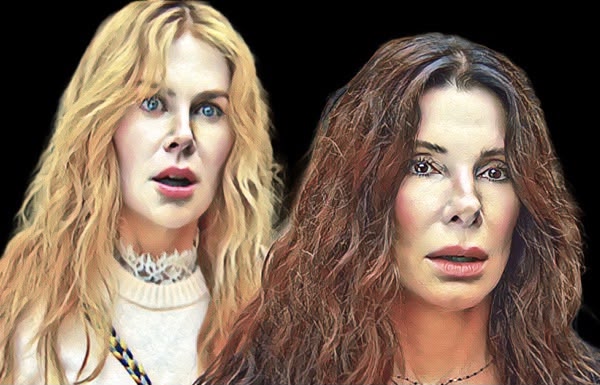
It is impossible to discuss cinema’s great witches without remembering Sally and Gillian Owens from Practical Magic. Sandra Bullock and Nicole Kidman play two sisters whose magical heritage is deeply connected to family relationships, love, and the threat of losing those they care about.
But the Owens sisters’ strength does not necessarily lie in the supernatural extent of their powers. It lies in their unity, complicity, and ability to break a cycle of suffering. That is why they deserve an examination of their own, separate from a ranking based on magical strength.
After All, Who Is the Most Powerful Witch?
The answer depends on what we mean by power. Wanda Maximoff can alter reality. Maleficent can curse generations. Jadis controls a frozen kingdom. Willow nearly destroyed the world. The Halliwell sisters multiply their abilities when they stand together. And Samantha Stephens could solve practically any problem with a simple twitch of her nose.
But perhaps the most fascinating aspect of these characters is precisely the different ways in which they relate to power.
Some desire it because they are afraid of losing it. Others because they were never allowed to exercise it. Some use it to protect, others to destroy, and still others simply to survive. And then some discover, too late, that controlling magic is far easier than controlling their own emotions.
For centuries, stories taught us that powerful women should be feared. Movies and television transformed that threat into spectacle, fantasy, and, increasingly, identification.
Today, witches do not necessarily have to be good to earn our admiration. They can be ambitious, contradictory, selfish, generous, funny, or terrible.
And perhaps that is the greatest magic of all: finally being allowed to be characters as complex as any hero.
Happy Halloween!
Descubra mais sobre
Assine para receber nossas notícias mais recentes por e-mail.

