
Revenge stories usually leave one question until after the credits: what happens to the man who has managed to kill all his enemies? His family is still dead, his friends do not return, and violence, however effective, does not necessarily give him a reason to get out of bed the next morning. It is from this uncomfortable place that the second season of The Terminal List, on Prime Video, resumes James Reece’s story.
Based on Jack Carr’s True Believer, the continuation expands the narrative’s scope, drawing Chris Pratt’s character into an international conspiracy. But its starting point remains intimate: after crossing off the names of those responsible for destroying his life, Reece must discover whether he still wants to take part in it.
Spoilers for both seasons and Dark Wolf follow.
A survivor who still does not know how to live
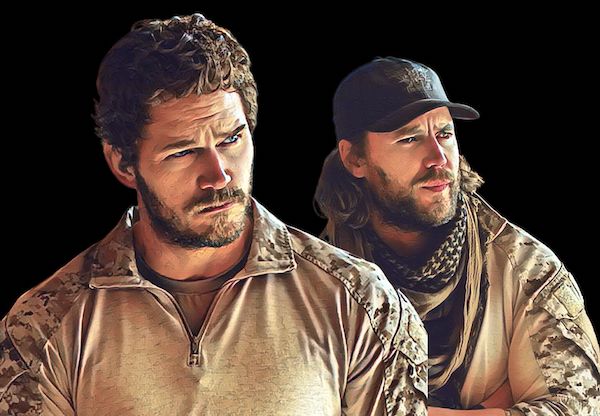
Chris Pratt returns older, embittered, and more intense, with no opportunity to revisit the comic streak that helped make him a star. James Reece seems to carry in his body the effort of continuing to exist after losing everything. Pratt is convincing as this hero tormented by longing, guilt, anguish, and trauma, still trying to find some reason to keep going.
The opening at sea gives that condition a physical form. Isolated, ill, and accompanied by hallucinations of Ben Edwards, Reece has not left the first season behind. He killed his friend after discovering his involvement in the conspiracy, but executing the last name on the list did not end that relationship. Ben remains present as a wound revenge could not heal. thecinemaholic.com
The time in Mozambique offers a different possibility. At the Hastings family’s reserve, there is a routine connected to the land, the animals, and conservation. For a while, we can imagine his discipline and skills finding a purpose beyond eliminating people. It is an important pause because it allows us to see how much of this man still exists outside combat.
Naturally, the series needs to put him back into action. The CIA approaches him with an offer combining a presidential pardon, treatment for his tumor, and a new mission. The opportunity to survive comes with the obligation to become useful to the institution again.
That negotiation captures one of the season’s most interesting contradictions. Reece is presented as an independent man capable of challenging any structure, but his freedom remains constrained by those who control the resources he needs. Even the possibility of caring for his own body becomes part of the bargain.
Raife Hastings and the path Ben did not choose
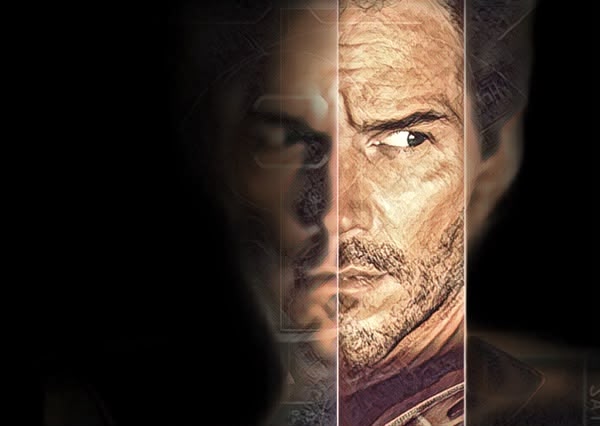
This is where Raife Hastings, played by Tom Hopper, becomes important beyond being another capable fighter. Those who watched Dark Wolf know the bond between him and Ben Edwards, and the rupture that sent them down different paths. Raife steps away from that world, while Ben eventually returns to the CIA, unable to imagine a civilian existence.
The second season uses that history to give Reece a friendship shaped by a different understanding of loyalty. Raife also knows the violence, the secrets, and the justifications used by men convinced they are carrying out a necessary mission. His experience allows him to recognize the cost of those choices.
That does not make him a pacifist or place him outside the franchise’s contradictions. His work in security and weapons becomes part of the investigation when his company’s equipment turns up in terrorist hands. Trying to build a life outside covert operations does not shield him from the consequences of that business.
Raife thus serves as a counterpoint to Ben’s fate. Both endured experiences that could justify resentment, cynicism, and distrust. Ben crossed a line from which he never returned; Raife preserved relationships and boundaries that allow him to stand beside Reece without repeating that betrayal.
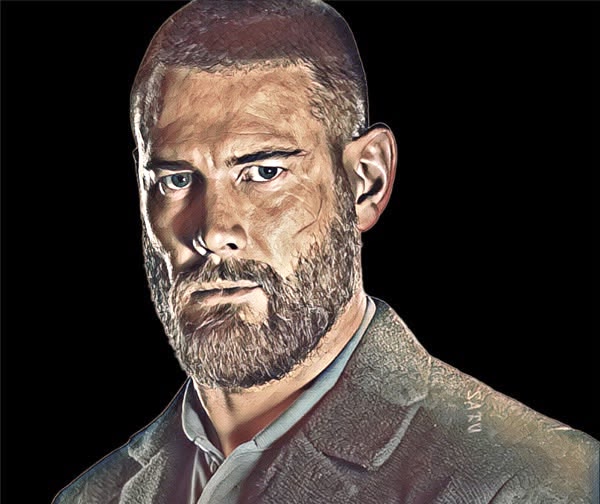
Hopper brings a steady presence to this relationship. Alongside a protagonist consumed by loss, Raife represents some possibility of continuity: there are living friends, shared histories, and commitments still worth preserving. The past explored in Dark Wolf gives that companionship additional weight because we know that brotherhood has already been tested and divided.
Katie Buranek and the struggle over truth
Journalist Katie Buranek, played by Constance Wu, also needs to occupy a central place in this reading. While Reece confronts the men involved in the conspiracy, she investigates the narratives that enable those men to operate. The second season broadens the conflict to include control over information and the interests of those who finance its circulation.
Katie faces the consequences of her reporting on the first conspiracy, including legal action by Lorraine Hartley’s estate, while trying to finish her book about Reece. Her association with Vasili Andrenov, the magnate behind the acquisition of Voltstreem, offers support and access, but also places her in a dangerous relationship with someone interested in steering her investigation.
This is a particularly relevant issue: a source can provide truthful information while still manipulating the direction of a story. The challenge lies not only in recognizing a lie, but in understanding why a particular truth is being offered, by whom, and for what purpose.
The investigation into diverted weapons brings Katie and Raife together. When she obtains the report on the Kestrel program, she is attacked and shot, surviving thanks to his intervention. The discovery turns professional risk into physical violence, confirming that controlling this story is part of the operation.
Katie helps expose Andrenov’s connection to the conspiracy and ultimately decides to leave Voltstreem and return to work as an independent war correspondent. She gives the completed book to Reece, without publishing it at that point.

Her trajectory provides a necessary counterpoint to the military focus. There are forms of resistance that depend on reporting, documents, and the ability to reconsider whom one trusts. At the same time, a tension remains in how the series uses her: Katie has her own investigation, but she is also tasked with organizing the hero’s story and helping him recognize that he can still live. Her independence is more interesting when the narrative allows her to exist beyond that caregiving role.
When former allies return as suspects
The presence of Mo Farooq, played by Dar Salim, and Jules Landry, portrayed by Luke Hemsworth, also connects the season to Dark Wolf. Recognizing these faces makes the investigation more personal: Reece must assess men with whom he shares a history, without the reassurance that this history guarantees trust.
Mo appears linked to the attacks, but says he is undercover and following orders. The revelation of Landry’s involvement once again shifts suspicion inside the operation itself. The season explores this difficulty in distinguishing loyalty, obedience, and manipulation, although the number of intermediaries and competing interests sometimes makes the plot more cluttered than illuminating.
The geopolitical expansion raises the stakes, but the best conflicts remain those in which a decision compromises a relationship. The franchise gains depth when a shared past stops being a guarantee and becomes precisely what makes betrayal possible.
Freddy, the father, and revenge across generations
The death of Freddy Strain, played by Gabriel Luna, returns Reece to the mechanism he seemed to need to overcome. The Russian president’s assassination during the meeting in Odesa reveals the operation’s political scale, but for the protagonist, losing his friend once again turns the mission into a personal reckoning.
While pursuing Andrenov, Reece discovers that Freddy was not the intended target: the shot was meant for him. The conspiracy then becomes connected to the past of his father, Thomas Reece, and the revenge pursued by Ivan Zarkov, the Colonel.

This shift has dramatic force, but it also exposes a convenient aspect of the construction. After moving through international interests, terrorism, and covert operations, the plot places its protagonist at the center of a family story once again. The world seems enormous until its conflicts converge on James Reece’s biography.
Discovering that Thomas did not simply abandon his family, but continued working for the CIA until he was murdered, forces his son to reconsider a longstanding absence. His father’s watch in Oliver Grey’s possession keeps the investigation open and prepares another chapter.
Emotionally, it makes sense: Reece needs to reconstruct not only his future, but the meaning of his past. As a franchise device, the solution also ensures there will always be another blood debt to collect.
The appeal and danger of this hero
Heroes like Reece embody a dangerous vision of masculinity that parts of contemporary culture are trying to leave behind, but which continues to find a substantial audience. The Terminal List speaks directly to the expectation, particularly among men, that one man alone can challenge larger structures, identify the guilty, and impose a justice institutions cannot provide.
Its appeal is understandable. Faced with opaque systems, compromised authorities, and financial interests, Reece offers the reassurance of someone who acts. The problem arises when his military competence also begins to serve as proof of moral authority, including in moments when his brutality should invite greater scrutiny.
Pratt sustains that fantasy by giving suffering to the man who embodies it. We can be moved by his longing and question the logic that turns that pain into permanent permission to kill. The performance works precisely where the discussion of the character becomes more uncomfortable.
That is why the final movement toward treatment carries particular weight. The season does not confirm his recovery: Reece agrees to proceed with medical examinations and give himself a chance to survive.
The season also ends clearly poised to continue. Grey, the Colonel, and the sniper who killed Freddy remain threats, while Thomas Reece’s watch turns his father’s death into a personal investigation. There is no formal new list, but there are enough names for James to resume pursuing answers—and people. A potential third season, still awaiting official confirmation, could draw on Savage Son, Jack Carr’s third novel, which the creators have identified as a possible direction and which explores the relationship between hunter and hunted.

Thomas’s past also provides material for another spin-off, a possibility Carr has already mentioned in connection with Cry Havoc, his novel about James’s father in Vietnam. The franchise thus has two ways to extend its story: follow the consequences of violence in the present or return to the choices that produced it. Dramatically, there is material to explore; the question is whether that expansion will allow Reece to change or simply give him new reasons to keep killing.
Katie and Raife help make that choice possible because they represent connections to the present. There is still someone to listen to him, challenge him, and stand beside him. After using his body as a weapon for so long, allowing it to be cared for may be this man’s most difficult decision. The series prepares new pursuits, but leaves its most interesting question elsewhere: could James Reece keep living if, one day, there were no one left to kill?
Descubra mais sobre
Assine para receber nossas notícias mais recentes por e-mail.

