
Warning: Spoilers for the first three seasons and the Season 4 premiere of The Gilded Age.
When George Russell (Morgan Spector) was shot in Season 3 of The Gilded Age, my first suspicion, like that of many viewers, fell on Richard Clay, his former right-hand man. Their falling-out, following years of working together, seemed to provide the perfect motive. George had every reason to suspect someone who knew his business so intimately and who, after being dismissed, might have wanted revenge.
But while we were looking for possible suspects among the tycoon’s more recent enemies, fans on Reddit brought back a storyline that, I confess, I had almost completely forgotten. The answer might lie in the first season, when George and Bertha Russell (Carrie Coon) were still fighting for their place among New York’s millionaires and demonstrated, without the slightest embarrassment, just how far they were willing to go to win.
The Morris family was among the first victims of that determination. Looking back at what happened, the possibility of revenge cultivated over several years becomes particularly disturbing. Not simply because Anne Morris (Katie Finneran) had every reason to hate the Russells, but because her family’s suffering seems to have vanished entirely from the memory of those responsible for it.
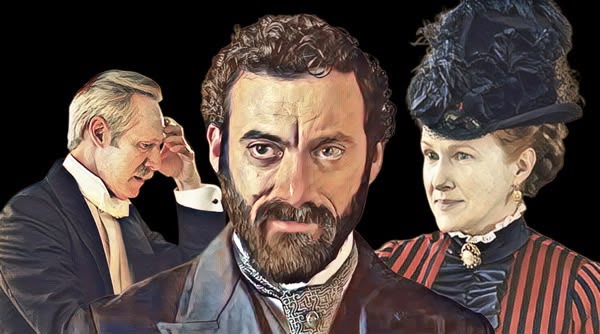
The Humiliation That Started the Tragedy
In Season 1, Anne Morris belonged to the group of high-society women who refused to recognize Bertha Russell as one of their own. Married to Alderman Patrick Morris (Michel Gill), she served on the committee organizing a charity bazaar and rejected Bertha’s offer to host the event at her luxurious mansion.
Bertha did not forget the insult, and George decided to retaliate spectacularly. He attended the bazaar and offered each participant one hundred dollars to purchase all the merchandise available. Within minutes, he transformed an occasion of social prestige into a public demonstration of his financial power.
At the time, it was easy to root for the Russells. After all, Bertha was being snubbed by women who seemed to believe that the age of their fortunes mattered more than any personal qualities. George, meanwhile, was the devoted husband who refused to tolerate seeing his wife humiliated.
But there was something cruel about that revenge. George did not simply want to redress the insult. He wanted to demonstrate that none of those women could challenge him without suffering the consequences. And the social dispute would soon turn into a family tragedy.
Patrick Morris’s Suicide
Patrick Morris and other aldermen were involved in a financial operation connected to George Russell’s railroad interests. When they attempted to undermine the businessman through financial and legislative maneuvering, they discovered that they had underestimated their opponent.
George had sufficient resources to withstand the attack and inflict devastating losses on the men who had tried to defeat him. Patrick Morris lost virtually everything.
Desperate, he approached George and begged for a solution that would allow him to protect his family. He failed to persuade him. Russell believed that the alderman had willingly entered a business confrontation and should accept the consequences of losing. Patrick returned home, looked at portraits of Anne and their children, and took his own life.
It remains one of the cruelest scenes of the first season, precisely because the tragedy does not end with the alderman’s death. Anne loses her husband, her financial security, and much of her social standing. People who once frequented her home begin to distance themselves, while the Russells continue gaining influence and prestige.
George did not kill Patrick Morris. Nor was the alderman innocent in the financial operation that led to his ruin. But there is an enormous difference between defeating an opponent and destroying him so completely that he can no longer imagine a future.
The series showed us that difference. Perhaps we did not pay enough attention because we were too busy rooting for the Russells.
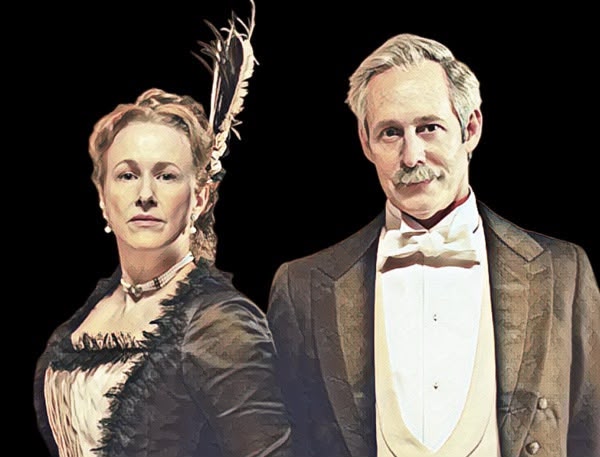
Anne Morris Never Forgot
Anne Morris’s transformation was one of the bitterest consequences of that storyline. The arrogant woman who had despised Bertha for her social origins came to experience the humiliation and exclusion she had once helped impose on others.
But Anne did not consider herself merely a victim of unfortunate circumstances. To her, George and Bertha were responsible for her husband’s death.
Her anger became particularly evident when she saw Bertha celebrated for her philanthropic activities. How could a woman whose family had caused such suffering be publicly admired for her generosity?
Anne went so far as to accuse Bertha of being married to a murderer. Her words caused embarrassment among people who preferred to remain on good terms with the Russells, especially now that the couple’s wealth and influence were impossible to ignore. The widow promised that she would not forget what had happened. And that promise may be far more important than it initially appeared.
The Morris Revenge Theory Already Existed in 2022
Curiously, the possibility that Anne Morris might seek revenge did not emerge recently. On February 25, 2022, journalist Jack Filsinger published an article in Screen Rant examining the mysterious railroad accident featured in the first season. The suspicion of sabotage raised the possibility that one of George Russell’s enemies had used faulty axle components to cause the disaster. Anne Morris was already among the suspects.
The article suggested that the widow might have used her late husband’s political and business connections to organize sabotage against George’s railroad interests. After all, the aldermen’s influence over New York business had not simply disappeared because Patrick was dead.
It was a theory published while the first season was still airing, not a revelation about who had caused the accident. Nevertheless, it is remarkable that, nearly five years later, we are once again discussing the possibility that the Morrises are behind an attack against George Russell.
In August 2025, following the shooting that ended Season 3, the theory resurfaced among fans. In a Facebook post on the HBO The Gilded Age Fan Page, one viewer suggested that Mrs. Morris might have hired a hitman. Or perhaps one of her sons was seeking revenge.
The second possibility adds an interesting dimension to the story. Anne lost her husband, but her children also lost their father and their financial security. If the series decides to revisit that family, revenge would not necessarily have to come from the widow herself.
For now, however, there is no confirmation that Anne or her children were involved in the shooting. The theory is compelling because it brings back a conflict already established within the series, not because there is definitive evidence of their participation.
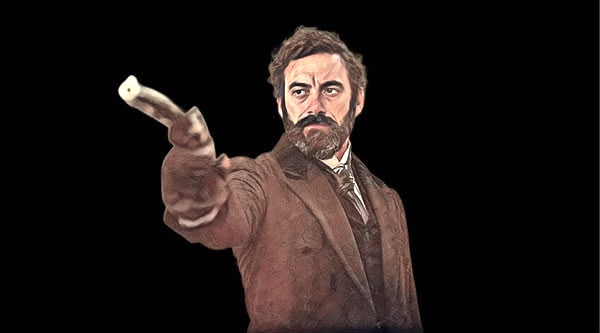
George Russell, Luigi Mangione, and Violence Against the Powerful
There is a contemporary dimension to this discussion that Morgan Spector himself highlighted in an interview with Variety in August 2025.
The actor drew a comparison between the attempt on George Russell’s life and the December 2024 killing of Brian Thompson, a UnitedHealthcare executive, in New York, a case in which Luigi Mangione was charged.
Spector identified a parallel between the concentration of wealth and power during the Gilded Age and the economic tensions of contemporary America. In both periods, enormous fortunes coexist with profound inequalities, while decisions made by business leaders and institutions can radically transform the lives of people who lack the resources to challenge them.
The comparison does not justify violence, nor does it establish a direct equivalence between the two cases. But it helps explain why George Russell can provoke such contradictory feelings.
To viewers, George is frequently admirable: intelligent, determined, devoted to his family, and capable of standing up to an elite determined to prevent his rise. To those harmed by his business dealings, however, he may represent something very different. That ambiguity has always existed in The Gilded Age, even if the series often prefers to emphasize the Russells’ charm.

What the Winners Remember and What the Losers Never Forget
Perhaps the most interesting aspect of this theory is the difference between what the Russells remember and what the Morrises could never forget. For George and Bertha, their conflict with Patrick and Anne was merely one of many battles fought during their rise. Then came new business ventures, new enemies, their conquest of society, Gladys’s marriage, and Larry’s growing involvement in the family business. Life went on. Their fortune grew. So did their ambitions.
It is entirely possible that George and Bertha no longer even think about the people they left behind. Anne Morris, however, never had that privilege. For her, financial ruin and her husband’s suicide were not simply unpleasant experiences to be overcome. They were events that transformed her entire existence. While the Russells celebrated their victories, she was left to live with her husband’s absence and the loss of everything she had once considered secure.
What the Russells regarded as just another victory may have marked the beginning of a tragedy that never ended for the Morrises. And that difference in perspective is essential to understanding the true implications of the revenge theory.
Who Ordered George Russell’s Shooting?
Season 4 began without revealing who was behind the attack. George is still searching for answers, and his investigation now involves the Pinkerton detective agency. Meanwhile, the businessman must confront the crisis in his marriage to Bertha and new challenges to his business empire.
There is no shortage of suspects. Richard Clay seemed to have an obvious motive, although his absence from Season 4 complicates expectations of a direct confrontation. Other business rivals might also have wanted the tycoon dead. But the Morris theory has one narrative advantage: it does not require the writers to invent a tragedy retrospectively to justify a desire for revenge. We already witnessed it.
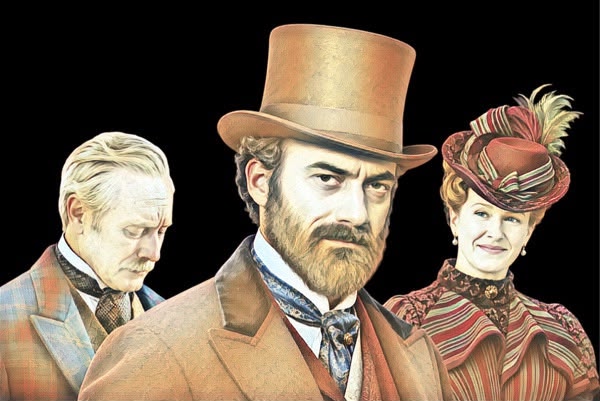
We saw Anne’s humiliation, Patrick’s ruin, and the death that destroyed their family. We also watched the Russells move forward as though that tragedy imposed no limits whatsoever on their ambitions. It would be a particularly interesting choice if Julian Fellowes and Sonja Warfield brought this story back now, when George is beginning to question the life he has built and the price of his achievements.
There is even an irony in HBO’s official synopsis for the fourth season: Bertha Russell has changed society, but at a high cost, and her family must now face the consequences. The description most likely refers primarily to the domestic crisis brought about by Bertha’s decisions, especially Gladys’s marriage. But it also allows for a broader interpretation: the Russells have spent years imposing their will on others, and they may now discover that not every consequence of their actions has remained in the past.
After all, George and Bertha have accumulated wealth, conquered society, and won almost every battle they chose to fight. But if the Morrises are truly involved in the shooting, the series may be about to demonstrate that not every victory means the end of a war.
Some people can afford to forget those they have destroyed. Others spend the rest of their lives remembering.
Descubra mais sobre
Assine para receber nossas notícias mais recentes por e-mail.

