
This article contains spoilers for VisionQuest’s seventh episode.
Paul Bettany gave a remarkable performance. In “Immolation,” the penultimate episode of VisionQuest, the actor gets to bring together the contradictions of a character who has spent the season trying to discover whether he can still feel. The result is an exploration of the price of recognizing ourselves in our own past. We can wish to recover who we were while doing everything possible to avoid the suffering that recovery would bring.
For Vision, acknowledging his family also means acknowledging loss. His distance from Tommy can be read as a defense: by questioning whether he is the boy’s father, he postpones the emotional responsibility of that bond. The doubt that seemed to protect him from making a false claim also protects him from a painful truth.
Saving Lisa means accepting the Client’s offer
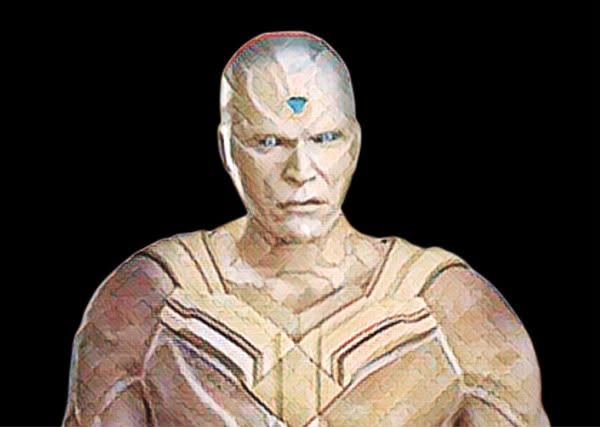
Lisa is threatened by Jocasta’s nanobot, which is attempting to rewrite her brain. Removing it could kill her. The Client offers Vision access to the code needed to save her, but demands that he come to meet him afterward. To reach the depths of his programming, Vision needs an external power source; Paladin provides Corvus Glaive’s weapon, stolen from Wakanda. The instrument that wounded him in Infinity War now sustains his quest.
The offer combines help and coercion. The Client provides a solution to someone who has run out of alternatives, turning the urgency of saving a young woman into a means of capture. Vision makes a decision, but the power to set its terms belongs to whoever controls the information.
Tommy, meanwhile, has to wait for someone else to save the person he loves. The situation brings father and son closer through the experience of fear, even before they can fully name the bond between them.
Phineas Horton and the legacy of the first synthetic man
The episode travels back to 1939: following the death of his son James, Phineas Horton sacrifices his wealth and family to build J.I.M. Bettany also plays the inventor and his creation. Their story takes Vision to the origins of a lineage marked by difficulty dealing with feelings.
J.I.M. had already been introduced as a being unable to withstand complex emotions without bursting into flames. The first synthetic man was a warning about the danger of feeling; Tommy had also seen the absence of a family in that story.
Bettany’s presence at different points in this genealogy gives the episode a particular power. Creator and creation share a face, yet occupy different positions in relation to the same question: how much can we demand that someone fulfill the purpose for which they were created?
Horton wants to repair an absence. A creation, however, does not necessarily remain within the wishes of its creator. In seeking an answer to death, he introduces another being into a story already burdened with expectations. It is a form of fatherhood shaped by an inability to accept a child’s autonomy.
The encounter with Vision himself
The inward journey also brings Vision face to face with his earlier self. Their encounter returns to the image of a prison built within his own consciousness: after facing so many enemies, he must confront his ability to keep himself captive.
Bettany sustains the conflict of portraying someone who looks at himself as though facing an impossible demand. There is a particular cruelty in turning our past into a standard that always condemns us. The more perfect that earlier version appears, the easier it becomes to justify giving up on trying to reach it.
This is one of the episode’s most interesting possible readings. Idealization can become a form of paralysis. If that Vision could love in a supposedly unattainable way, the current one can keep declaring himself incapable before taking a chance.
The breakthrough comes when he acknowledges the loss of Wanda and recognizes his own identity. With the recovered code, he saves Lisa. His subsequent farewell finally acknowledges Tommy as his son.
This is where Bettany finds the emotional center of the story. The growing connection between father and son no longer depends on an abstract definition of authenticity. The question becomes what Vision will do with the bond that exists before him. Recognizing himself does not erase suffering, but it allows him to take responsibility for that love.
Jocasta, Ultron, and the Client’s revelation
Meanwhile, Jocasta discovers that the biometric keys are not enough to open the vault: a password is missing. The Client’s clues bring her closer to her erased memories. In the closing sequence, Vision and Jocasta are deactivated, Paladin’s vehicle is hit, and the Client reveals Ultron’s face. A memory shows him as Jo’s romantic partner. Ultron, in turn, attacks the undercover F.R.I.D.A.Y.
The two maneuvers should be distinguished. The agreement to save Lisa is the Client’s trap. The attack on F.R.I.D.A.Y., meanwhile, reveals Ultron’s betrayal of the possibility of cooperation he had been hinting at. The episode ends with this connection between their faces, without fully clarifying the man’s identity or the extent of their alliance.
My reading is that the ending calls for caution about the appearance of intimacy. A familiar face can inspire recognition without offering safety. After following Vision as he tries to acknowledge his feelings, we return to characters whose intentions remain hidden.
What “Immolation” sets up for the finale
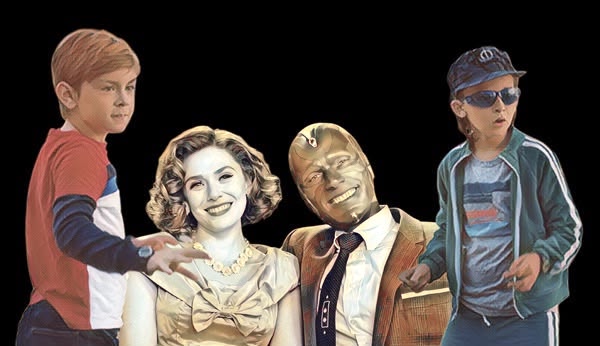
The editing layers past events, code, memories, and revelations, demanding attention to distinguish physical events from what is represented in the mindscape. The technological explanations can draw attention away from the drama Bettany sustains: a father must abandon the distance that protected him in order to make himself available to his son.
The title invites us to consider the sacrifice of a defensive identity. Vision has been trying to exist without fully committing to the consequences of his history. By accepting his bond with Tommy, he also exposes himself to the risk of suffering again.
That is what “Immolation” achieves. The Client still needs to be confronted and Ultron’s choice understood, but Bettany gives weight to something no final showdown can resolve for his character: acknowledging love offers no immunity from loss. It offers a reason to return.
Descubra mais sobre
Assine para receber nossas notícias mais recentes por e-mail.

