
Spoilers ahead for MobLand Season 2, Episode 8, “We Don’t Talk Anymore,” streaming on Paramount+.
MobLand Season 2 reaches its eighth episode with a family that seems increasingly incapable of distinguishing its enemies from the people living under the same roof. Harry Da Souza (Tom Hardy) remains the man everyone calls when the Harrigans need their problems solved, but his solutions have become as brutal as the criminals he confronts. Conrad (Pierce Brosnan) is beginning to lose control of his own mind, Maeve (Helen Mirren) manipulates the younger members of the family with astonishing cruelty, and Kevin (Paddy Considine) no longer seems willing to sacrifice what little he has left to keep the family functioning.
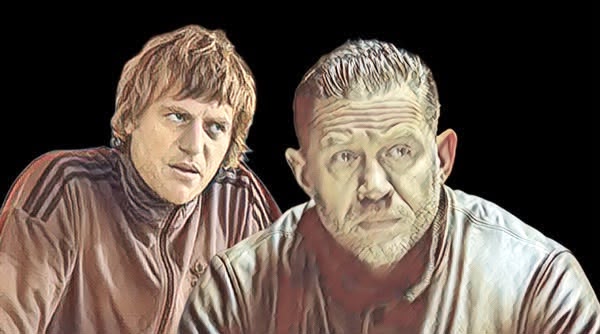
After the trap Frankie Cooper (Johnny Flynn) set for him in the previous episode, Harry finally carries out his threat against Michael, Frankie’s son. The decision, which was supposed to force his rival to acknowledge his power, produces exactly the opposite effect. By turning a territorial dispute into a personal tragedy, Harry places his own family directly in the line of fire.
Meanwhile, problems that once seemed secondary begin to take on greater importance. A man newly released from prison arrives determined to avenge his father’s death, a secret about the Harrigans’ origins comes to light, and a discovery in the lake on Conrad’s estate suggests that the police may be much closer to the family than anyone imagined.
Harry’s Revenge and the Death of Michael Cooper
The seventh episode ended with Harry threatening Michael, who was in prison, after escaping Frankie’s trap at the casino. It was no bluff. In “We Don’t Talk Anymore,” the young man’s body is discovered inside Newgate prison, confirming that Harry managed to carry out his plan even within a supposedly secure institution.
Later, Harry explains to Kevin how he arranged the murder. Paul was responsible for bribing a prison employee, allowing Jim G to reach Michael. The explanation is almost bureaucratic. Harry describes each step as though he were discussing a particularly complicated business operation, showing no apparent disturbance at having ordered a young man’s death.
It is precisely this coldness that makes the character so unsettling. Harry has always been portrayed as the most competent professional in this world, a man capable of negotiating, intimidating, and killing without losing control. Yet there is a difference between using violence to prevent an immediate threat and murdering an adversary’s son to demonstrate power.
Harry crosses that line without hesitation.
The telephone conversation between him and Frankie is one of the episode’s most interesting moments. Harry appears to believe that, following Michael’s death, the two men might recognize the cost of their war and negotiate a truce. Frankie, however, is staring at photographs of his son, trying to comprehend a loss that no demonstration of strength could ever repair.
For a few moments, Johnny Flynn abandons Frankie’s arrogance to portray a devastated man. He reminds Harry that Michael was only a young man and that Harry himself is also a father. The warning carries an obvious meaning: Frankie now knows how to make his enemy experience the same pain.
The murder does not end the war. It eliminates any possibility of a rational negotiation.
Conrad Reveals the True Origins of the Harrigans
While Harry and Frankie fight for control of London, Conrad faces a far more intimate crisis. During a conversation with Eddie (Anson Boon), he reveals previously unknown details about his childhood and the origins of the Harrigan surname.
Conrad explains that he grew up under the violence of Liam Patrick Francis, the man he believed was his father. Liam brutally abused his mother until, shortly before her death, she revealed that Conrad’s biological father was actually Finn Burke, a man from Killarney.
The revelation did not lead to a family reconciliation. Conrad killed Liam, slitting his throat with his mother’s sewing scissors, and ran away. On his way to Cork, he managed to get a ride from a truck driver working for a company called Harrigan’s Slaughterers. It was from this connection that he borrowed the surname that would eventually become synonymous with a powerful criminal organization.
The story helps explain how Conrad constructed his identity. The man who now demands absolute loyalty and controls his family through fear emerged from a childhood marked by violence, humiliation, and the discovery that his own origins were different from what he had always believed.
But understanding Conrad’s past does not mean justifying his actions. He transformed the experience of being subjected to violence into a need to exercise it over everyone around him. Even Eddie receives a threatening warning when he pushes the conversation too far.
This is one of the season’s best opportunities for Pierce Brosnan to show something beyond Conrad’s extravagance. Behind the theatrical patriarch is a man who seems to have spent his entire life trying to prevent anyone from making him feel the fear he experienced as a child.
Is Conrad Losing His Mind?
The situation becomes even more serious when Conrad summons Kevin to discuss the organization’s future. After consulting a doctor, he begins to admit that it may be necessary to choose someone to take over the family business.
Kevin shows little enthusiasm for the alternatives. Eddie is impulsive and deeply unstable, while Seraphina, although intelligent, appears to be involved in projects and alliances whose true extent nobody understands. Kevin also questions the credibility of the story she told about Kat McAllister.
The conversation about succession reveals that the Harrigans’ problems are not limited to external enemies. The family has no obvious leader to replace Conrad, and Kevin himself, perhaps the most logical choice, appears exhausted.
Then Conrad makes a surprising confession: he has been seeing dead people. At first, the apparitions occurred at night, but now they also appear during the day, particularly in the wooded areas surrounding the estate. Conrad is frightened and unable to understand what is happening. Kevin, confronted with his father’s unexpected vulnerability, tries to reassure him.
The moment could have represented a rare opportunity for closeness between the two men. Instead, when Kevin returns with a drink, Conrad resumes his threatening demeanor and points a shotgun at his son, demanding that he never tell Bella or anyone else what he has heard.
Kevin refuses to accept the intimidation. Rather than begging for his life, he challenges his father to pull the trigger. Conrad eventually allows him to leave, but the violence destroys the intimacy they had shared only minutes earlier. The patriarch would rather threaten the man who tried to help him than risk being perceived as weak.
The series has yet to clarify the cause of Conrad’s visions. They could indicate cognitive decline, a psychological crisis, or simply serve as a narrative device to bring the ghosts of his past into the present. What is already clear is that Conrad can no longer entirely trust his own perception of reality.
And a man who built his empire on absolute control is unlikely to accept losing control of himself.
Maeve, Eddie, and Gina: An Increasingly Dangerous Manipulation
Maeve remains one of the family’s most destructive figures, although her methods differ from Conrad’s. While he intimidates through explicit violence, she prefers to exploit insecurities, desires, and secrets.
In a sauna scene, Maeve once again provokes Eddie and fuels the deeply disturbing relationship that has developed between them. When he becomes uncomfortable, she reverses the situation, accuses him of misinterpreting her intentions, and forces him to kneel and apologize.
Maeve records his humiliation, creating yet another means of controlling him. Eddie is particularly terrified that Conrad might discover what has been happening. Their relationship has moved beyond being just another Harrigan eccentricity. Maeve exploits Eddie’s confusion about his place in the family to keep him dependent on her approval, subjecting him to situations in which any reaction can be used against him.
It is a strategy similar to the one she employs with Gina, Harry’s daughter. Maeve continues insisting that Gina stage a suicide attempt. Her objective is to make Harry so desperate that he abandons his responsibilities to the Harrigans to protect his daughter. Now she uses the release of an Irish criminal from prison as an argument to convince Gina that she is in even greater danger.
The irony is that Maeve does not need to invent the threat. Gina really may be in danger, although the matriarch’s supposed concern is far from selfless.
Who Is Mad Dog O’Connor?
The episode opens with the funeral of Colm O’Connor, the criminal known as Medusa, whose death resulted from one of the operations involving Harry, Eddie, and Gina.
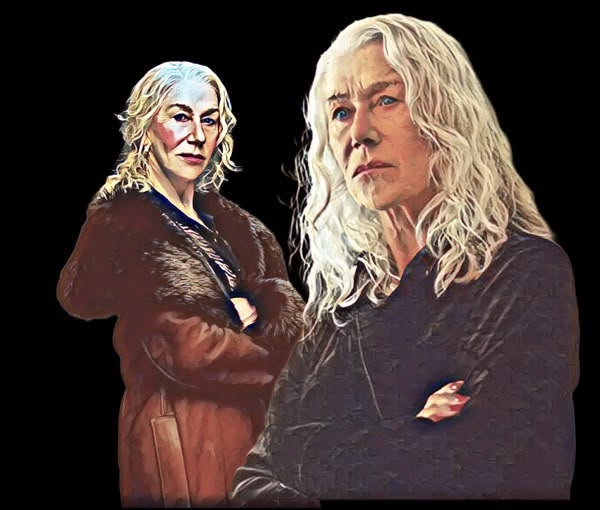
His son, Kelly O’Connor, nicknamed Mad Dog, has just been released from prison after serving twenty years for murder. He attends his father’s funeral and makes it clear that he intends to find those responsible for his death. The character’s arrival introduces another threat just as the Harrigans are already fighting a war against Frankie Cooper and the interests represented by Kat McAllister.
The problem is that Mad Dog has a concrete lead. While examining security footage from an establishment his father frequented, he discovers images of Eddie and Gina following Medusa’s movements before his death. Gina’s face appears in the recordings, providing a potential starting point for his investigation.
There is still no confirmed alliance between Mad Dog and Frankie, but both men now have personal reasons to seek revenge against Harry and the Harrigans.
Gina consequently becomes one of the season’s most vulnerable characters. She is caught up in Maeve’s manipulations, could become the target of Mad Dog’s investigation, and may also be used by Frankie to strike at Harry.
The more her father tries to control events, the more endangered his daughter seems to become.
Harry and Jan: Can You Return to Normal Life After Killing Someone?
Another important sequence follows the growing closeness between Harry and Jan (Joanne Froggatt) after she killed Donnie. Harry assures her that he has taken care of the body and eliminated the evidence of the crime. As far as he is concerned, Donnie’s death can be rationalized as a consequence of the man’s own choices, which put Jan in danger.
But Jan cannot accept that explanation with the same ease. She knows that she killed someone and remains disturbed by what she has done. When she questions Harry about the men he himself has killed, the difference between them becomes evident. Jan is still searching for a way to understand violence, while Harry has developed mechanisms that allow him to treat it as an everyday activity.
The contrast becomes even more disturbing when he mentions the recent death of a young man, Michael Cooper, as though the victim’s age makes little difference to his assessment of the murder. Harry offers Jan the possibility of leaving with Gina and rebuilding their lives far away from the organization. Jan asks whether he would not like to leave everything behind. His inability to provide a convincing answer reveals a great deal about the character.
Harry seems genuinely determined to protect his family, but he cannot imagine an existence outside the world that has made him indispensable. He offers other people a freedom he does not seem to consider possible for himself.
Meanwhile, the episode finds room for a sequence of macabre humor involving Paul. Harry and Kevin pretend that they are going to execute him, but instead force him to dismember Donnie’s decomposing corpse with a chainsaw and package the remains for disposal.
The scene highlights the grotesque humor that has always been part of MobLand, although it also exposes how easily the series shifts between moments of family intimacy and extreme violence.
What Does the Body in the Harrigans’ Lake Mean?
The most intriguing revelation is saved for the ending.
During a conversation with police officer Kavanagh, Colin Tattersall suggests that he has a confidential source capable of providing important evidence against the Harrigans. The information is connected to something hidden on the family’s estate in the Cotswolds. Later, as Eddie skips stones across the water, the camera moves beneath the surface of the lake and reveals a corpse held underwater by weights.
The dead person’s identity is not confirmed. One possibility is that the body belongs to JoJo, but the episode does not provide enough evidence to establish this identification with certainty. Nor does it clarify who informed Tattersall about the corpse or how the victim might be connected to the crimes under investigation.
The discovery is especially significant because it comes at a moment when the Harrigans are desperately trying to protect themselves from external enemies. If the police really have a source capable of revealing secrets hidden within the estate, the threat could be even greater than the one posed by Frankie Cooper. A criminal investigation might expose not only a murder but also the involvement of several family members in operations that have so far remained concealed.
There is also an interesting narrative coincidence. Conrad spends the episode tormented by visions of dead people, while an actual corpse remains hidden beneath the waters of his property. The ghosts he believes he sees may be the result of his deteriorating condition, but the body in the lake represents a concrete threat, one that cannot be dismissed through intimidation.
What Can We Expect from the Final Two Episodes?
“We Don’t Talk Anymore” leaves MobLand facing an interesting narrative challenge. The series has constructed such an extensive network of conflicts that it now needs to find a way to bring them together without turning its conclusion into a succession of murders and twists.
Frankie Cooper has lost his son and has no reason left to accept a negotiation. Mad Dog O’Connor arrives determined to discover who killed his father. Maeve continues working to separate Harry from the family, while Eddie appears increasingly vulnerable to her manipulation. Seraphina and Bella are considering alternatives for the future, Kevin is losing faith in his own father, and Conrad can no longer fully distinguish his visions from reality.
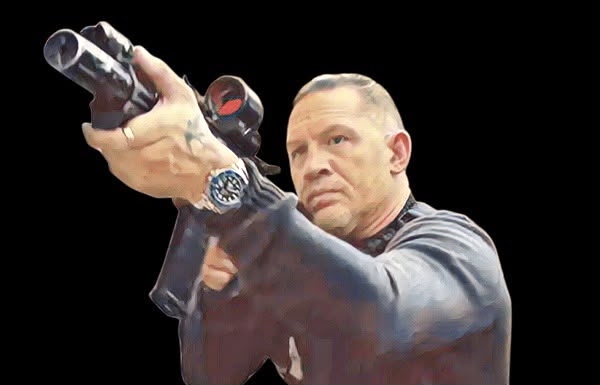
At the center of everything stands Harry. Tom Hardy has created a fascinating character precisely through his economy of movement and dialogue. Harry rarely shows fear, and his ability to solve problems seems almost limitless. Yet by ordering Michael’s murder, he stops being merely the man who manages the Harrigans’ violence and assumes full responsibility for a decision that could destroy his own family.
Michael’s death also brings back a question that has followed the series from the beginning: how different is Harry from the men he works for? He considers himself a professional, someone who understands the rules and does what needs to be done. But that distinction becomes increasingly difficult to sustain when competence means killing a young man to hurt his father and then attempting to negotiate peace.
With two episodes remaining, perhaps the greatest danger facing the Harrigans is not Frankie, Mad Dog, or the police investigation. It may be their inability to recognize that the very people entrusted with protecting the family are also the ones destroying any possibility of its survival.
The next episode of MobLand, titled “Nervous Breakdown,” is scheduled for November 13, with the season finale following on November 20.
Descubra mais sobre
Assine para receber nossas notícias mais recentes por e-mail.

