
Spoilers for the first three episodes of All’s Fair Season 2.
We know the game, but every time, we want to question the rules. The skeptical Dina Standish receives a gift from Allura: a reading with the best tarot reader in Los Angeles. There is no room to refuse, but she arrives determined to challenge the cards. And, as we know, even in fiction, tarot always serves as a warning.
The fun lies in watching Dina, accustomed to conducting interrogations and finding flaws in other people’s arguments, try to maintain control of a conversation in which someone intends to explain her own life to her. Loni Everlane, played by Dorinda Medley, does not seem particularly intimidated. She lays out past, present, and future in three cards: The Hanged Man, The Lovers, and The Tower. A combination worth remembering, especially now that Dina has found a suitor so interested in making her happy.
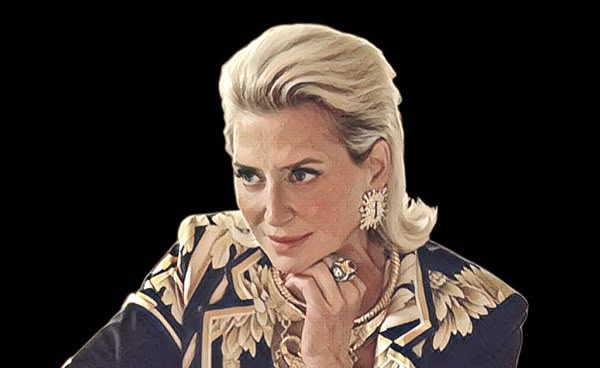
Because that is where I start to get suspicious. The reading promises a new possibility of love, but it also warns that something from the past will return to haunt her, in a matter of life and death. Dina associates the danger with Carrington Lane, with whom she has just had another confrontation. We can follow her reasoning and accept that the invitation to Allura’s ball is an attempt to prevent another act of revenge. But is the threat really where she thinks it is?
Before getting to Brody, it is worth looking at the cards. The Hanged Man, representing the past, seems to sum up Dina’s interrupted life. Losing Doug, Carr’s manipulation, the doubts about her mental capacity, and her arrest placed her in a situation where her experience and authority were no longer enough to determine what happened to her. A woman accustomed to taking action was forced to wait for others to believe her version of events.
The figure hanging upside down may create an ominous impression, but that is the card’s standard depiction. Its symbolism involves suspension, sacrifice, and a change in perspective, not necessarily a literal death. For Dina, it also fits the difficulty of imagining a life after Doug. How do you move forward when the future you knew no longer exists?
The Lovers, representing the present, offer an answer she might not have expected. The card speaks of love and union, but also of choices, values, and commitments. It does not have to indicate a romance: it can represent an important decision about how to live and whom to form bonds with. Loni leaves room for the predicted passion to be for someone or for life itself, allowing Dina to accept the prediction without immediately having to admit that she would like to feel desired again.
Then Brody appears. Young, attentive, and seemingly confident in his interest in her, he offers an opportunity to step away from being the widow, the mentor, and the woman who must solve everyone else’s problems. The age difference may fuel Dina’s doubts, but that is not what makes me question his intentions. It is how easily his arrival seems to fulfill the pleasant part of the reading, while the other part is assigned to Carr.
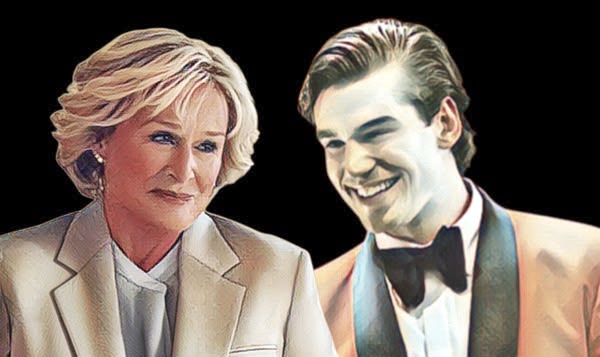
After all, The Tower still lies in the future. In tarot, it suggests a rupture or revelation capable of shaking what seemed secure. It can represent the moment when a certainty no longer holds, forcing someone to reconsider what they believed. This does not necessarily mean death, betrayal, or romantic disaster, but in a series that has just introduced a new romance, it is a card that invites suspicion.
Read together, the three cards allow us to imagine someone emerging from a period of suspension, facing an important choice, and then undergoing a transformation that disrupts their stability. The sequence alone does not establish that the choice causes the rupture. Nor does it require a past mistake to return or someone’s life to be at risk: those are interpretations Loni adds. For us, following a story written to produce consequences, what matters is why the script chose to bring these possibilities together.
My theory is that Brody has some connection to the Conrad Walton case, the man Dina pursued in a case involving a Ponzi scheme. We do not need to imagine a family relationship to find a possible motive. A scheme like that involves people who lost money, affected families, and consequences that continue after the legal proceedings end. What do we know about those left behind?
The first season already presented an act of revenge connected to the case. Conrad lost his fortune and died by suicide. His son, Lloyd, attacked Emerald, and Dina understood that violence as a way of reaching her through someone close to her. Later, Lloyd was also killed, and Dina was arrested for his murder until she could establish that she had an alibi.
But their deaths do not mean that all the consequences of the case have been resolved. Brody could be someone harmed by the financial scheme or by what happened when it was dismantled. He could have lost money, watched someone close to him lose everything, or constructed a version of events in which Dina is responsible for his misfortune. For revenge to exist, someone only needs to believe they have a score to settle.
So far, there is no confirmation of that connection. It is a theory arising from the way the script places a promise of love alongside the threatening return of the past. If Brody is connected to the case, the three cards could trace a single trajectory: Dina emerges from a period of suspension, allows herself to choose a new attachment, and discovers that the relationship threatens the security she was beginning to recover.
It would also be a way of using Carr as a distraction. She is an obvious threat who makes a point of announcing her resentments and intentions. Dina knows her capacity for cruelty and, after the slap, has reason to expect a reaction. Inviting her to the ball seems like a concrete response to a vague prediction. In doing so, she believes she is addressing the danger while opening herself up to the promise of happiness.
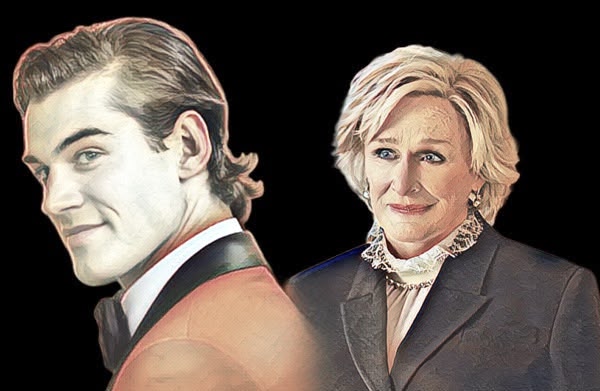
Of course, I would like to see her happy. There is pleasure in watching Dina discover that she can still desire, be desired, and make plans that do not involve the firm or managing a loss. It would be tiresome if every opportunity for affection had to conceal a con. But All’s Fair chose to place The Lovers between The Hanged Man and The Tower, accompanied by a warning about something she left behind. It is difficult to welcome Brody without some reservations.
Dina arrives at the reading determined to question the cards and leaves trying to manage what she has heard. Perhaps her mistake is believing she has identified the problem. She is looking at Carr while Brody draws closer. What if the new love and the return of the past were, from the beginning, the same prediction?
Descubra mais sobre
Assine para receber nossas notícias mais recentes por e-mail.

