
Netflix released the first images of The Age of Innocence on Tuesday, November 10, ahead of its February 18, 2027 premiere. The timing strikes me as shrewd: riding the success of The Gilded Age, the platform is offering its own journey into the drawing rooms of New York’s 19th-century elite. For those following the disputes between the Russells and the Van Rhijns, the invitation is practically irresistible.
But we are talking about a work with a particular weight. Published in 1920 and set in 1870s New York, the novel earned Wharton the Pulitzer Prize for the Novel in 1921, making her the first woman to win in that category. She looked back on the world she grew up in, with a devastating understanding of its conventions, cruelties, and the mechanisms that kept it intact. The dresses are magnificent. What happens inside them is considerably less comfortable.

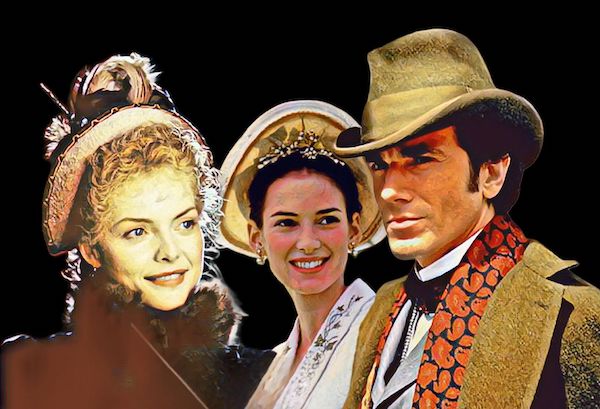
This will be the novel’s first adaptation as a television series, following a screen history that began in the silent era. There was a version in 1924, directed by Wesley Ruggles, another in 1934, directed by Philip Moeller and starring Irene Dunne and John Boles, and, finally, Martin Scorsese’s 1993 film, with Daniel Day-Lewis, Michelle Pfeiffer, and Winona Ryder. Almost seven decades separate the book’s first and third cinematic adaptations. And the last one, for me, is definitive. I discussed all of this here on MiscelAna years ago.
Definitive obviously does not mean that no one can return to the novel. It means that an extraordinary cinematic achievement exists with which any new version will inevitably enter into a dialogue. The fact is that Scorsese understood the sensuality of restraint, the cruelty of rituals, and the distance between what Newland Archer believes about himself and what his choices reveal. He made a film in which removing a glove can carry more intimacy than many a sex scene. That is why I refer to it so frequently when discussing Larry Russell and Marian Brook ad nauseam.
Now the story is getting eight episodes written by Emma Frost, with Ben Radcliffe as Newland, Camila Morrone as Ellen Olenska, and Kristine Froseth as May Welland. The directors include Shannon Murphy, Lisa Brühlmann, and Brazil’s Natalia Leite, while Margo Martindale plays Mrs. Manson Mingott. There is room to develop characters, explore other perspectives, and find a distinctive language. The question is what they intend to do with that room.
Because among the drawing rooms, costumes, and carefully composed encounters in the images released today, there was Newland, shirtless and muscular, standing by a boxing ring. Oh, God. I have absolutely nothing against a handsome shirtless man. But when we are dealing with Edith Wharton, I would like to understand why we need to start there.
There is an explanation. Frost told Vanity Fair that she added a boxing gym to the story, somewhere Newland can go to work out his aggression. It is a deliberate writing choice, then. And that is precisely what concerns me, because Newland needs to be restrained for his passion for Ellen to become the reason he wants to break with everything.
The man Newland believes himself to be
Newland Archer is a complex hero. A man deeply integrated into the society that favors him. He knows its codes, enjoys its privileges, and shares its assumptions. His discomfort with certain conventions does not drive him to challenge them until his passion for Ellen transforms him.
Generally, he likes to think of himself as more enlightened than his peers. Wharton allows us to follow that opinion without requiring us to agree with it. That is precisely where her irony operates: Newland imagines an intellectual superiority and a freedom that his own expectations frequently contradict.
At the beginning of the novel, his idea of marriage to May already reveals this pattern. He wants an innocent young woman, suitably raised to occupy the position of wife, but he also imagines that he will be able to cultivate in her the understanding he considers necessary. The freedom he grants his future wife remains subordinate to what he intends to teach, permit, and guide. There are contradictions, evidently. They make the character. The mistake is to turn them into a progressivism that would place him morally ahead of his time.
Ellen’s return unsettles his security because she brings experiences that lie beyond May’s sheltered upbringing and the expectations of their circle. Ellen is coming out of an abusive and unhappy marriage, yet she cannot divorce or move freely through society. It is Newland who works at every turn to send her back to her husband, until he falls in love and begins to imagine another life. Even then, his fantasy of escape carries the limitations of the world that formed him. Desire does not magically transport him beyond it.
In Netflix’s official material, Newland is presented as a “progressive and intelligent” gentleman seeking a deeper, more passionate connection with the world. That description is quite close to his opinion of himself, but it is anachronistic and misses an essential part of the novel’s irony.
Presenting him as a progressive man repressed by a conservative society, as the series does, makes the conflict far too easy. It gives viewers a hero they can agree with and makes his surroundings responsible for everything standing in the way of his happiness. Wharton demands more of us because Newland participates in the order that suffocates him. He believes in it, too.
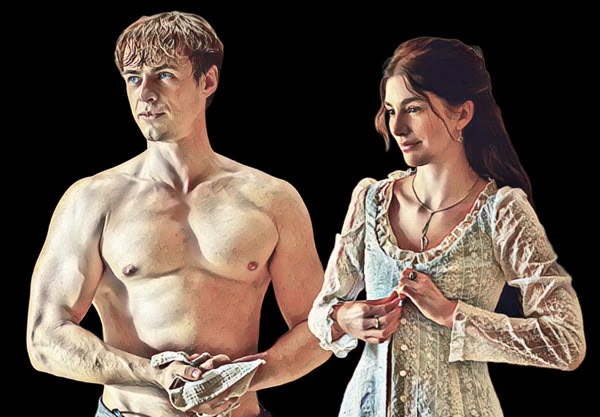
That is why the boxing gym concerns me as a characterization choice. His frustration acquires an immediately recognizable physical expression, bringing him closer to a contemporary model of the tormented romantic lead. An isolated scene may work, but Newland’s conflict requires us to see his complicity with the world he imagines he wants to escape.
Newland can move us profoundly and still be mistaken about himself. That combination is fundamental to the character.
May was never a rebel; Ellen does challenge conventions
Then there is Kristine Froseth, who comes from The Buccaneers, a series I consider deplorable and in which I find her performance particularly irritating. I admit that her presence does little to reassure me. That does not determine what she will do here, but May requires a subtlety I hope to find.
The character description does not help either: Frost praises a May who is “energetic, spontaneous, innocent, and hopeful,” while the official profile adds that she conceals a rebellious side. It is possible to recognize youth, vitality, and hope in May. But this need to announce a rebellious streak makes me wary.
One of the great literary debates is precisely whether May is a villain or a victim, because she is the one who separates Newland and Ellen without either of them realizing it, precisely because she is a conformist, seemingly lacking intellectual sophistication and attached to the superficiality of New York society. In other words, she is the opposite of a rebel. Her upbringing prepares her to occupy a specific position and ensure the continuity of that world. Her way of thinking, her expectations, and the means at her disposal are tied to the conventions she has learned to embody.
That does not make her a simple character. Quite the contrary. Her apparent innocence coexists with a capacity to perceive and act that Newland never entirely understands. He believes he knows the limitations of his fiancée and later his wife, but that certainty says a great deal about the way he sees her.
The novel’s great revelation, in fact, hinges precisely on May having no secret desire to break the rules. Instead, she possesses the intelligence and shrewdness to separate the lovers without a confrontation. She exercises those abilities within the order that defines her, working to preserve it. That is precisely what makes the character so unsettling. If she is “secretly rebellious,” why would she do this to Newland and Ellen?
Announcing a “rebellious side” feels like an attempt to give her a quality more readily valued by contemporary audiences and aligned with what Froseth already does in The Buccaneers. As though we needed to discover a nonconformist hiding beneath the dresses to take an interest in her, when the novel requires us to confront a woman whose strength also lies in maintaining what we find suffocating.
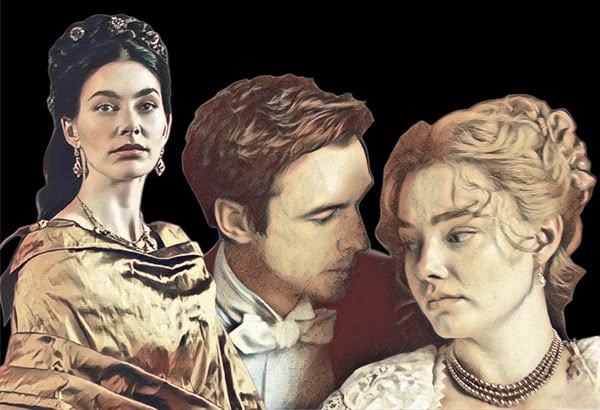
It is a problem I have with The Buccaneers: the desire to give period characters contemporary sensibilities to make them easier to identify with. In Wharton, however, the discomfort arises precisely from the distance between what we would like these people to do and what they are capable of imagining.
If Newland is progressive and May harbors a rebellious streak, both already possess, on some level, an inner escape route. The novel is crueler. Conventions do not simply function as obstacles placed in the characters’ paths. They organize their desires, their certainties, and their understanding of what is possible.
The suffocation is the story
The plot revolves around Ellen’s return to New York. She receives the familiar description of an independent, playful, and determined woman. That is consistent with Edith Wharton’s vision. Her relationship with belonging, family, and renunciation has a depth that the image of the emancipated woman can easily obscure.
Ellen has a more concrete understanding of the cost of crossing certain boundaries. Her experience does not allow freedom to remain merely a romantic fantasy. There are losses, attachments, guilt, and a difficult relationship with belonging. Nor can she be reduced to the independent woman who arrives to teach a man how to live.
That is why Frost’s summary of the story as a choice between following your heart and fulfilling your duty strikes me as insufficient. There is a love triangle, evidently, but Wharton examines the conditions under which that love can be felt, understood, and lived. In Gilded Age society, simply following your heart was impossible.
That is what makes the novel suffocating.
For those watching The Gilded Age, this new adaptation could be an excellent opportunity to encounter the perspective of an author who knew that world from the inside. But its capacity to disturb must be preserved. Wharton does not give us characters designed to win our approval, and her relevance does not depend on making them more like us.
Scorsese understood this in 1993. His film finds passion and brutality within restraint. It does not need to free the characters from their contradictions to bring us closer to them. It is precisely because we understand the extent of that imprisonment that the story hurts.
We have not seen the series yet. We have images and statements that allow us to discuss its approach without passing advance judgment on the result. And what the publicity announces already deserves scrutiny: attributing progressivism to Newland and rebellion to May could alter the very mechanism that gives the novel its power.
Netflix’s challenge goes far beyond recreating 1870s New York. That is why Frost’s description of the story as a choice between following your heart and fulfilling your duty bothers me. It is a possible entry point, but a rather comfortable one for a book that makes us so uncomfortable. Wharton also investigates what we call love, how much we project onto another person, and how far we truly desire a freedom that would require us to surrender our privileges.
I do not expect Netflix to reproduce Scorsese’s perfect approach. A new adaptation needs to find its own language, and there is room for other readings of Ellen, May, and Newland. I would, however, like the desire to win over a new generation to come with some confidence in the intelligence of the original material. Wharton remains unsettling without her characters needing to be adjusted to the qualities we now expect in romantic leads. Newland already had somewhere to hide his frustrations: a perfectly respectable life. I want to see what the boxing ring adds to that.
Descubra mais sobre
Assine para receber nossas notícias mais recentes por e-mail.

