
Warning: spoilers for the entire season and both credits scenes.
The best thing about VisionQuest is its understanding that resurrecting a character does not resolve his story. Marvel had already rebuilt Vision’s body and restored his memories. What remained was discovering what he would do with them. The series turns that unfinished business into an adventure about identity, inheritance, and emotional bonds, with enough humor to keep its reflections from becoming a seminar between chase sequences.
That is also why its contribution to the franchise’s future goes beyond Doctor Doom’s appearance. Before placing another villain on the horizon, the season gives Vision a personal reason to confront him. By the end, he has children he recognizes as his own and a relationship with Wanda that could exist again. Marvel recovers something its major battles need: characters who have something to lose.
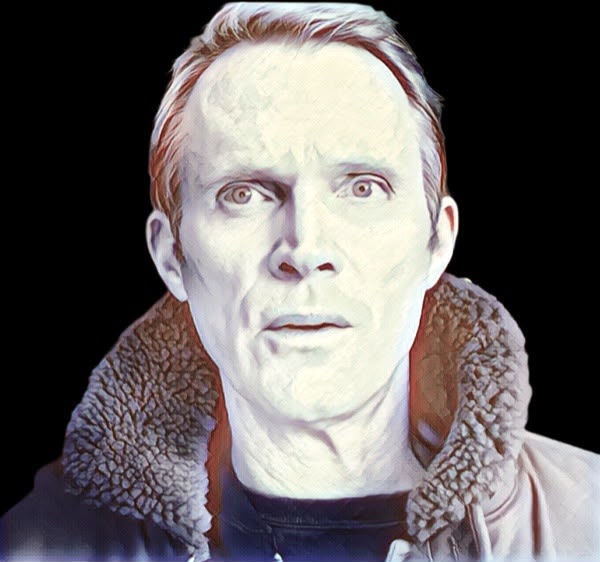
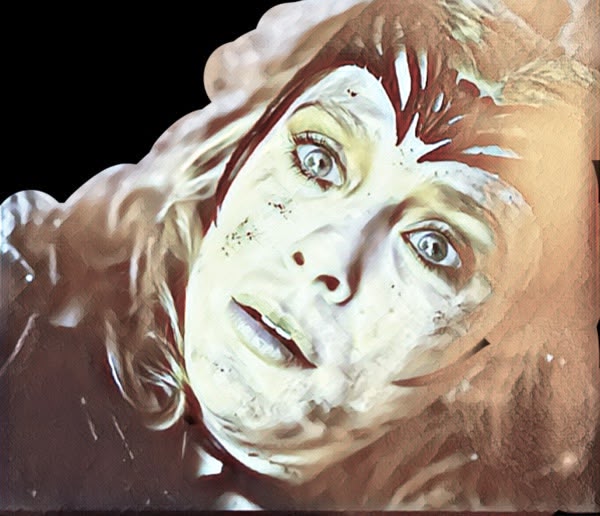
Having Memories Is Not the Same as Accepting a Life
Since WandaVision, Vision has been carrying an intriguing dilemma. His reconstructed body could access the past, but treating it as information did not mean recognizing that existence as his own. VisionQuest explores that distance between knowing and feeling. Accepting Tommy also means accepting that he had a family and that losing it hurts.
My reading is that the arc works because Vision’s difficulty is not limited to his artificial nature. We, too, can tell our own stories as though they belonged to someone else, especially when keeping our distance seems more bearable than acknowledging a loss.
The reunion with his sons gives that journey consequences. Vision moves beyond debating what he is and begins taking responsibility for what he feels. It is a decisive change for a character who, in the major films, frequently had to be wounded, deactivated, or sidelined so that his power would not resolve the conflict too quickly.
The Series Reorganizes Tony Stark’s Legacy
Living alongside J.A.R.V.I.S., F.R.I.D.A.Y., E.D.I.T.H., and Ultron gives faces and personalities to programs the films often presented as other heroes’ tools. In VisionQuest, they form a community, with differences, interests, and bonds of their own.
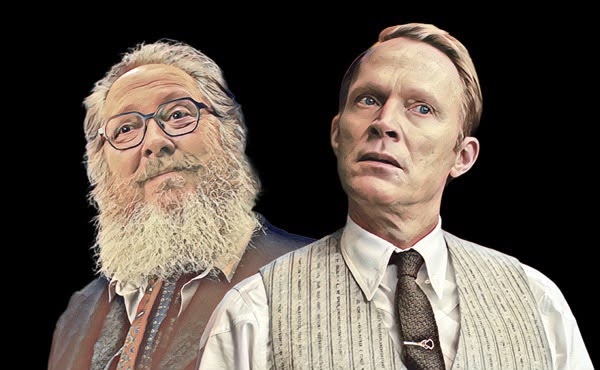
The season also retrospectively expands the origins of that technology. The presence of Phineas Horton, Josephine Carrington, and Virgil introduces other ambitions and losses into the lineage we associated primarily with Stark, Banner, and Ultron. It adds layers to the continuity while also demanding the viewer’s attention.
There is a risk in that approach. Explaining every origin can diminish the mystery and make the narrative feel dependent on a manual. The series works best when those revelations help us understand its characters. Knowing who created a body matters because someone still believes they have rights over it.
Ultron Feels, but That Is Not Enough
James Spader is central to this balance between entertainment and menace. His Ultron can be witty, vain, affectionate, and dangerous within the same conversation. His proximity to Vision allows the series to explore a father-son relationship tainted by manipulation, resentment, and a curiosity neither can eliminate.
His bond with Jocasta takes that development further. Ultron experiences love, but suffering does not automatically produce a moral transformation. When he loses Josephine, he tries to turn a private pain into justification for punishing the world.
It is one of the season’s most interesting arguments: feeling does not guarantee empathy. What distinguishes Vision is his willingness to recognize that others also have lives worth continuing, even when he himself is suffering.
Ultron’s survival and the Jocasta device leave another avenue open. That allows for new stories, but it does not confirm his involvement in Avengers: Doomsday. Being available for future stories and being cast in a film are different things.
Who Is Doctor Doom?
For those who follow the films without knowing the comics, Victor von Doom is a scientist and sorcerer, the ruler of Latveria, and one of the Fantastic Four’s greatest adversaries, particularly Reed Richards’s. His threat combines intelligence, technology, magic, and political power.
In the comics, one recurring characteristic is his conviction that he knows how the world should work. Doom can present domination as a solution to chaos. The problem lies in who will be free to disagree with him. For readers, that combination makes him more interesting than the generic idea of someone who wants to destroy everything.
Robert Downey Jr. plays Victor von Doom in the MCU. That does not automatically make the character an evil Tony Stark or an Iron Man variant. The identity Marvel has announced is Doom; any further explanation for casting the same actor depends on what the films actually reveal.
Doom Connects Two Families
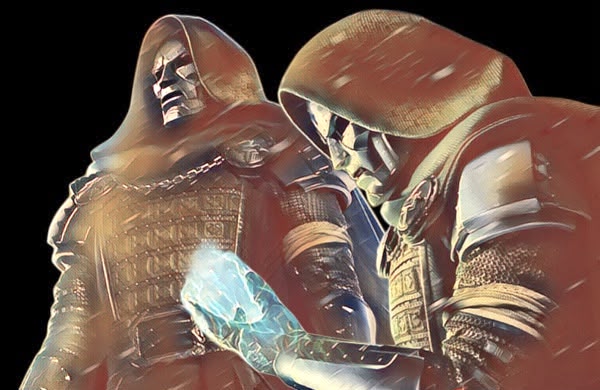
The character’s description in the book From Endgame to Doomsday adds a relevant detail: this Victor has an extensive history with the Fantastic Four. His intelligence rivals Reed Richards’s, and Latveria’s absence from Sue Storm’s Future Foundation gatherings places him within that world’s political landscape.
Those connections point toward an origin in the Fantastic Four’s universe, Earth-828, although the quoted description does not expressly identify the reality’s number. For Reed and Sue, Doom may represent a familiar adversary. For the Maximoffs, his arrival opens up a new conflict.
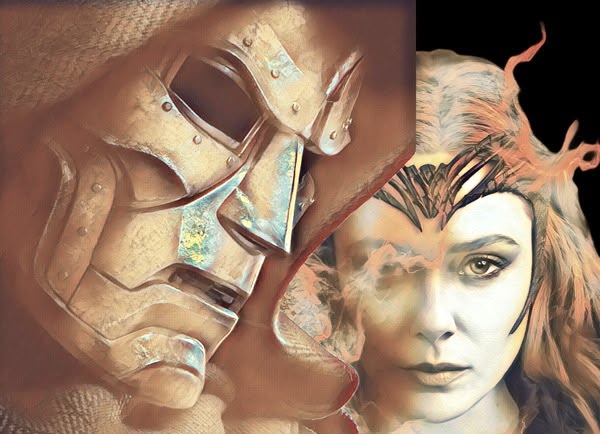
The closing scenes of The Fantastic Four: First Steps and VisionQuest place the villain near Franklin Richards and Wanda. That combination suggests a possibility: his interest may involve powers capable of altering reality. His intention to take the Scarlet Witch’s power is explicit; how that connects to Franklin and Doom’s complete plan has yet to be revealed.
My reading is that Marvel is positioning two families around the same threat. Reed and Sue have Franklin to protect. Vision, Billy, and Tommy have Wanda to find. Before even bringing teams together, the franchise creates personal stakes that can cross the boundaries between universes.
The most obvious reference is The Children’s Crusade. In the comics, the search for Wanda takes the Young Avengers to Latveria and directly involves Doom, who attempts to seize her power. The parallels are clear; the MCU can draw on that structure while changing characters, circumstances, and consequences. The series has not established that Wanda has lost her memory, that she will marry Victor, or that the films will repeat that story.
How Does Vision Fit into This Story?
The strongest answer, for now, is emotional. Doom reaches Wanda just as Vision and his sons regain the possibility of searching for her. The series brings those two trajectories closer without needing to show a confrontation between them.
That offers Vision a richer dramatic role than simply being a powerful weapon. He could participate in a rescue attempt, confront Wanda’s exploitation, or help his sons understand a mother marked by terrible decisions and real losses. These are possible directions, not yet a confirmed synopsis.
There is also a thematic opposition in place. Vision ends the season accepting relationships he cannot control. Virgil tries to impose a family and an eternity according to his own will. Doom arrives claiming another person’s power. The struggle for autonomy carries over from one story to the next.
What Is in Place for the Next Phase?
VisionQuest returns Vision to the world with a clearer identity and stronger bonds, reunites Billy and Tommy, and leaves Ultron available for new conflicts. Wanda’s scene connects that family’s reconstruction to the next major antagonist. It creates possibilities for the Avengers and the characters associated with the Young Avengers without confirming a team’s formation or anyone’s role in the upcoming films.
The series also leaves Marvel itself with a challenge. After developing Vision’s ability to choose, it would be frustrating to reduce Wanda once again to a reservoir of power that men fight over. Doom’s declared intention can sustain that conflict, provided the character has room to react and decide.
For me, the season’s achievement lies in giving emotional weight to the franchise’s groundwork. The multiverse may offer an infinite number of worlds. A family trying to recognize one another after so many losses gives us a reason to care about what happens in one of them.
Descubra mais sobre
Assine para receber nossas notícias mais recentes por e-mail.

