
Before Marilyn Monroe, Audrey Hepburn, Dovima, Twiggy, or any of the women Richard Avedon transformed into icons, there was Louise. His younger sister was his first muse, his earliest reference for beauty, and a presence that would accompany him throughout his life. Decades after he first began photographing her, Avedon acknowledged that the models and faces that attracted him were reminders of her. He once described Louise as “the ghost behind so many of my subjects.”
It is an extraordinary statement from a man who revolutionized fashion photography and redefined the way we see some of the most famous personalities of the 20th century. Avedon was not simply creating images. To some extent, he was also searching within them for something that belonged to his own past.
Louise Marie Avedon was born on April 2, 1925, in New York City, to Jacob Avedon and Anna Polonsky. She was two years younger than Richard, who was born in 1923. Their Jewish family had close ties to the fashion industry. Their father ran a women’s clothing business, while their mother encouraged her children’s interest in art, museums, theater, and literature.
The Wall Street Crash of 1929 damaged the family’s business and forced the Avedons to exchange their comfortable lifestyle for more modest circumstances in Manhattan. But their concern with appearances remained.
Richard would later recall that family portraits were carefully staged to suggest a prosperity that no longer existed. They posed in front of cars and houses they did not own, and even borrowed dogs to complete the photographs.
The family created images of an idealized happiness. And Richard grew up understanding that a photograph did not necessarily have to correspond to reality.
The Girl Who Didn’t Need to Speak
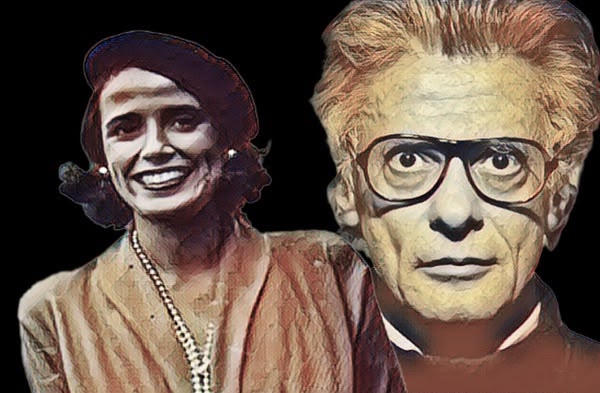
Louise was considered extraordinarily beautiful. She had dark hair, expressive eyes, and delicate features that fascinated her brother.
Richard remembered a phrase their mother frequently repeated: with skin and eyes like hers, Louise did not even need to open her mouth.
Looking back, the compliment takes on an unintentionally cruel meaning. Beauty seemed sufficient to define the girl. There was no need to hear what she had to say.
Avedon believed that his sister’s beauty had contributed to her isolation. He recalled that Louise was so beautiful and shy that nobody noticed her suffering. In his view, beauty could isolate a person as profoundly as genius, without offering the same rewards.
This was the photographer’s personal interpretation, not a medical explanation for the illness Louise would develop. Even so, it reveals how he tried to make sense of the contrast between the image his family admired and his sister’s emotional experience.
Their relationship was also central to Richard’s earliest experiments with photography. As a boy, he conducted an experiment he would never forget. After learning from his father how light could produce photographic images, he attached a negative of Louise to his skin and spent hours in the sun. When he removed it, his sister’s image had been temporarily imprinted on his body. It is an almost cinematic story: before mastering the camera, Richard had literally imprinted Louise’s image upon himself.
He continued photographing her throughout her adolescence and early adulthood. A portrait taken in 1945, in which Louise appears with her back to the camera, looking over her shoulder as the wind catches her coat, already contains elements that would become fundamental to Avedon’s visual language: movement, elegance, apparent spontaneity, and, above all, the relationship between the face and the gaze.
Louise also worked in his studio, retouching color photographs made using Kodachrome. Her participation in the photographer’s story, therefore, was not confined to childhood. She was present as Richard began building a career that would profoundly transform fashion photography.
Schizophrenia and Louise’s Gradual Disappearance
While Richard was establishing himself at Harper’s Bazaar, Louise’s life was taking a very different course. The first signs of psychological distress appeared during adolescence. Her family sought psychiatric help, but her condition worsened over the years. According to biographical accounts, Louise became increasingly withdrawn. She began having difficulty communicating and, at certain periods, almost entirely stopped speaking.
As an adult, she was diagnosed with schizophrenia. Some accounts describe symptoms resembling catatonia, a condition that can cause profound changes in movement, speech, and responsiveness to the surrounding environment.
There is insufficient publicly available clinical documentation to establish precisely how doctors reached the diagnosis or to reconstruct the full course of her illness. What we do know is that Louise spent much of her adult life under psychiatric care.
It is important to remember that we are talking about the 1940s and 1950s, when the understanding of schizophrenia and the resources available to treat it were very different from those of today. The first antipsychotic medications were not introduced until the 1950s, and prolonged hospitalization was common in cases considered severe.
Louise was admitted to Rockland State Hospital in Orangeburg, New York. She would remain under institutional care for many years. Richard recalled one of the last times he saw her. According to his account, his sister had enormous difficulty speaking and needed help even to eat. The girl whose beauty had fascinated her family had become a profoundly debilitated woman.
Louise died on January 18, 1968, at the age of 42, at Rockland State Hospital. Biographical sources disagree about the cause of her death. Writer Andrew Solomon stated that she died by suicide, while other accounts point to a cardiac condition. A family chronology published by New York’s Museum of Modern Art (MoMA) confirms the date and place of her death but does not clarify the cause. Without conclusive documentation, it is impossible to establish which account is correct.
The Woman Behind the Models
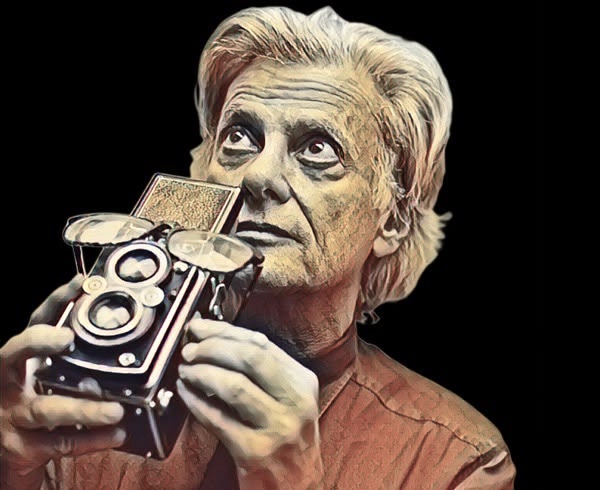
Louise’s influence on Richard Avedon is one of the most fascinating dimensions of his career. It was not simply a matter of physical resemblance. The photographer acknowledged that his concept of beauty had been profoundly shaped by his sister. The models with dark hair, striking features, elongated necks, and intense gazes who appeared in his early work evoked something of Louise for him.
But this interpretation is not universally accepted among his biographers. Philip Gefter, author of a biography of Avedon, argues that the photographer’s feminine ideal was also influenced by his cousin Margie and his first wife, Doe, whom Richard photographed repeatedly. Avedon himself, however, never stopped acknowledging Louise’s place in his imagination.
Beauty was not merely an aesthetic matter. There was something more complex in the way he sought to capture people. His portraits frequently exposed expressions of vulnerability, insecurity, loneliness, or discomfort, even when his subjects were celebrities accustomed to controlling their public image.
Avedon knew that a photograph could be constructed and still reveal something unexpected. He summed up this contradiction in one of his best-known statements: “All photographs are accurate. None of them is the truth.”
He also used to say that all his portraits were self-portraits. Perhaps this helps explain why Louise remained so present in his images. When photographing another person, Avedon also brought his own memories, references, and experiences into the frame.
Photographing What Frightened Him
In 1963, Avedon produced a series of photographs at East Louisiana State Hospital, a psychiatric institution in Jackson, Louisiana. For approximately a week, he photographed patients and spent his nights at the institution. The images, later included in Nothing Personal, published in 1964 in collaboration with James Baldwin, were radically different from the glamour that had made him famous. The portraits depict people who were often isolated, vulnerable, and living with suffering and neglect. There is no attempt to beautify their circumstances.
Andrew Solomon, who knew Avedon personally, connected this work to Louise’s story. According to his account, the photographer spent his days photographing patients and carried those images with him even into his sleep.
The connection to his sister is difficult to ignore, although the project cannot be reduced to a single personal motivation. Nothing Personal was also an exploration of the contradictions of American society, racial segregation, power, violence, and marginalization.
But Avedon’s family experience adds an intimate dimension to those photographs. The man who transformed models into images of beauty and movement was also interested in people whose lives existed far beyond the ideals of perfection celebrated by society. And Louise had been, from an early age, someone in whom beauty and suffering coexisted.
The Ghost Who Remained
Louise Avedon did not leave behind a public career, an artistic body of work of her own, or interviews that might allow us to hear her side of the story. Much of what we know about her comes through her brother’s memories and the recollections of people close to the family.
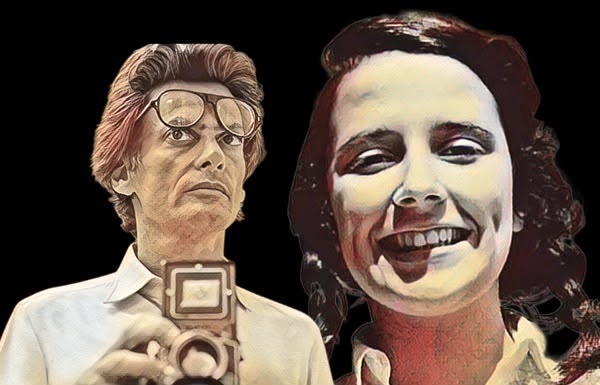
This presents an important limitation. We know Louise primarily through Richard’s eyes. We do not know exactly how she perceived herself, what she wanted, how she understood her illness, or what she felt about the admiration her beauty inspired. We know that her brother loved her, that she participated in his earliest photographic experiments, and that her image remained a reference for him for decades.
Richard Avedon died in 2004, at the age of 81, after suffering a cerebral hemorrhage while working on a photographic series about American democracy. He had photographed some of the world’s most beautiful women, revolutionized fashion, and portrayed presidents, artists, intellectuals, activists, and ordinary people. But whenever he tried to explain where his conception of beauty came from, he returned to the same person: Louise.
The girl who first stood before his camera and whose image, long before any of his famous photographs, he had imprinted upon his own skin.
Descubra mais sobre
Assine para receber nossas notícias mais recentes por e-mail.

