
It is almost impossible to believe that 21 years have passed. I followed Natalee Holloway’s disappearance closely in 2005, when the case was still breaking news unfolding almost in real time, not true crime packaged for streaming.
An American teenager travels to Aruba with her classmates to celebrate graduation, leaves a nightclub with three young men, and fails to appear for the flight home. Natalee’s photograph filled television news broadcasts while the search became an international spectacle composed of leads, suspects, accusations, prejudice, and contradictory accounts.
For years, the story remained trapped inside the same question: What happened that night?
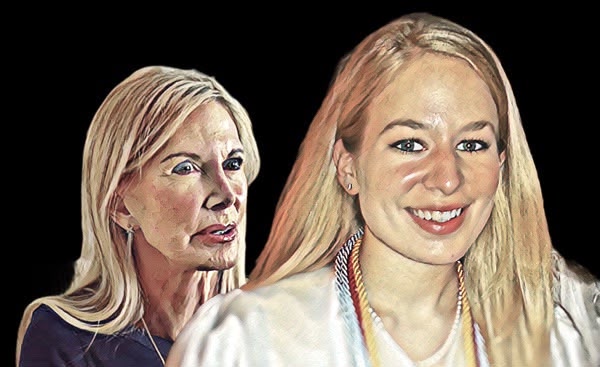
Now, Taken: Natalee Holloway organizes more than two decades of investigation into three episodes, guided primarily by Beth Holloway, the mother who refused to allow her daughter’s disappearance to become another mystery without an answer.
The documentary reached No. 1 worldwide among Netflix’s English-language series, with 12.9 million views in its debut week. On FlixPatrol’s daily ranking, it remains near the top alongside the second season of Black Doves.
The interest is not surprising. True crime possesses an almost universal appeal, but Natalee’s case offers something particular: one generation followed the story when it still had no ending; another is discovering it now as an organized narrative with a beginning, middle, and supposed conclusion.
“Supposed” is an important word. There is a confession. There is no body.
The Story of a Mother Who Never Stopped
The documentary’s greatest strength does not lie in presenting a new solution to the case. Most of the information was already known to those who followed the investigation over the years. Its importance lies in returning control of the story to Beth after it was contested by police officers, journalists, opportunists, and, above all, the man who killed her daughter.
Beth arrived in Aruba only hours after learning that Natalee had not returned to the hotel. She quickly identified Joran van der Sloot, then 17, as the young man who had left the nightclub with her. She went to his house, heard his first version of events, and realized that she was being lied to.
Joran claimed Natalee had been dropped off at her hotel. In the original story, two security guards had supposedly helped the young woman inside. The account was false, but it led to the arrest of the men it implicated while Joran and the brothers Deepak and Satish Kalpoe, the last people seen with Natalee, remained free during several crucial days.
From that moment, Beth faced not only a disappearance but a machine of exhaustion. Every new hope was followed by another lie. Every lead produced another version. Joran reportedly changed his account dozens of times.
The documentary includes previously unseen footage from the 2010 FBI operation in which he attempted to extort $250,000 from Beth in exchange for the location of Natalee’s remains. He received $25,100 and provided information he would later admit was worthless.
It is difficult to imagine a crueler form of exploitation. Joran knew exactly what this mother was searching for and turned her hope into currency.
Beth, however, never stopped. Not because she believed every lead, but because abandoning any possibility would mean accepting that her daughter had disappeared twice: first physically, and then from collective memory.
Innocent Decisions That Became Fatal
The sadness of Natalee’s story also lies in a sequence of innocent decisions that, in retrospect, proved to be wrong.
She drank during a graduation trip. She trusted a young man her own age who presented himself as safe. She entered a car with him and other young men. She moved away from her friends. She may have believed she could return to the hotel whenever she wanted. When she realized that she did not want to continue, she said no.
We do not need to pretend these choices did not increase her vulnerability to reject victim-blaming.
Thousands of young people make similar decisions during graduation trips and return to their hotels the following morning. Natalee’s choices became fatal only because, that night, she encountered a man willing to interpret trust as availability and refusal as an insult.
Every story of violence against a woman provokes a parallel search for mistakes that might restore some sense of safety to the rest of us. How much did she drink? Why did she get into that car? Why did she leave with young men she barely knew? Where were her friends? Why did no one recognize the danger?
Some of these questions are necessary to reconstruct the timeline. The problem begins when they stop investigating what happened and start explaining why the victim supposedly allowed it to happen.
Blame is also a way of understanding. If we can identify one wrong choice, we create the fantasy that a rule exists that can protect us: Do not drink, do not trust, do not leave the group. It is less frightening to imagine a sequence of careless decisions than to admit that ordinary choices can acquire irreversible consequences when they encounter another person’s violence.
Natalee’s friends also became trapped in this retrospective judgment. After the disappearance, every gesture began to look like a warning and every distraction like a failure. But they were teenagers celebrating the end of high school, not a security team.
Today, every sign appears obvious because we know the ending. That night, a friend leaving a nightclub with a young man could have seemed like a normal part of the trip. Demanding that they foresee a murder means expecting teenagers to possess an understanding that police officers, prosecutors, and investigators would take years to develop.
Natalee made wrong decisions. But she did not make the decision that caused her death. Joran did.
According to his own confession, when she recognized the danger, she imposed a boundary and fought back. Her last known act was neither passive nor careless. It was resistance.
Aruba Between Prejudice and Its Own Failures
American coverage often treated Aruba with an almost colonial prejudice. A white, middle-class American teenager had disappeared on a Caribbean island, and the entire country began to be portrayed as backward, corrupt, or naturally incapable of conducting an investigation.
Pressure from the United States damaged tourism, generated resentment among residents, and turned Beth into a figure who faced hostility on the island. Aruba’s legal system, connected to the Dutch model, was constantly judged as though it should operate exactly like the American one.
Recognizing this arrogance, however, does not erase the mistakes made by the local police.
While Joran and the Kalpoe brothers remained free and had time to coordinate their stories, two Black hotel security guards were arrested because of the false account provided by the young men themselves. The initial focus shifted toward those with the least power, while the main suspect received advice from his father, Paulus van der Sloot, an attorney training to become a judge.
Police waited about 10 days to arrest Joran and the Kalpoe brothers. During that interval, any crime scene could have been altered, evidence could have disappeared, and stories could have been aligned.
Former Aruban deputy police chief Gerold Dompig, who speaks about the case again in the documentary, acknowledges the difficulty created by Paulus’ frequent access to his son. According to the account presented, the Kalpoe brothers told investigators that Joran had gathered them together and repeated his father’s advice: “No body, no crime.”
There is no known recording of Paulus saying those words, so they must be treated as an allegation, not as a definitively established fact. Even so, they are disturbing.
“No body, no crime” is not even legally accurate. Murder cases can be prosecuted without the recovery of the victim’s remains, although the absence of a body makes the case much more difficult.
The real question is different: Why would the father of a supposedly innocent young man be discussing the permanent absence of a body so early? At that point, Natalee was still officially a missing young woman. The statement appears to assume two things that should not yet have been known: She was dead, and her body would never be found.
That does not prove Paulus helped conceal her remains or knew where she was. But it allows us to ask where such confidence came from.
Lying to Disguise a Murder
Joran’s dozens of stories do not merely represent a liar who enjoyed remaining at the center of attention. They functioned as a way of disguising the murder and sabotaging its investigation.
Every new account contaminated the previous one, redirected searches, created suspects, and made it more difficult to distinguish evidence from invention. Joran did not lie in a disorganized way. He produced enough versions to prevent a legally usable truth from taking shape.
His behavior suggests antisocial, narcissistic, and predatory traits, although no document can provide a clinical diagnosis. What can be observed is a lack of empathy, a sense of impunity, the use of people as instruments, and a persistent belief that he could manipulate police officers, journalists, and family members.
He understood other people’s emotions very well. He knew what Beth needed to hear, recognized the hope certain information would create, and identified the exact moment to withdraw the answer. What appeared to be missing was not a cognitive understanding of suffering, but the emotional boundary that would prevent someone from exploiting it.
Joran stopped lying only when lying ceased to protect him.
In the murder of Stephany Flores in Peru, there was a body, hotel footage, a crime scene, and evidence that made it impossible to repeat the strategy he had used in Aruba. In 2023, confessing to Natalee’s death also became advantageous: It was the condition for securing a plea agreement in the United States on the extortion charges.
Even the truth became currency.
The Confession That Does Not Explain Everything
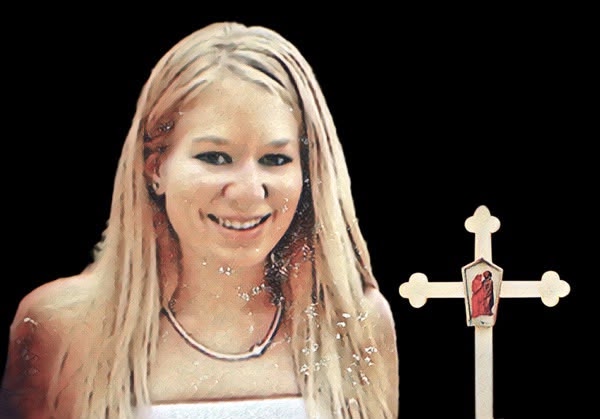
In the account he gave investigators in 2023, Joran said he took Natalee to a beach, made sexual advances, and was rejected. She told him to stop and kneed him in the groin. He then kicked her violently in the face while she was lying on the ground.
Natalee was either unconscious or already dead. Joran said he picked up a cinder block and smashed her head with it. He then allegedly dragged her body to the water, walked only until the water reached his knees, and pushed her into the sea.
Beth recognized her daughter in that reaction. She said Natalee “fought like hell” and was killed for asserting her boundary. For her, hearing the brutality was less torturous than continuing not to know.
The FBI and the family accepted the confession. But there is no forensic confirmation. The body was never recovered; there was no autopsy; the scene was not preserved; and no physical evidence can confirm either the cinder block or the way the remains disappeared.
And it is precisely the disappearance of the body that leaves the confession incomplete.
A body simply pushed into shallow water might initially sink, return to the surface during decomposition, or wash back onto the coast. Winds and currents could also carry it away, and marine activity would eventually scatter the remains. It is not impossible that the body disappeared. But neither is that an automatically convincing explanation.
The documentary itself acknowledges that FBI agents questioned this part of the story. Years earlier, members of Aruba’s search teams had released dummies into the sea and claimed that they returned to shore. To ensure the body disappeared, it would probably have been necessary to take it much farther out, use a boat, attach some form of weight, or rely on exceptional ocean conditions.
Joran may have told the truth about the murder while continuing to lie about the body. He may have omitted assistance from other people. He may have concealed how he ensured the remains were never found. It is also possible that the currents did exactly what he claims.
The most responsible conclusion is simple: We probably know how Natalee was attacked and killed. We still do not truly know how her body disappeared.
The Second Woman Who Might Still Be Alive
There is one consequence that cannot be ignored. While Joran was lying about Natalee, Stephany Flores was still alive.
He murdered the young Peruvian woman on May 30, 2010, exactly five years after Natalee’s disappearance. He was convicted and remained imprisoned in Peru until he was temporarily extradited to the United States to face charges for extorting Beth.
Stephany’s death prevents the story from being treated merely as a mystery that was finally solved. She represents the human cost of the failures in the first investigation.
It is impossible to claim that a particular arrest, prosecution, or judicial decision in Aruba would necessarily have saved Stephany. But it is equally impossible to watch the documentary without realizing that a man surrounded by suspicion, lies, and evidence remained free until he killed another woman.
Beth knew he would kill again. The title of the third episode, I Knew He’d Kill Again, turns that fear into a devastating sentence.
What the Documentary Really Adds
For those who followed the case, Taken: Natalee Holloway offers few factual revelations. Joran’s confession became public in 2023. Stephany’s murder, the contradictory stories, the extortion attempt, and Paulus’ possible influence were already known.
There is, however, previously unseen material: footage from the 2010 FBI operation, Dompig’s current testimony, new accounts from Natalee’s friends, and the reconstruction of a false lead from 2021, when a blouse presented as possible evidence underwent DNA testing and was identified as part of another scam.
The form is conventional. Interviews, television archives, photographs, recordings, and an organized chronology. The documentary does not pursue an innovative visual narrative, nor did it need to. Its main contribution lies in its perspective.
For 21 years, Natalee was transformed into a photograph, a mystery, a perfect victim, a careless tourist, and a character in a story controlled by men who decided what could be said about her. Now, Beth assumes control of the narrative.
Critical reception has been favorable, although hardly enthusiastic. The documentary has been described as fast-moving, emotionally powerful, and effective at condensing the case. The recurring reservation is the lack of new information for those who know the story and an approach that is more emotional than investigative.
It is a fair criticism. The production presents the confession as a conclusion but does not confront it with all the rigor required by the absence of a body. At the same time, perhaps its intention was never to reopen the investigation. Beth needed to explain how she survived it.
An Emotional Conclusion, Not a Forensic One
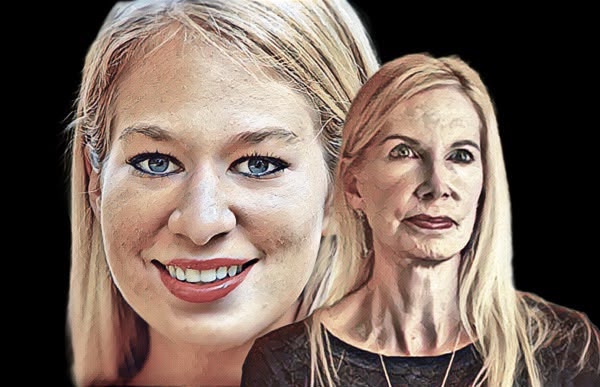
Beth says the nightmare ended when she heard the confession. That does not mean she has abandoned her search for justice. She is still working with Dutch attorneys to try to hold Joran accountable for the murder.
What ended was the torture of not knowing.
Taken: Natalee Holloway does not resolve every contradiction, recover the remains, or prove that Joran acted alone. Nor does it fully explain why a family so close to the justice system appeared so certain that the body would never be found.
But it returns to Beth the right to organize her daughter’s story.
Natalee was not merely the beautiful young woman in the photograph repeated for years. She had friends, plans, a scholarship, and dreams of becoming a doctor. She made innocent decisions that became wrong only because she encountered someone willing to turn vulnerability into opportunity.
When she recognized the danger, she fought back.
Joran tried to control the story for 18 years. He lied, changed his account, redirected searches, exploited a mother’s hope, and used the truth only when it began to offer him an advantage.
Beth did the opposite. She kept repeating her daughter’s name until time stopped protecting the man who killed her.
The documentary offers her an emotional conclusion. The forensic truth remains incomplete. And perhaps that is the most honest and painful part of the case: We now know who killed Natalee Holloway, and we probably know how she died. We still do not know everything that was required to make her disappear.
Descubra mais sobre
Assine para receber nossas notícias mais recentes por e-mail.

