
With the release of Avengers: Doomsday approaching, Marvel is once again exploring one of its most seductive possibilities: reuniting us with characters we thought we had said goodbye to. Steve Rogers returns, Wanda Maximoff reappears, and Robert Downey Jr. puts on another suit of armour, this time as Victor von Doom. Each case has a different explanation, but the emotional effect is similar. We get to see those faces again. Among so many open doors, however, one absence still hurts: Natasha Romanoff’s.
It is not a matter of overlooking Black Widow’s sacrifice in Avengers: Endgame. We know she died so Clint Barton could obtain the Soul Stone and give the Avengers a chance to reverse Thanos’s victory. The problem is that we have also watched this universe find ways to keep dead characters around. Loki gained another storyline through a variant. A Gamora from another point in time continued to exist after the death of the one we had followed. If there are so many possibilities, why must we accept that Natasha will remain forever on the other side?
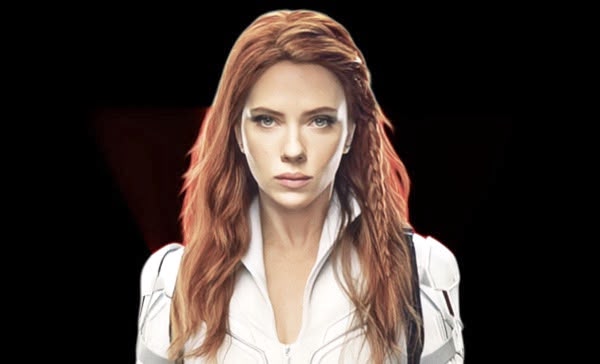
Death No Longer Ends Every Story
The differences matter. Steve did not die on screen; Tony Stark remains dead, and Downey is playing another character. Wanda’s return also has its own circumstances. But the precision of those explanations does not erase the feeling: some reunions are possible, while Natasha’s remains absent from the announced plans.
Nor is she the only absence. Jane Foster died in Thor: Love and Thunder, and her arrival in Valhalla did not undo that farewell. T’Challa carries a loss that extends beyond fiction: Chadwick Boseman’s death. These are different situations, which prevent us from treating Black Widow’s fate as an absolute exception. What distinguishes her story is the combination of our longing for the character, Scarlett Johansson’s willingness to consider her journey complete and the public conflict that marked her relationship with Disney.
The multiverse itself has already offered Black Widow an alternative in animation. In What If…?, the Watcher takes a Natasha who survived a devastated universe to another that has lost its version of the heroine. There is, therefore, no shortage of narrative mechanisms. It would be possible to preserve the death of Endgame’s Natasha and introduce another, just as happened with characters audiences were able to follow again.
That does not mean Marvel should undo every farewell. Death loses its weight when it becomes merely a gap between contracts, and respecting an ending can be a valuable artistic decision. What stands out is how flexible that rule has become. When almost anything can be circumvented, a permanent absence begins to say more than the plot’s explanation.
In Natasha’s case, there is an actress who considers the story finished. And there is a history behind the scenes that should not disappear from this discussion.
When Scarlett Had to Take On Disney
Black Widow’s solo film arrived in 2021, after the character’s death in Endgame in 2019. The opportunity to place her at the centre of her own adventure came when we already knew how her story ended. For one of the figures who helped build the cinematic Avengers, a solo spotlight took a long time to arrive.
When it finally did, it was caught up in the pandemic and a dispute over distribution. Scarlett Johansson sued Disney in July 2021, alleging that the simultaneous release in cinemas and on Disney+ undermined the box-office-linked compensation stipulated in her agreement. Disney disputed the allegation, but its public response went beyond defending the contract.
The company disclosed that the actress had already received $20 million and linked the lawsuit to a lack of sensitivity toward the pandemic’s effects. By revealing the sum and framing her claim that way, it shifted the discussion from honouring an agreement to the character of the person asking for it to be honoured.
In my view, Scarlett was right to defend her work. Being a highly paid star does not remove the right to question changes to negotiated terms. Disney also had financial interests in expanding its streaming business. Presenting only the actress’s compensation as a moral problem was a rather convenient way to frame the conversation.
That interpretation was not confined to fans. The actors’ union criticised the company’s response as bullying and gender-shaming. A woman was asserting her right to compensation and found herself having to defend against a personal attack as well.
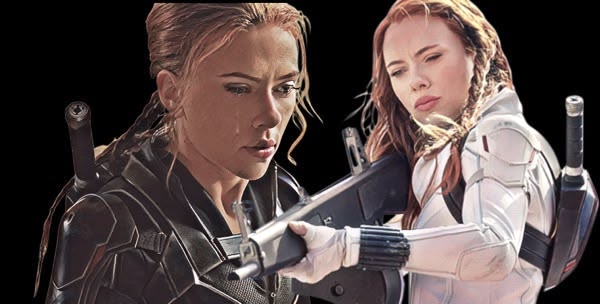
She Won, but We Lost
The dispute ended in a settlement in September 2021, with undisclosed terms. There was no court judgment declaring Scarlett the winner. Still, it is possible to recognise a professional victory in her willingness to challenge a company of that size and pursue negotiations despite the attempt to discredit her publicly.
This does not establish that Natasha’s absence is retaliation by Disney, nor does it prove that Scarlett refused to return because of the lawsuit. We do not know whether offers were made, under what conditions or how much that episode might weigh on a decision. Her public position is that the character’s story is complete and that her sacrifice deserves to be preserved.
But we can also ask whether that ending has a personal meaning. Perhaps the actress simply no longer wants to offer her art, her time, and her availability to an experience in which she had to fight and expose herself publicly to defend her own work. That is a hypothesis, not a motivation we can attribute to her as fact.
A potential multimillion-dollar offer would not necessarily resolve that question. The value of a new contract can pay for another job, but it does not determine the desire to do it. From the outside, returning may look like an irresistible opportunity. For the person who lived through the experience, it might mean reopening something she no longer wants.
Scarlett later said she held no grudge, although she criticised the handling of the dispute as unprofessional. She also continued developing Tower of Terror with Disney. That prevents a simplistic narrative of a complete rupture. Working with the company again, however, is not the same as wanting to return to Marvel or play the character once more.
Not every ending has to be a punishment directed at someone else. Sometimes, it can simply be the decision that you have already given enough.
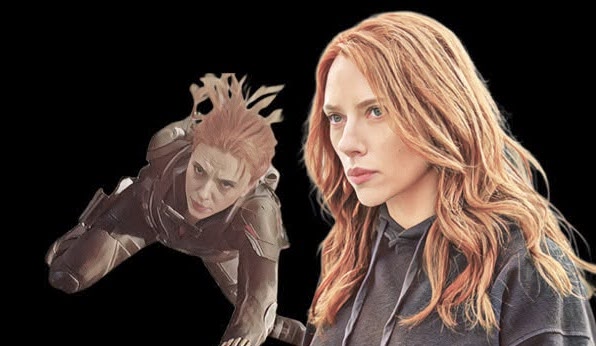
Missing Her Does Not Mean Demanding Her Return
Natasha was an important presence in a universe that, for a long time, offered women little space. We followed her humour, her guilt, her friendships and the sense of belonging she found among the Avengers. She helped turn that gathering of extraordinary individuals into a family we cared about.
That is why her absence still hurts. Recognising the importance of her sacrifice does not erase the desire to see her again, especially as the franchise prepares so many reunions. At the same time, that desire does not give us the right to demand that Scarlett reopen an experience she considers complete.
We can mourn the loss of the character and respect the actress’s decision. We can also question her treatment without pretending to know the private reasons behind her farewell. That tension makes the story more interesting than a simple campaign for resurrection.
Marvel has opened doors across time, death and realities. We will see whether, among so many possibilities, Natasha’s universe remains one with no way back. If that door stays closed because Scarlett no longer wishes to walk through it, our sadness remains legitimate. So does her choice.
Descubra mais sobre
Assine para receber nossas notícias mais recentes por e-mail.

