
As published on CLAUDIA
There is something particularly unsettling about watching a story about rights we now consider basic and realizing how recently people had to fight to secure them. Going to school, working, entering a public building, participating in society. In Being Heumann, these possibilities lie at the heart of a battle that required far more than persuading someone that inclusion was a good idea. It took occupying a building and refusing to leave.
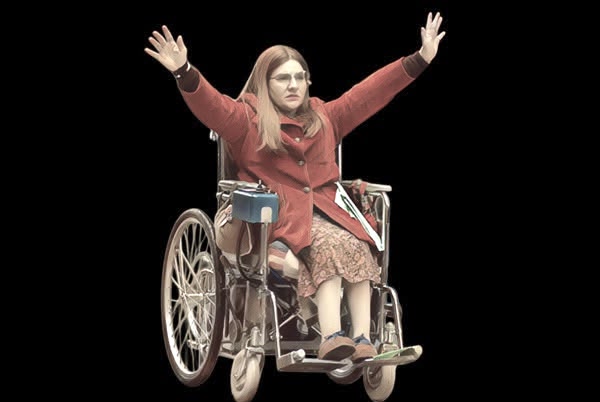
Directed by Siân Heder of CODA, the film revisits a decisive chapter in the life of Judith “Judy” Heumann, played by a deeply moving Ruth Madeley. Her name may be unfamiliar to some Brazilian viewers. Yet the scale of what she helped change touches millions of lives. And it is precisely this gap between a woman’s importance and how much we know about her that makes the film so necessary.
Judy contracted polio at 18 months and began using a wheelchair in early childhood. At five, she was denied admission to school: her presence was considered a fire hazard. Years later, having graduated and passed the written and oral examinations required to teach, she encountered another closed door. She failed the medical examination because she could not walk. She took the matter to court and became the first wheelchair user to work as a teacher in New York State.
There is a particular violence in this repetition. First, a girl is told she cannot learn alongside other children. Then, the woman who studied and trained is told she cannot teach either. Her competence becomes secondary in a society that has already decided where she belongs.
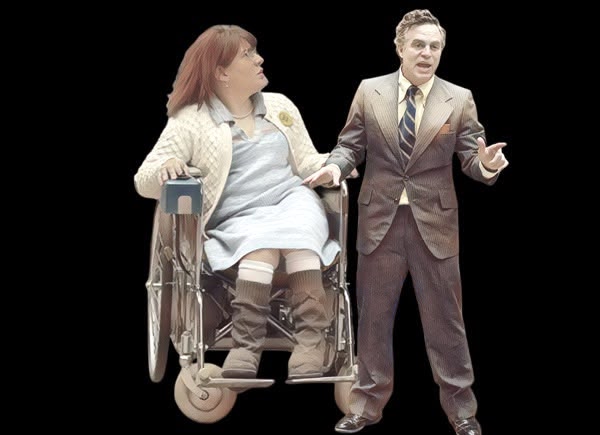
The film’s central episode takes place in 1977, when protesters occupied the offices of the Department of Health, Education, and Welfare in San Francisco. Section 504 of the Rehabilitation Act, passed in 1973, prohibited disability discrimination in programs and activities receiving federal funding. But the regulations establishing how those guarantees would be implemented had yet to be issued.
This is where a signature ceases to be a bureaucratic formality and exposes a struggle for power. Schools, hospitals, and other institutions resisted the requirements and the costs of making accommodations. Activists feared the rules would be weakened. Securing a signature was not enough: they needed to preserve the scope of the rights they had won.
Mark Ruffalo, excellent as always, plays Joseph Califano, the secretary responsible for signing the regulations. Administrative delays had tangible consequences for those still being excluded. What the government could treat as another round of review meant continued lack of access for the people waiting.
The occupation lasted 26 days. The signature came on April 28, 1977. Sustaining the protest required organizing food, hygiene, medication, and care under precarious conditions. People with different disabilities had to find ways to communicate, live together, and resist. Judy was a pivotal leader, but the victory belonged to a community.
That collective dimension also guided Heder. In a promotional interview, the director explains that she discovered the story after a friend’s recommendation led her to watch the documentary Crip Camp. She read Judy’s memoir, written with Kristen Joiner, and took the initiative to contact her. The two grew close and worked together for around two years before the activist’s death in March 2023.
“I was very afraid of making the film without her,” Heder says. At the same time, she felt an urgency to introduce Judy’s story to the world. Her responsibility extended beyond the protagonist. Researching Kitty Cone, Brad Lomax, and Hale Zukas, among other figures in the movement, deepened her commitment to making room for those lives. “This isn’t just about Judy’s legacy,” the director observes.
The film invests in relationships and characters without seeking elaborate narrative inventions. It is almost what we might call a “traditional film,” and something is comforting about that choice. The form suits the story Heder is telling: it allows the drama to unfold without diverting our attention from the people and what was at stake. The emotion emerges from their interactions, their differences, and their discovery of a collective strength.
That structure also brings a certain predictability to the journey toward victory. Still, knowing the outcome does not diminish our indignation at what it took to achieve it. The positive tone makes room for joy and humor without erasing the violence of exclusion. There is suffering, of course, but there are also people living, disagreeing, and discovering what they can accomplish together.
Ruth sustains this balance with a performance that moves us without turning Judy into an untouchable figure. The actress, who is herself a woman with a disability, had already read Judy’s memoir before the project. Playing her and leading a Hollywood production carried both personal and professional significance. “Some go much deeper than that, and this was one of them for me,” she says, comparing the role with other jobs.
It is lovely that Ruth emphasizes the privilege of sharing aspects of Judy that do not always surface once a woman is remembered primarily for her legacy. The political leader also had humor, joy, and contradictions. The film gains from allowing that person to emerge.
For Brazilian readers, the story raises another question: where were we while all this was happening? The answer requires more care than simply assuming we lagged decades behind across the board. In October 1978, a year after the American occupation, Brazil enacted Constitutional Amendment No. 12, which provided for education, protection against discrimination at work, and access to public buildings and spaces for people with disabilities. It was already a constitutional guarantee, although framed in the language and within the limitations of its time.
The 1988 Constitution and Law 7,853, passed in 1989, built on that foundation. In 2015, the Brazilian Inclusion Law was signed, taking effect in 2016. The struggle and the rights, therefore, did not begin there. The law consolidated and expanded guarantees along a path also shaped by the mobilization of people with disabilities themselves.
Nor were women absent from this history. Physician, professor, and activist Izabel Maior is one of its important leaders. In her account to the Federal University of Rio de Janeiro, she describes her involvement in the movement as it gained strength in the early 1980s. Rediscovering Judy can also be an invitation to learn more about the women who confronted similar barriers in Brazil. We do not need to find an exact counterpart to recognize the value of each journey.
The two countries’ laws differ in scope and context. Yet the proximity of some of these dates makes the comparison revealing. The American occupation happened less than 50 years ago. Barely half a century separates us from a confrontation necessary to demand regulations enforcing such basic rights. It is a relevant story and, because it is so recent, a frightening one: this past belongs to the lives of people who are still here.
The signature did not mean that every accommodation had been made, either. It was a decisive victory in a transformation that would continue to require struggle. For decades, we have discussed the right to participate, and we still need to discuss the conditions that make participation possible. A written guarantee cannot, on its own, remove a staircase, transform a school, or undo the prejudice of someone making a hiring decision.
Being Heumann arrives on Apple TV on November 13 and deserves to be seen for the history it recovers and the woman it introduces to us. We leave moved by Ruth, pleased with Ruffalo, and, above all, thinking about Judy. About how recently people had to demand what seems so obvious. And about how many still have to insist on being let in.
Descubra mais sobre
Assine para receber nossas notícias mais recentes por e-mail.

