
Suzane von Richthofen, convicted of participating in her parents’ murder in one of Brazil’s most widely publicized crimes, has returned to the spotlight with the release of The Unthinkable Daughter on Netflix. Available since November 11, the documentary by Lygia M. Barbosa and Paulo Gambale Maká combines a lengthy interview with archival footage and testimony from people connected to the case, revisiting the 2002 crime and presenting her life after prison.
For American audiences, Suzane’s notoriety may bring to mind Gypsy Rose Blanchard, portrayed by Joey King in The Act: a young woman involved in her mother’s murder whose life after prison became a public spectacle. The comparison concerns their transformation into media personalities, rather than the circumstances of their crimes. Gypsy’s case involved a history of maternal abuse; Suzane was convicted of participating in the planned murder of both her parents.
The production has reignited debate over the platforms streaming services provide to convicted criminals. Among its critics, Ana Carolina Oliveira, the mother of murdered five-year-old Isabella Nardoni, questioned narratives that turn killers into protagonists while relegating victims to the background. Writing in Folha de S.Paulo, Teté Ribeiro identified contradictions in Suzane’s account. While the filmmakers describe an examination of the media, the penal system, and rehabilitation, the film also gives its interviewee an opportunity to challenge the image that has followed her for 24 years.
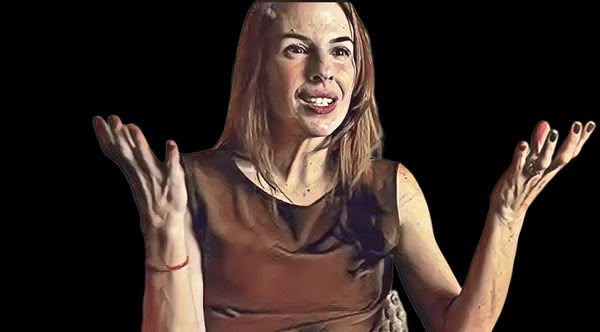
Now married, a mother, and a law student, Suzane has been serving the remainder of her sentence under an open prison regime since January 2023. Against that backdrop, an essential question emerges: why has she decided to speak now? The interview itself offers a concrete answer when she mentions looking for an internship and struggling to find work because she is recognized for the crime. Public perception affects the life she hopes to build, and a globally distributed production can help her try to change it.
Having an interest in changing her image does not automatically make her statements false. It does, however, require attention to what she acknowledges, what she downplays, and how the filmmakers challenge her version. After watching the documentary, what troubles me is the distance between declaring remorse and constructing an account that recognizes responsibility for her choices without repeatedly shifting its weight elsewhere.
The Crime That Must Remain at the Center
Before discussing the woman Suzane has become, we need to remember who Manfred Albert and Marísia von Richthofen were. He was an engineer; she was a psychiatrist. In the early hours of October 31, 2002, they were murdered while sleeping in their home in Brooklin, São Paulo. Their daughter was 18 and participated in planning the crime, carried out by her boyfriend, Daniel Cravinhos, and his brother, Cristian. Suzane was the one who let them into the house.
The investigation identified her parents’ opposition to the relationship and an interest in the inheritance among the motives. The weapons used in the attacks were prepared beforehand, precautions were taken to avoid leaving evidence, and an attempt was made to stage a robbery. That sequence matters because it prevents us from reducing what happened to an argument that spiraled out of control or a decision made in a moment of desperation.
The documentary returns to the conflicting accounts of who conceived the plan and who influenced whom. It is a relevant question, but it does not erase what followed the first conversation: there were preparations, journeys, and opportunities to withdraw. Each person’s responsibility does not depend exclusively on discovering who first voiced the idea of killing.
Tried in 2006, Suzane initially received a prison sentence of 39 years and six months. She spent roughly twenty years behind bars, in different institutions, before being transferred to an open regime. That does not mean acquittal or the completion of her sentence. It means she began serving it outside prison under court-imposed conditions, a right that exists regardless of public sympathy.
What Does Suzane Acknowledge When She Says She Is Sorry?
The extent of Suzane’s regret goes as far as her admission that she could have stopped the crime and did not. That acknowledgment exists in her words and needs to be recorded, but, at the same time, her account returns to Daniel’s influence, to being in love, and to the difficulty of reconstructing the moment when the possibility of her parents no longer existing became a plan. She never says she regrets her parents were gone or even brutally murdered in their sleep.
More than two decades later, she may be unable to pinpoint a conversation precisely. The problem does not necessarily lie in that gap in her memory. It lies in the weight the romantic explanation continues to carry within an account intended to demonstrate maturity and responsibility.
Being in love does not erase responsibility for a sequence of conscious decisions. Suzane participated in preparing the crime, let the killers into the house, and helped in the attempt to present her parents’ murder as a robbery. Her participation was not limited to failing to prevent what others would do: she acted to enable the plan and then to conceal it. Her professed remorse must be examined against those choices.
The claim that there was no longer any way to stop what would happen must be confronted with all the earlier stages at which the crime could still have been prevented. Suzane knew the house, the routine, and her own parents. Presenting herself as someone with no way out at that moment does not account for her participation in creating that situation.
I am also troubled by her insistence on arguing that there is no turning back. Being unable to undo the past is a condition of a completed act, not a sufficient reckoning with its meaning or a demonstration of remorse. What I look for is a clearer understanding of what was taken from Manfred and Marísia, beyond what Suzane has lost and the difficulties she has faced since.
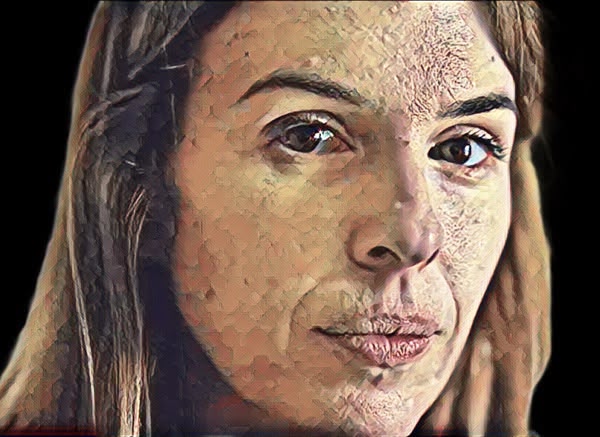
She occasionally cries, her voice changes in those moments, and she presents her arguments with exceptional clarity. Yet her words and expression do not seem to convey the same emotion to me. In fact, I do not perceive the emotion her words profess. That is a viewer’s impression, and my distrust finds firmer ground in how her account persistently distributes responsibility to others and returns to the crime’s consequences for her own life, almost casting her as an indirect victim.
Yes: Suzane’s testimony does not convince me of the remorse she professes. Not because it lacks a particular quantity of tears, but because the explanations continue to occupy space I would expect to be devoted to acknowledging her choices and the suffering she caused. She addresses those things, but superficially and with the right words; no inner conflict comes through in her account.
I keep the interview’s immediate purpose in mind and notice that Suzane appears to have no difficulty discussing what happened, yet I do not find in her recollections of her parents the affection or empathy I would expect. I perceive no emotional connection. It all sounds empty to me, as though they were strangers who merely passed through her life.
What Her Life in Prison Allows Us to Say
The stories from her years in prison also need to be examined accurately. Suzane became involved with Sandra Regina Ruiz Gomes, known as Sandrão, with whom she began sharing a cell designated for couples in 2014. The relationship ended in 2016. Sandrão later said Suzane had manipulated her, an allegation that must remain attributed to her former partner.
The episode involving prosecutor Eliseu José Berardo Gonçalves requires the same factual care. Suzane accused him of attempting to seduce her during a meeting in 2007, when she was imprisoned in Ribeirão Preto. He denied the allegation. In 2010, he received a 22-day suspension for breaching his professional duties, following confidential disciplinary proceedings. That story does not allow us to reverse the roles and claim it was established that she seduced a prosecutor.
Comparing the three convicted individuals’ subsequent paths is also insufficient to determine who controlled the others in 2002. Daniel has been serving his sentence under an open regime since 2018 and works customizing motorcycles. Cristian was granted the same benefit in 2017 but returned to prison following an incident involving allegations of assault and attempted bribery of police officers, as well as violations of his release conditions. He returned to an open regime in 2024.
Those facts prevent a simple opposition between a woman who remained embroiled in controversy and two men who never encountered trouble again. The brothers carried out the murders. Suzane’s greater visibility does not diminish their responsibility, just as their responsibility does not diminish hers.
The Limits of the Misogyny Argument
There is room to discuss how the press treated Suzane’s appearance, sexuality, and romantic life. Women face specific expectations, and crime coverage is not immune to those mechanisms. But recognizing that does not make judgment of her participation in her parents’ murder a consequence of misogyny.
Suzane’s sex life and marijuana use do not explain her conviction. The preparation of the crime and her participation do. Likewise, her parents’ opposition to the relationship does not make them responsible for the violence they suffered.
It is precisely this shift that troubles me about the framing. Discussion of excessive coverage can end up functioning as moral mitigation when it takes the place of examining actions. Suzane does not have to have been treated fairly in every headline to remain responsible for what she did.
We can criticize sensationalism, question police procedures, and recognize misogyny in certain approaches without accepting the version she offers. A serious examination needs to accommodate those questions simultaneously.
The Director’s Intentions and the Result on Screen
In an interview with Tudum, Netflix’s own editorial outlet, Lygia M. Barbosa explains that the team researched the penal system, psychological assessments, and approaches to rehabilitation. The premise deserves consideration. It also provides the criteria by which we can judge the result.
One question addresses how to gain Suzane’s trust without losing the freedom to challenge her. The response describes the many visits, conversations, and meetings before filming. It explains how the relationship was built but sheds little light on the exercise of critical independence: which statements required verification, how contradictions were addressed, and what happened when the interviewee’s version conflicted with documentary evidence.
That does not demonstrate that confrontation was absent. It shows that the answer to a decisive question remains incomplete. Establishing the rapport necessary to obtain testimony does not, in itself, explain how that testimony was investigated and presented.
Lygia also says impartiality guided the team and that different perspectives were heard. Balance, however, must materialize in the film’s choices. Editing determines how much time a justification receives, when a challenge appears, and which one stays with the viewer. Hearing several people does not remove the obligation to distinguish recollections, allegations, and established facts.
The explanation that a crime within a family becomes more serious in society’s eyes also stands out. A daughter’s participation in the planned murder of her parents involves a concrete breach of trust. That dimension extends beyond public perception. The coverage may have been sensationalist without the brutality of the event being a media fabrication.
The discussion of the media introduces another contradiction. The director asks why Suzane continues to be photographed at the supermarket and at university, while Netflix releases and promotes a new production centered on her. The documentary participates in the exposure it intends to investigate. The responsibility of those renewing that interest should also be central to the examination.
Who Speaks and Who Remains in the Archives
According to the director, Suzane’s brother, Andreas, was approached and declined to participate. His decision must be respected and does not authorize anyone to attribute a position on the documentary to him. Nevertheless, his absence establishes an asymmetry: Suzane has a present-day voice with which to explain her choices; her brother, who lost his parents, remains represented through images from the past.
Archival material helps reconstruct events, but it does not replace his current perspective. Some people affected by this story do not wish to relive it publicly with every new production. Market interest creates no obligation for them to respond.
Meanwhile, Suzane’s current life supplies the film with images of continuity. She married physician Felipe Zecchini Muniz, had a son in January 2024, and resumed her law studies. In December 2023, she officially changed her name to Suzane Louise Magnani Muniz.
Those are facts of her life, not certificates of moral transformation. Marriage, education, and motherhood do not prove remorse, just as distrust of her does not justify extending her condemnation to her family. The film can present this new life without asking viewers to accept it as an answer to the questions her testimony leaves open.
Rehabilitation Does Not Require Public Approval
There is no basis for calculating how many people came to believe Suzane after the documentary. The critical response demonstrates resistance but does not represent the entire audience. Nor does audience interest resolve the question. According to DN Brasil, the production reached the top spot among Netflix’s most-watched films in Portugal. Watching can express curiosity, outrage, or a desire to understand. It does not amount to belief.
What we can say is that Suzane has once again gained enormous visibility, including among people who may be encountering the case for the first time. The interview offers an opportunity to present her version precisely when her public image affects the plans she announces for her future.
Her right to rebuild her life does not depend on convincing those viewers that she is remorseful. Nor does it oblige viewers to accept the account she offers. Supporting rehabilitation and finding her reckoning with the crime insufficient are perfectly compatible positions.
That is why Netflix’s editorial responsibility deserves scrutiny. The platform can interview someone convicted of a crime and discuss her social reintegration, but it must maintain critical scrutiny when that person has so much to gain from the narrative. I finish the film unconvinced by the remorse presented and troubled by the space afforded to the reconstruction of her image. Suzane can tell her story. Manfred and Marísia can no longer respond.
Descubra mais sobre
Assine para receber nossas notícias mais recentes por e-mail.

