
Some films age, some films survive their own time, and then there is Rocky. In 50 years, Rocky Balboa does not seem to have lost fans; on the contrary, he kept finding new generations, until Creed discovered a way to update the mythology without destroying what had always made the character special. Half a century later, we still know exactly what it means to see someone raise his arms at the top of a staircase. We still recognize the first notes of “Gonna Fly Now.” We still want Rocky to make it to the end, even though we know that in that first film he does not even win the fight.
Perhaps it is impossible to separate Rocky’s longevity from Sylvester Stallone’s own story because, from the very beginning, one was created in the image of the other. Stallone has never hidden that. When his acting career failed to take off, he realized that waiting for someone to hand him the role that could change his life was probably not going to work. So he decided to write it himself.
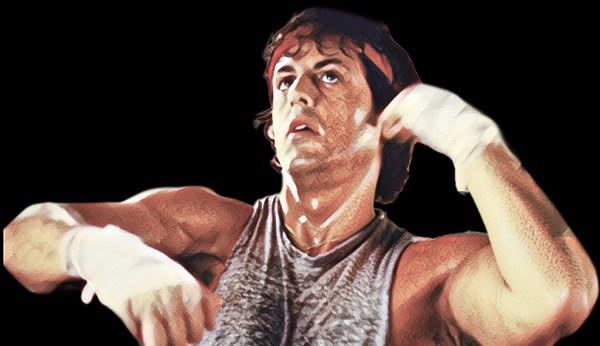
Today it feels inevitable, but at the time it was anything but. Stallone was turning 30 in 1976 and had very little to show for a career he had been fighting for years to build. He had appeared in Woody Allen’s Bananas, in The Prisoner of Second Avenue with Jack Lemmon, and had a more substantial role in The Lords of Flatbush, but nothing suggested that Hollywood was about to turn him into a star. At some point, he came to the conclusion that he would probably never break through as an actor alone and needed to find another way in. That way was writing.
The seed for Rocky came from a real fight. In March 1975, Chuck Wepner, a boxer almost no one believed could seriously challenge Muhammad Ali, lasted nearly the full 15 rounds before losing by technical knockout with only seconds left. Stallone had already been thinking about stories involving a fighter, but that bout helped give shape to what he was looking for. Soon afterward, he wrote the first draft of Rocky in just a few days.
The legend, however, usually simplifies this part of the story too much. Stallone really did write that first version very quickly, but the screenplay did not emerge fully formed. There were several major rewrites. One early version was much darker; Mickey was a far more bitter character, and the ending even pointed toward Rocky rejecting the boxing world itself. The film we know was gradually discovered along the way, until Stallone realized that the heart of the story was not about a man who wins, but about someone who needs to discover that he still has some worth. That was exactly what Stallone himself was trying to discover.
He has said that he poured his own frustration as an actor into Rocky because he believed no one would be interested in watching a story about a depressed actor and writer, broke and desperate for a chance. So he transferred that feeling to an aging boxer with no prospects, treated like someone who had wasted whatever talent he once had. Rocky’s circumstances were different, but the wound was the same. Perhaps that is why it is impossible to imagine anyone else as Rocky Balboa, although Hollywood tried.
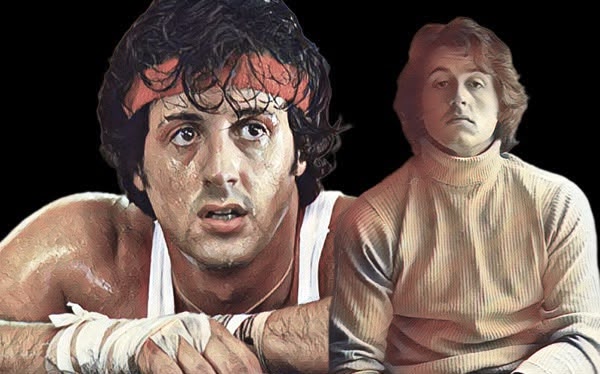
Irwin Winkler and Robert Chartoff met Stallone when he came in to discuss possible work as an actor. There was no role for him, but during the conversation he mentioned that he also wrote and told them about a story he had developed about a fighter. The producers wanted to read it. They liked it so much that what followed became one of the most famous negotiations in Hollywood history.
The problem was simple. Hollywood wanted Rocky, but it did not want Sylvester Stallone. United Artists saw the potential for a bigger film starring an established name. Ryan O’Neal, Burt Reynolds, James Caan and other known actors were associated with the project. Stallone, who was hardly in a comfortable position to turn down money, refused to sell the screenplay unless he could play Rocky himself. The offer for the rights rose to an amount that could have changed his life immediately, but he kept saying no.
Years later, Stallone would acknowledge just how risky that decision had been. He was unknown, he did not have the conventional look of a leading man, and he had a very distinctive way of speaking and moving. On paper, there were plenty of reasons for the studio to prefer someone established. Even so, he insisted that no one could play the character better than he could.
It is difficult to imagine a more Hollywood story. The man who wrote about an underdog became the underdog of his own movie about an underdog.
Winkler and Chartoff decided to back him. To make Stallone’s participation possible, the project had to remain small, with a reduced budget and very little room for error. Instead of turning Rocky into an expensive vehicle for a star, they would make a modest film with the virtually unknown actor who had written it.
John G. Avildsen was also an unusual choice. He had no particular interest in boxing, and perhaps that was exactly what allowed him to see something another director might have missed. What won him over in the screenplay was not a fight. It was Rocky talking to his turtles, Cuff and Link. Avildsen understood that he was not really looking at a boxing movie, but at a character study, a love story and a drama about loneliness disguised as a sports film.
Everything had to be done quickly. Rocky was shot in 28 days, and the lack of money ended up playing an active role in the film’s creation. Many scenes had to be changed simply because the production could not afford what had originally been imagined.
One of the best examples is the sequence with Rocky and Adrian at the skating rink. The original idea involved a crowded rink with hundreds of extras. There was no money for that. The solution was to close the rink within the story itself and leave the two of them almost completely alone. What began as a budget limitation became one of the film’s most intimate and delicate scenes.
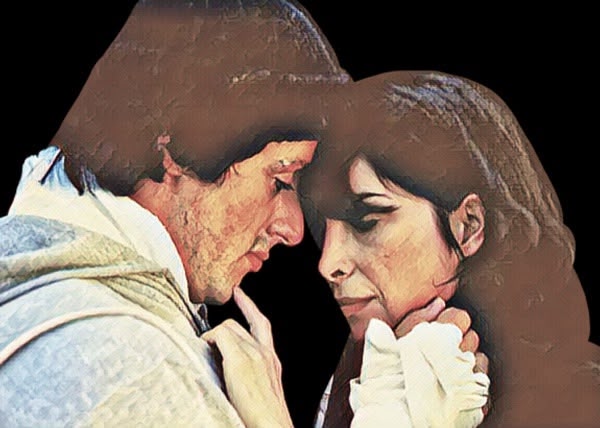
The same thing happened with seemingly minor details. A huge fight poster was produced with the colors of Rocky’s trunks reversed. Because there was no money to replace it, Stallone simply incorporated the mistake into the scene and had Rocky point it out. The robe he was given was also too large, so the character comments on that as well. Instead of hiding the production’s limitations, Rocky began to absorb them into its own personality.
The streets of Philadelphia also contributed to that almost documentary texture. Many of the running scenes were shot in something close to guerrilla style, with minimal infrastructure and real people staring at Stallone as he passed. The famous orange thrown to Rocky during his run through the market came from a spontaneous interaction. The film gained a texture that would probably have disappeared if everything had been carefully controlled.
And then came the steps. Garrett Brown had just developed the Steadicam and was still trying to demonstrate the potential of his new camera system. Among the test footage he had shot were images filmed on the steps of the Philadelphia Museum of Art. Avildsen saw the footage, immediately understood what could be done with the technology and brought Brown onto the film. One of the most recognizable images in cinema history was born from the meeting of a new piece of equipment still trying to prove its value and a film doing exactly the same thing.
The final fight was also handled with far more precision than the budget might suggest. When a more conventional approach did not work, Stallone wrote the sequence punch by punch, detailing movements and reactions. He and Carl Weathers spent hours rehearsing the fight almost like a dance. There is something especially beautiful about the fact that the climax of a boxing film was built almost like ballet.
Weathers, in fact, arrived at the role of Apollo Creed with exactly the confidence the character required. During his audition, he was so physically aggressive that Stallone asked him to ease up. Weathers complained that he could do better if he were allowed to work opposite a real actor, not realizing that the man in front of him was both the star and the screenwriter. When he found out, he replied that perhaps Stallone might improve. Stallone loved it.
Talia Shire also brought much of herself to Adrian. Because the production needed to save money wherever possible, part of her wardrobe came from her own clothes. Her quiet, withdrawn performance became the perfect counterpoint to Rocky, and the romance between them ended up becoming as important as anything that happened in the ring. Perhaps the scene that best explains Rocky, however, takes place before the fight.
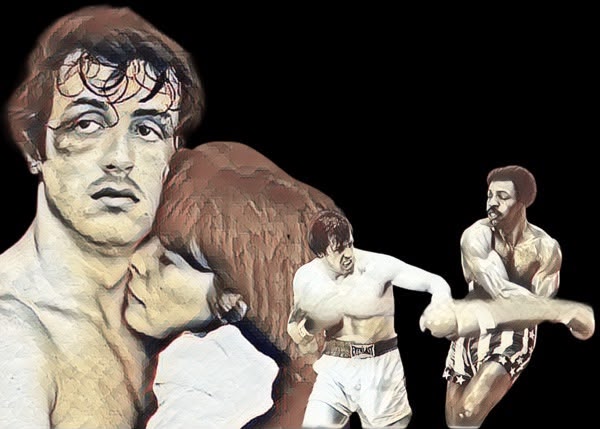
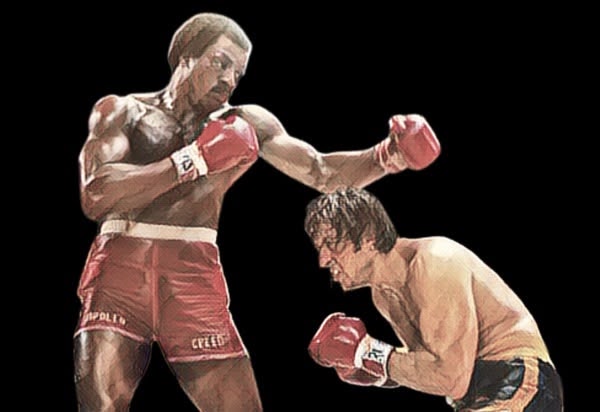
The night before the bout, Rocky admits to Adrian that he does not really expect to defeat Apollo. What he wants is to make it to the end. No one had ever done that against the champion. If he is still standing when the final bell rings, he will know for the first time that he is not simply another man trying to survive.
Stallone considered that conversation essential and insisted that it be filmed even when the production was already running behind schedule. He was right. That is where we understand that winning was never really the point. Apollo wins by split decision. Rocky barely hears the result because he is looking for Adrian. The championship belt was never his prize. The prize was making it that far and having someone to call for when it was over.
Hollywood, however, still had a much bigger surprise waiting for Stallone. When Rocky opened, its behind-the-scenes story became part of the phenomenon. Audiences were not simply watching a movie about an unknown man receiving an improbable opportunity. They were watching a film written and starring a virtually unknown actor who had just created his own improbable opportunity. The story of Rocky Balboa and the story of Sylvester Stallone began to merge in a way that would never be completely undone.
The film went to the Academy Awards with nine nominations. Stallone was nominated for Best Actor and Best Original Screenplay, an extraordinarily rare combination, especially for someone who only months earlier had been fighting simply to find work. The competition that year makes the achievement even more remarkable.
As an actor, Stallone was up against names including Peter Finch, William Holden and Robert De Niro. In the screenplay category, he faced Paddy Chayefsky and Network. For Best Picture, Rocky competed against Taxi Driver, Network, All the President’s Men and Bound for Glory. It is difficult to imagine a more brutal Best Picture lineup.
Stallone did not personally win as either actor or screenwriter. Peter Finch won Best Actor, while Paddy Chayefsky took Original Screenplay. Rocky, however, won Best Film Editing, John G. Avildsen won Best Director, and the film ended the night with the Academy Award for Best Picture.
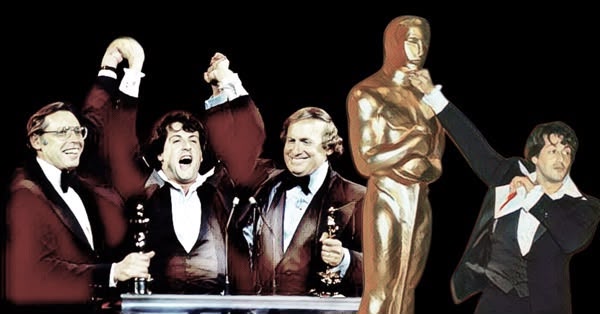
Only months earlier, Sylvester Stallone had been the actor the studio did not want. Now Hollywood had chosen the film he had written and insisted on starring in as the best picture of the year. That night did not simply launch a franchise. It created a star. Stallone became one of the biggest commercial names of his generation, created another almost equally iconic character with Rambo, and spent decades trying to move away from Rocky, return to him, reinvent him and eventually make peace with him again.
Nearly 40 years later, Creed found an extraordinarily intelligent way to update the story. Rocky was no longer the young man waiting for a chance, but the older man teaching another generation how to fight. Stallone returned to the Oscars, this time nominated as a supporting actor for the very character he had created when no one wanted to hire him.
It was also Creed that introduced Rocky to a new generation without turning the past into a museum piece. The franchise discovered that it could continue because what mattered had never simply been who would win the next fight. The essential thing was still watching someone fall, get back up and discover a reason to keep going.
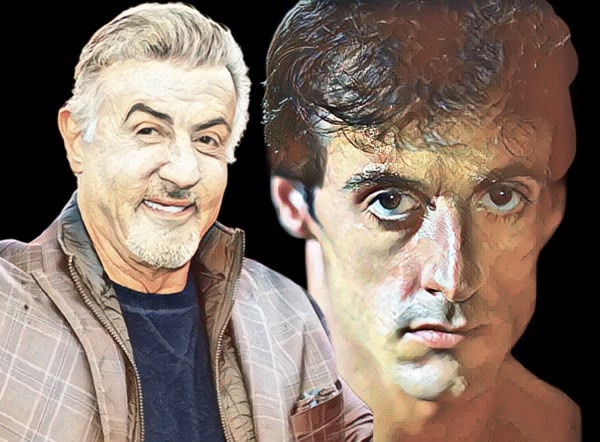
Perhaps that is why Rocky has not lost fans in these 50 years. It has gained new ones. Separating Stallone from Rocky now feels impossible. The character is fictional, but his need to prove that he still had something to offer was not. Stallone wrote a man convinced that he had missed his opportunity because Stallone himself feared Hollywood had already made the same decision about him.
Decades later, when talking about Rocky, Stallone called him his best imaginary friend. It makes sense. Rocky gave him a career, a cinematic identity and a story that crossed generations. Stallone, in return, gave the character something another actor would have struggled to provide in quite the same way: the sense that every failure, every humiliation, every run and every punch came from somewhere real.
Fifty years later, we still root for Rocky even though we know exactly how the fight ends. He loses. But when the final bell rings, no one really believes that man has been defeated.
Descubra mais sobre
Assine para receber nossas notícias mais recentes por e-mail.

