
Hollywood has always tried to replicate its successes, but the streaming era has turned that old obsession into something resembling a rule. A series takes off, attracts an audience, dominates social media, and almost immediately, competing platforms begin searching for similar stories. Not necessarily better or more original ones, but productions offering the same ingredients that supposedly made the original successful. The algorithm of repetition did not begin with streaming, but it has found the perfect environment in which to thrive. And now it is The Gilded Age’s turn.
HBO has just renewed Julian Fellowes’ series for a fifth season, a vote of confidence that reflects its growing audience. Episodes from the fourth season are averaging 5.9 million viewers in the United States, almost 20% more than the previous season. It is an impressive achievement for a period drama that does not rely on murders, dragons, superheroes, or international conspiracies. More importantly, however, The Gilded Age is beginning to move beyond being simply a successful television series and becoming a cultural phenomenon, with all the advantages and problems that such a transformation can bring.
To understand what is happening, we only need to look at the trajectory of fantasy over the past two decades. When Peter Jackson brought The Lord of the Rings to cinemas, he demonstrated that a fantasy story could attract mainstream audiences without entirely sacrificing the complexity of its literary universe. Tolkien no longer belonged exclusively to devoted readers of the genre; he had become part of popular culture. Years later, Game of Thrones achieved something similar on television, only on an even more extraordinary scale. HBO turned the power struggles between the families of Westeros into a weekly event, with characters discussed as if they were real people, theories dominating social media, and the constant possibility of an unexpected death making every episode unpredictable.
Fantasy was no longer a niche genre but one of the entertainment industry’s main attractions. Naturally, everyone began looking for the next Game of Thrones.
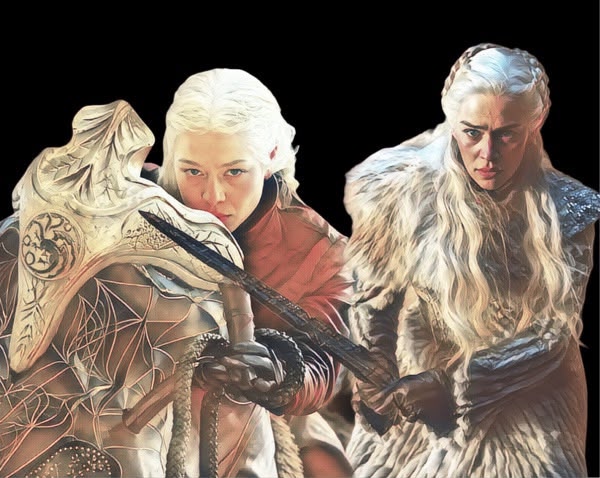
From Game of Thrones to the Search for the Next Phenomenon
Amazon invested a fortune in The Rings of Power, returning to Tolkien’s universe. Netflix backed The Witcher, while Amazon’s The Wheel of Time attempted to establish its own place with another literary fantasy saga. These works had different origins, characteristics, and audiences, but they all began to be judged by the same question: which one would become the next Game of Thrones? None managed to reproduce the original phenomenon, although some attracted substantial audiences and built dedicated fan communities.
Not even HBO managed to fully recapture that cultural impact with its own spin-offs. House of the Dragon and A Knight of the Seven Kingdoms expanded Westeros, maintained interest in George R. R. Martin’s universe, and attracted significant audiences, but that does not mean they recreated the same collective experience that watching Game of Thrones had become. The industry learned how to reproduce dragons, dynastic struggles, wars, betrayals, and spectacular deaths, but recreating the extraordinary relationship audiences developed with those characters was another matter entirely.
Perhaps that is the first problem with the algorithm of repetition: it identifies the most visible elements of a success without necessarily understanding why they worked together. And when one formula appears exhausted, the industry starts searching for another. Now, apparently, Hollywood has found new territory. Out go the dragons, and in come the American heiresses.
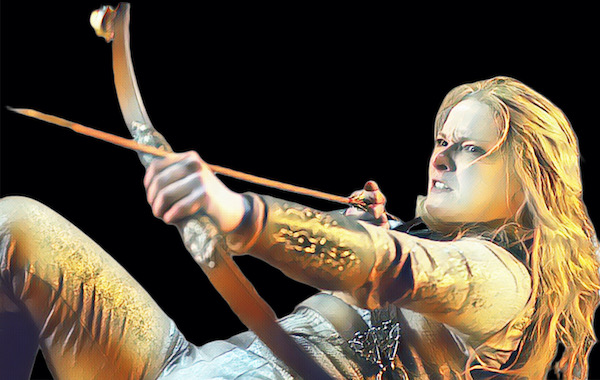
HBO, Apple, Netflix, and Amazon: The Race for the Gilded Age
The renewal of The Gilded Age for a fifth season, announced on November 19, 2026, comes just days after MGM+ confirmed The American Heiress, an adaptation of Daisy Goodwin’s novel starring Julianna Margulies. Apple TV is already exploring this world with The Buccaneers, based on Edith Wharton’s final, unfinished novel and renewed for a third season. Netflix is preparing The Age of Innocence, another Wharton adaptation, scheduled to premiere on February 18, 2027. MGM+, a service owned by Amazon, completes the picture with an eight-episode production about a young American woman who marries a British duke, adapted by Goodwin herself, the creator of Victoria.
Four platforms, four productions, and a shared historical world: late 19th-century America, enormous fortunes, European aristocracy, marriages of convenience, rigid social codes, and, above all, women forced to negotiate their futures within structures that offered them considerably less freedom than money. The similarities do not mean that all these projects were conceived in response to HBO’s success. The adaptations have their own histories, and Daisy Goodwin’s novel, for example, was published in 2010, long before The Gilded Age premiered. Even so, it is impossible to ignore the convergence and the commercial opportunity it represents.
The industry may not have discovered the Gilded Age only now, but it has certainly recognized that an audience is willing to return to it. And if the experience with fantasy taught us anything, it is that a genre or historical period can become especially attractive to streaming platforms once a production demonstrates its audience potential. The problem is that reproducing the setting does not necessarily mean understanding the story.
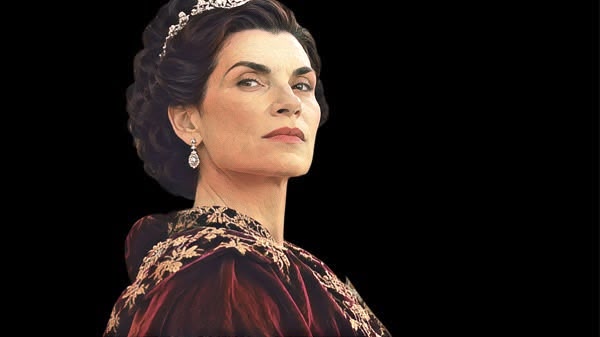
Edith Wharton: Everyone Wants the Dresses, but Have They Read the Books?
I have written several times about Edith Wharton’s presence in contemporary adaptations. The author knew the New York society she portrayed intimately and understood that behind the dresses, balls, mansions, and seemingly perfect marriages lay an often cruel system of social control. Her novels were not simply love stories about wealthy people, but studies of money, reputation, ambition, convention, and the consequences of defying expectations. It is precisely this dimension that risks disappearing when a literary work is treated primarily as an opportunity to create a visual spectacle.
In The Age of Innocence, Ellen Olenska threatens society not because she is particularly scandalous, but because her very existence challenges the values sustaining that world. Newland Archer believes himself more progressive than the other men in his social circle, yet his intellectual freedom does not necessarily translate into the courage to challenge the rules that benefit him. May Welland, frequently underestimated, understands far more than her husband imagines and knows how to use social conventions to her advantage. In The House of Mirth, Lily Bart discovers that beauty, intelligence, and social position offer little protection when a woman loses control of her reputation. Meanwhile, in The Buccaneers, we encounter young American women who cross the Atlantic only to discover that an aristocratic title can represent a new form of imprisonment.
The problem with some contemporary adaptations is that the industry seems so fascinated by the appearance of these stories that it forgets their essence. Apple’s version of The Buccaneers, as I have argued before, modernizes behavior, language, and conflicts so extensively that it often seems more concerned with bringing its characters closer to contemporary expectations than with exploring the contradictions of their time. This is not about demanding submissive women or denying that female characters challenged conventions. Such women existed, and Wharton wrote precisely about them. The point is that rebellion had consequences. A woman could desire freedom in 1880, but that did not mean society was prepared to grant it. When everyone begins thinking and reacting like 21st-century characters, the historical conflict that made these stories so compelling disappears.
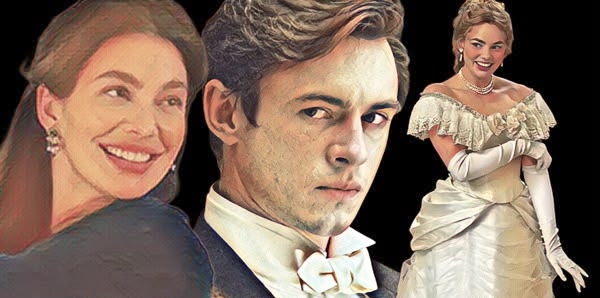
Consuelo Vanderbilt and The American Heiress: The Same Story, Another Platform
The announcement of The American Heiress makes this convergence even more interesting because Daisy Goodwin based her novel on the story of Consuelo Vanderbilt, the American heiress pressured by her mother, Alva Vanderbilt, into marrying the Duke of Marlborough in 1895. Consuelo is also the principal historical inspiration for Gladys Russell’s storyline in The Gilded Age, in which Bertha Russell, played by Carrie Coon, sees her daughter’s marriage to a duke as the opportunity to permanently transform money into aristocratic prestige.
Goodwin uses the same social mechanism to tell the story of Cora Cash, an American who believes she is marrying for love and discovers that British aristocracy has its own rules, prejudices, and financial interests. In the MGM+ adaptation, Julianna Margulies will play Isabella Cash, the mother determined to obtain through her daughter a title that her fortune cannot buy. The two fictional stories have important differences, but both explore the encounter between American families wealthy enough to finance the survival of European aristocratic estates and men who possessed titles, traditions, and castles, but not necessarily money.
Consuelo Vanderbilt herself experienced this contradiction. Her marriage was unhappy, and she eventually separated from the duke before rebuilding her life. Fiction may offer different endings, but historical reality remains more complex than romance usually allows. The arrival of The American Heiress on streaming does not necessarily mean that MGM+ is attempting to copy The Gilded Age, but the production will undoubtedly encounter an audience already familiar with this world thanks to HBO’s series. That is one of the advantages of arriving after a success: another production has already done part of the work of attracting the audience’s interest.
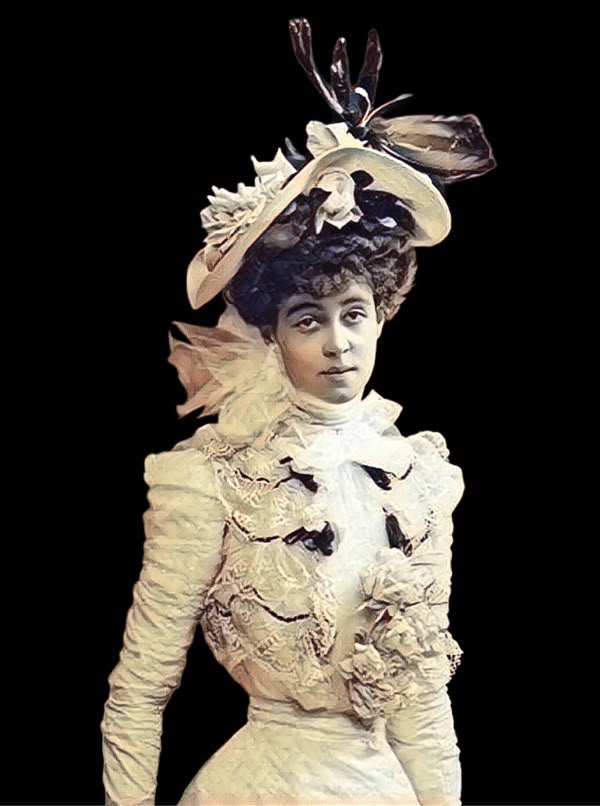
The Gilded Age Is Becoming a Major Phenomenon. And That Is Also a Problem.
There is, however, an issue that seems to me even more important than the competition between platforms. The Gilded Age is entering that delicate stage when a series stops being merely popular and begins transforming into a phenomenon. And becoming too big can bring problems as significant as its advantages. Growing audiences guarantee additional seasons, attract new viewers, and increase a production’s influence, but they also raise expectations, turn characters into the subjects of passionate disputes, and make narrative decisions feel almost like declarations of war.
We are already seeing signs of this process in the discussions surrounding Marian Brook and Larry Russell. Their romance, once one of several storylines within a much larger universe, has come to dominate a considerable share of fans’ expectations. Every encounter, misunderstanding, silence, or decision generates interpretations, demands, and frustrations. It is no longer simply a question of whether two characters will end up together, but of debating who is right, who is wrong, who deserves forgiveness, and who should be punished. The characters cease to belong exclusively to the narrative and become part of an emotional struggle among viewers.
This level of engagement is obviously a sign of success, but the problem begins when audience expectations start exerting pressure on creative decisions. Writers must decide whether to deliver what fans want, challenge their expectations, or attempt to surprise them, and none of these alternatives automatically guarantees a good story. Game of Thrones knew this situation all too well. As the series became a worldwide phenomenon, theories, demands, and expectations surrounding its conclusion multiplied. By the time its final season arrived, the discussion was no longer simply about what was happening on screen, but about what millions of people believed should happen.
I am not suggesting that The Gilded Age is destined to follow the same path, but it would be naive to ignore the risk. The series still has the opportunity to preserve what made it appealing: contradictory characters, complex relationships, and conflicts extending beyond individual romances. Julian Fellowes created a world built around the struggle between money and tradition, the transformation of American society, and the resistance of an elite convinced that it could control who deserved access to its privileges. It would be a shame if all this were eventually reduced to satisfying groups of fans or manufacturing moments designed to dominate social media.
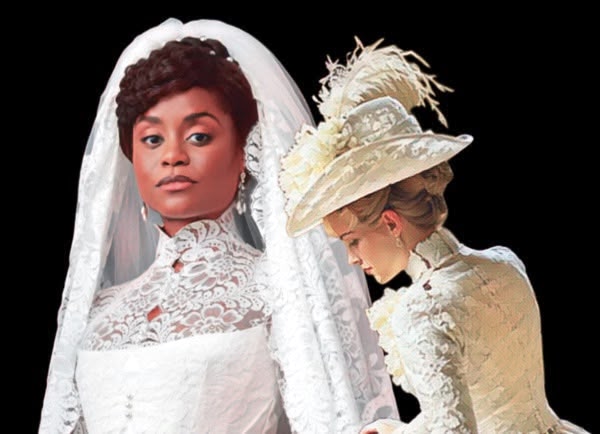
When a Series Begins Repeating Its Own Success
This may be the algorithm’s greatest danger. It is not simply that Amazon, Apple, or Netflix might search for their own versions of The Gilded Age, but that HBO’s production itself might begin to believe it must endlessly repeat whatever appears to be working. If a romance generates enormous attention, there is a temptation to prolong its obstacles. If a particular rivalry captivates viewers, it can be maintained beyond what the story requires. If a character provokes passionate debate, their trajectory may begin to depend more on audience reactions than on narrative coherence.
This is a risk, not a judgment about what the writers are already doing. But there is a difference between allowing a story to develop organically and turning it into a sequence of events calculated to maintain engagement. Success offers creative freedom, but it also creates dependencies. The larger the audience, the more costly it becomes to contradict its expectations, especially when social media transforms virtually every narrative decision into an immediate public debate. That is when a series can begin losing precisely what made it special.
There is another contradiction: an industry constantly searching for the next great production can end up damaging the original by demanding that it continue growing, surprising viewers, and generating moments capable of justifying its status. The need to preserve the phenomenon can become more important than the freedom to develop its characters. When that happens, a story stops following its own internal logic and begins trying to live up to the image that audiences and the industry have constructed around it.
The Algorithm Can Repeat a Formula, but Not a Phenomenon
There is an almost perfect irony in Hollywood’s fascination with stories about people who confused money with power, ostentation with prestige, and social acceptance with happiness. The platforms themselves seem caught in a similar competition, each determined to secure the privileged position of having the next major cultural phenomenon, closely observing its rivals’ moves and trying to make sure it does not arrive too late to the party.
HBO has The Gilded Age. Apple has The Buccaneers. Netflix will have The Age of Innocence. And Amazon, through MGM+, is preparing The American Heiress. Edith Wharton, who died in 1937, would certainly recognize many of these ambitions, although she might be surprised by how easily the social criticism in her novels can be mistaken for a celebration of the very luxury she sought to question.
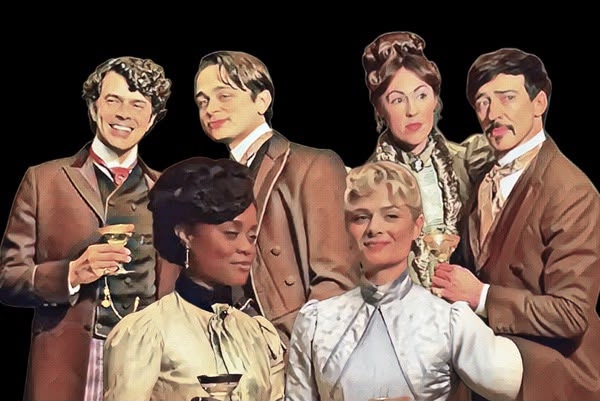
The question is whether these adaptations are genuinely interested in the society Wharton dissected or merely in the dresses her characters wore. But there is a second question, perhaps an even more important one: will The Gilded Age manage to continue telling its own story now that it has become successful enough to inspire other productions? The experience of Game of Thrones demonstrated that even the greatest phenomena can become prisoners of the expectations they create, and that success does not always grant creators the freedom we might imagine.
The algorithm may teach the industry how to repeat a formula, but it cannot guarantee an understanding of why that formula worked. And sometimes the greatest danger facing a successful series is not being copied by its competitors, but beginning to copy itself.
Descubra mais sobre
Assine para receber nossas notícias mais recentes por e-mail.

