
The success of The Gilded Age has renewed interest in one of the most fascinating phenomena of the late 19th century: marriages between wealthy young American heiresses and European aristocrats who had titles, castles, and centuries-old traditions, but no longer had enough money to maintain them. MGM+ is now exploring that world with The American Heiress, an eight-episode adaptation of Daisy Goodwin’s novel, starring Julianna Margulies.
Officially announced on November 11, 2026, the production is scheduled to begin filming in the United Kingdom later this month. Goodwin, the creator of Victoria, will write the adaptation and serve as showrunner. Margulies, best known for The Good Wife and ER, will play Isabella Cash, an ambitious American mother determined to achieve, through her daughter’s marriage, something her fortune cannot buy: an aristocratic title.
The story may sound familiar to viewers of The Gilded Age. And for good reason. Goodwin was inspired by Consuelo Vanderbilt, the American heiress whose 1895 marriage to the Duke of Marlborough became one of the most famous examples of this exchange between wealth and social status. Consuelo is also the principal historical inspiration behind Gladys Russell, played by Taissa Farmiga in HBO’s period drama.
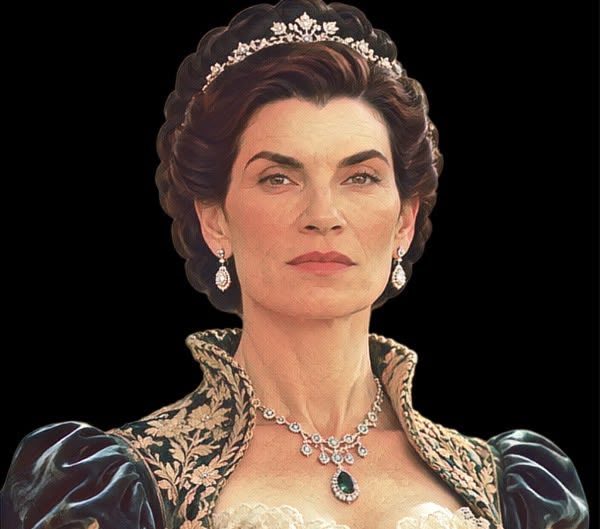
There is, however, an important distinction: The American Heiress was not conceived in response to the success of The Gilded Age. The novel was originally published in Britain in 2010 under the title My Last Duchess, arriving in the United States the following year. Daisy Goodwin was exploring this world more than a decade before Julian Fellowes premiered his series.
The Portrait of Consuelo Vanderbilt That Inspired Daisy Goodwin
The idea for the novel came to Goodwin during a visit to Blenheim Palace, the ancestral home of the Dukes of Marlborough. The writer noticed a portrait of Consuelo Vanderbilt and was struck by how unhappy the young woman appeared. Researching her life, she discovered that Consuelo had been pressured by her mother, Alva Vanderbilt, to abandon the man she loved and marry Charles Spencer-Churchill, the 9th Duke of Marlborough.
It was the perfect foundation for a novel: a young American woman with an extraordinary fortune but little freedom to choose her own husband. Her mother had arranged what society considered a brilliant marriage, while her daughter entered a union that would prove deeply unhappy. Consuelo and the duke had two sons, separated in 1906, and divorced in 1921. She eventually rebuilt her life, remarried, and devoted herself to philanthropic work.
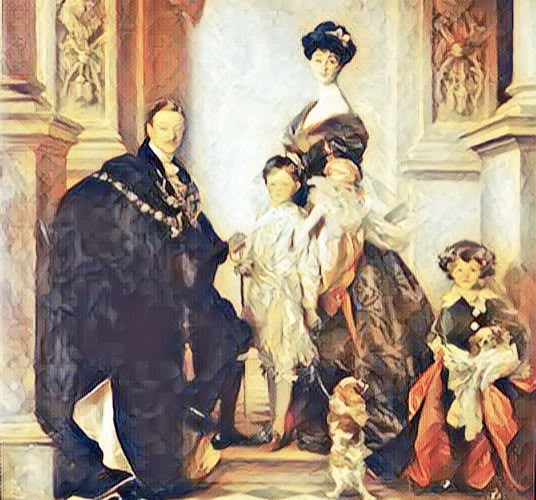
Goodwin transformed that history into the story of Cora Cash, an 18-year-old American heiress whose family made its fortune in the flour business. Their Newport mansion is so extravagant that it rivals, and even surpasses, the Vanderbilt residences. But for Isabella Cash, money is not enough. She believes her daughter’s destiny should be marriage into the British aristocracy.
Interestingly, some of the extravagances described in the novel seem more fantastical than they actually were. Goodwin explained that details of Cora’s wedding trousseau were taken directly from Consuelo Vanderbilt’s life, including a corset decorated with gold. Even the flowers transported from England in a refrigerated structure to preserve a family tradition were inspired by the real wedding.
The author recalled that her editor initially found that particular detail too implausible. Reality, however, had been even more extravagant.
Who Is Cora Cash, and What Is The American Heiress About?
Beginning in 1893, the novel follows Cora Cash, an intelligent, privileged, and rather spoiled young woman who initially has feelings for Teddy Van Der Leyden, an American artist and childhood friend. He represents the possibility of marrying for affection, although Teddy does not quite fulfill Cora’s romantic expectations.
Isabella decides to take her daughter to England, where an aristocratic title might finally secure the family’s social standing. During a hunt, Cora falls from her horse and meets Ivo Maltravers, the Duke of Wareham and owner of Lulworth Castle. Handsome, reserved, and mysterious, he possesses all the qualities of a romantic hero. He also belongs to a family whose social standing is considerably stronger than its finances.
The marriage seems to provide the perfect solution for everyone. Isabella gains the prestige she has always wanted, Ivo acquires the resources necessary to maintain his position, and Cora believes she has found love. The trouble begins after the wedding.
Arriving in England as a duchess, Cora discovers that her fortune cannot protect her from the contempt of the British aristocracy. Her mother-in-law, known as the Double Duchess, considers the young American an intruder. The servants question her habits, the social rules seem impossible to understand, and her own husband becomes increasingly distant. The wealthiest woman in her American social circle must learn that, in this world, money does not necessarily mean authority.
The novel also follows Bertha, Cora’s Black maid, whose experiences allow us to observe the same society from a radically different perspective. While her mistress struggles to gain acceptance among aristocrats, Bertha faces restrictions of class and race that no family fortune could ever erase.
Another important character is Teddy, who reappears in Cora’s life when her marriage begins to falter. And then there is Charlotte Beauchamp, an aristocratic woman who befriends the young duchess while concealing an important connection to Ivo.
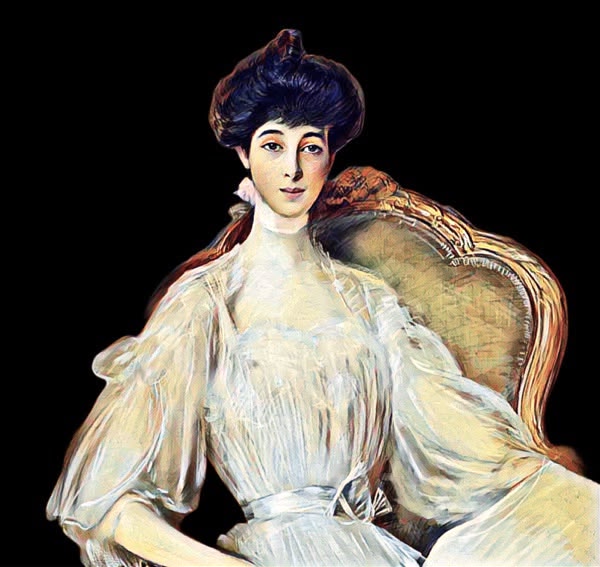
From Consuelo Vanderbilt to Gladys Russell: The Price of a Dukedom
It is impossible not to recognize Consuelo Vanderbilt’s story in Gladys Russell’s journey in The Gilded Age. Bertha Russell, played by Carrie Coon, wants to transform the fortune accumulated by her husband into social acceptance for the family. She understands that marrying her daughter to a duke would represent the ultimate triumph of her ambitions.
The real Alva Vanderbilt thought much the same way. Consuelo’s marriage to the Duke of Marlborough was regarded as an extraordinary social achievement, despite the bride’s resistance.
Isabella Cash is a literary variation on these mothers. They are powerful women within their families, but they live in a society where prestige still depends on structures controlled by men. Their daughters’ marriages offer an indirect way of obtaining a social position they could never acquire independently.
That does not mean their ambitions should be confused with female emancipation. Quite the opposite: the mothers’ social advancement often depends on sacrificing their daughters’ freedom.
There is also an economic irony. American families enriched by industry and commerce were financing the survival of a British aristocracy that continued to consider them socially inferior.
The so-called dollar princesses helped preserve British aristocratic estates for decades. By 1910, approximately one-quarter of the members of the House of Lords had American wives, according to a figure cited by Goodwin.
Another familiar example is Cora Crawley from Downton Abbey, whose American fortune helped preserve the Grantham family estate. In that sense, The American Heiress, The Gilded Age, and Downton Abbey explore different moments of the same historical phenomenon.
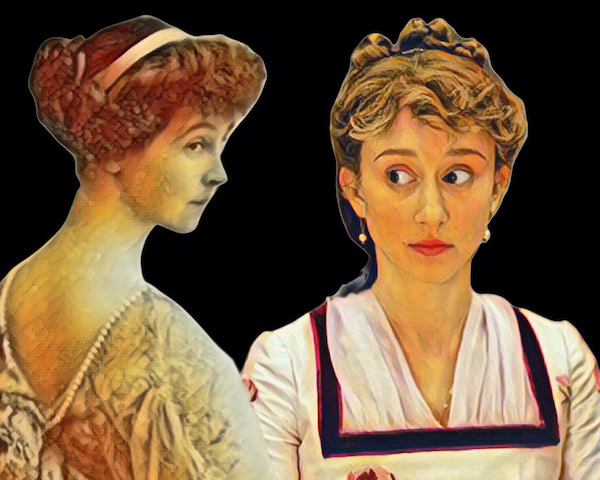
Edith Wharton, Henry James, and Rebecca: The Literary Influences
The novel’s original title, My Last Duchess, already reveals an important literary reference. Goodwin borrowed the name from Robert Browning’s 1842 poem, in which a duke describes a portrait of his former wife, gradually exposing his pride, jealousy, and authoritarian personality.
The woman is presented almost as a collector’s object, another possession within her husband’s aristocratic estate. That connection between marriage, power, and possession also runs through Goodwin’s novel.
There are clear parallels with Henry James, particularly The Portrait of a Lady, in which Isabel Archer, a young American who believes in her own independence, discovers the consequences of an unfortunate marriage. Her financial freedom does not guarantee the emotional autonomy she imagined she possessed.
In Edith Wharton, particularly The House of Mirth and The Age of Innocence, we encounter societies in which marriage, money, and reputation operate as mechanisms of control. Lily Bart and Ellen Olenska understand that defying convention can come at an unbearably high price.
Goodwin prefers a more accessible and romantic approach, but she explores the same conflict: how much control can a woman exercise over her own destiny when marriage is an economic and social institution?

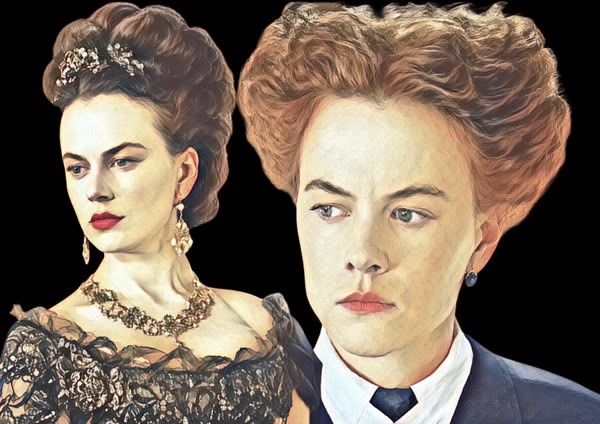
Another influence acknowledged by the author is Daphne du Maurier’s Rebecca. There is a castle, an enigmatic husband, a woman who knows very little about his past, and the disturbing presence of another female figure.
Goodwin has described the MGM+ adaptation as a combination of Consuelo Vanderbilt and Rebecca. It is a description that suggests the series could explore psychological suspense as well as the familiar balls, gowns, and rivalries between wealthy families.
The Book’s Reception: Luxury, Romance, and Criticism
The American Heiress became a New York Times bestseller and received favorable reviews for its historical reconstruction, humor, and portrayal of the conventions of British aristocratic society.
The reception, however, was not universally enthusiastic. In a review published in September 2010, The Guardian suggested that the novel took some time to find its rhythm. Initially, the abundance of descriptions of clothes and luxurious interiors seemed closer to a costume catalogue than a novel. The assessment improved considerably once Cora arrived in England and began confronting the conflicts of her marriage.
Other critics also questioned whether Ivo was sufficiently convincing. The duke functions as an object of desire and mystery, but his reserved personality and some decidedly ungenerous behavior make it difficult to become emotionally invested in the couple.
It is a significant problem, especially because the novel depends on the idea that Cora falls in love with a man who spends much of the story concealing important information.
On the other hand, Goodwin demonstrates considerable skill in presenting the social codes that governed these relationships. Much of the humor comes from the contrast between American spontaneity and British rigidity.
It is not difficult to imagine the potential of these situations in a television adaptation, particularly with an actress like Julianna Margulies playing Isabella.

The Anachronisms: A Modern Heroine in the 19th Century?
One of the novel’s most interesting questions concerns Cora’s independence, particularly when considered alongside the debates surrounding The Gilded Age. The young American challenges conventions, wants love in her marriage, and tries to understand her position. Her behavior may seem modern, but that alone does not make it an anachronism. Women in the 19th century questioned marriage, defied family expectations, and sought independence. Henry James and Edith Wharton filled their novels with such women.
The real question is how the world around them responds.
A woman could desire freedom. That did not mean society was prepared to grant it. The consequences of challenging certain conventions could include isolation, ruined reputations, and financial hardship. In that respect, Goodwin’s world preserves many of the restrictions that made these women’s lives a constant negotiation.
The material reconstruction is also grounded in historical research, although not every detail is equally persuasive. The portrayal of certain religious and family traditions surrounding Ivo, for instance, has been questioned by critics.
The adaptation will need to be particularly careful about how its characters respond to situations involving marriage, divorce, sexuality, and race. Reproducing dresses and castles accurately is not enough. A period drama must also capture the mentality of its time.
How Does the Book End? Spoilers
Warning: the following section reveals major plot developments and the ending of the novel.
The central crisis in Cora’s marriage involves Charlotte Beauchamp, a woman from Ivo’s past who befriends the new duchess and earns her trust.
Cora gradually realizes that everyone seems to know things about her husband that she does not. The situation becomes worse when she discovers that Ivo and Charlotte once had a romantic relationship.
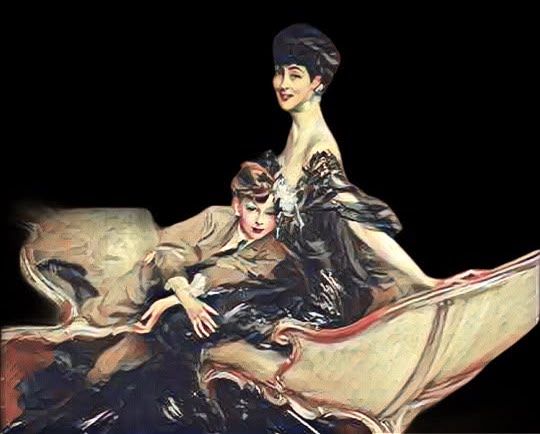
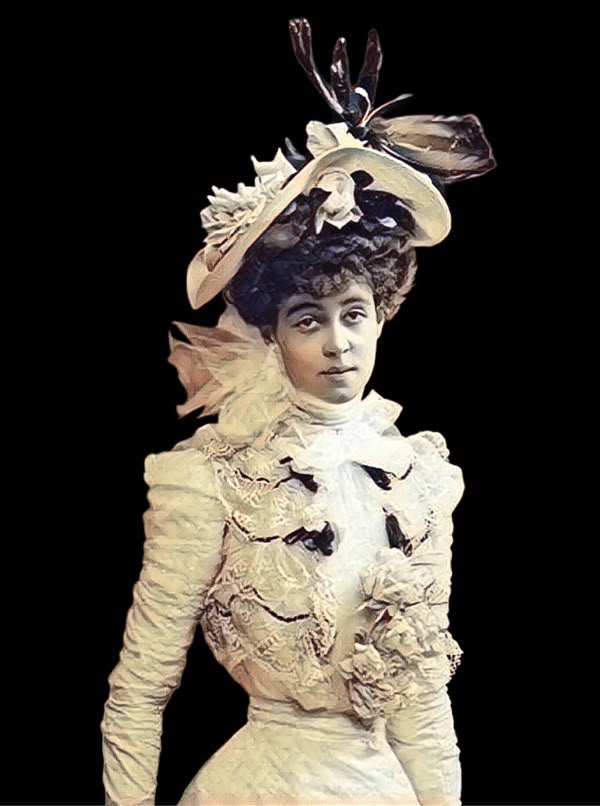
The revelation erupts into scandal during a dinner attended by the Prince of Wales. Teddy, who has grown close to Cora again, also reveals that he witnessed an intimate encounter between Charlotte and Ivo shortly before the wedding.
Cora, who has already given birth to the duke’s son, must decide whether to remain in a marriage marked by secrets or leave her husband and attempt to rebuild her life with Teddy.
When she confronts Ivo, he admits that his relationship with Charlotte existed but insists that it ended before he married Cora.
Cora decides to believe him and remain with her family. Teddy waits for her at a railway station, but she never arrives.
It is a romantic ending, at least in the narrative’s intention. It is also highly debatable.
The protagonist begins the novel subjected to her mother’s ambitions and ends by declaring that she has made a choice of her own. Yet that decision means remaining married to a man whose behavior has contributed to much of her suffering.
The conclusion can be interpreted as a sign of maturity, but also as a convenient solution that preserves the very marriage the novel has spent so many pages questioning.
That ambiguity is perhaps more interesting than the reconciliation itself.
Consuelo Vanderbilt, who inspired the character, followed a different path. After years in an unhappy marriage, she separated from the duke and eventually rebuilt her life.
Julianna Margulies and the New Series: What Do We Know About the Production?
MGM+ has confirmed an eight-episode adaptation of The American Heiress, coproduced by MGM+ Studios and Fifth Season. Daisy Goodwin will adapt her own novel, serving as writer, showrunner, and executive producer.
Julianna Margulies will play Isabella Cash and also serve as an executive producer. Stacey Snider, the former executive at 20th Century Fox, Universal Pictures, and DreamWorks, is among the producers involved. The series will be directed by Catherine Morshead, Sandra Goldbacher, and Edward Hall.
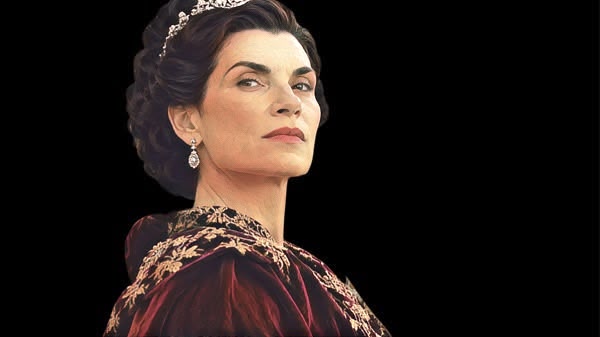
Filming is scheduled to begin in the United Kingdom in November 2026, although there has been no public confirmation, as of November 19, that cameras are already rolling. The actors who will play Cora Cash, Ivo Maltravers, Charlotte, and Teddy have yet to be announced.
No premiere date has been revealed. MGM+ has confirmed plans to make the series available in several territories, including Latin America.
The official announcement describes the production as a romantic comedy of manners, exploring mother-daughter relationships, social ambition, and the conflicts between the Old World and the New.
Margulies is an intriguing choice. Isabella is hardly a sympathetic character, but she may be one of the most interesting. Her obsession with prestige reveals both the power she exercises over her daughter and the limitations faced by a woman who depends on marriage to attain social standing.
The adaptation will also have room to develop supporting characters such as Charlotte and Bertha while giving Ivo greater complexity, addressing one of the weaknesses frequently mentioned in reviews of the novel.
Whether Goodwin will preserve the original ending or use the opportunity to reconsider Cora’s choice remains to be seen.
Can The American Heiress Repeat the Success of The Gilded Age?
Naturally, the production will be compared with The Gilded Age, particularly because both explore the same historical period and the negotiation between American money and European aristocracy. But there is an important narrative difference.
Julian Fellowes examines the transformation of American society through several families and characters. Goodwin concentrates on the experience of a young woman who crosses the Atlantic and discovers that the prestige acquired through marriage may also represent a loss of freedom. The world is similar, but the perspective is different.
And there is a detail I find particularly interesting: The American Heiress was written before The Gilded Age, yet its television adaptation arrives at a moment when the HBO series has already familiarized audiences with the Vanderbilts, the Astors, Newport, and aristocratic marriages. That could work in MGM+’s favor, but it also raises expectations.
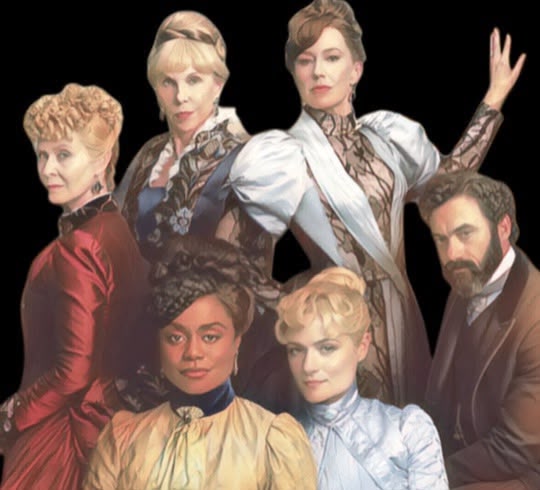
The inevitable comparison will not simply concern production values, costumes, or mansions. It will concern how these stories portray women who possessed extraordinary fortunes but still depended on men to legitimize their social position.
Consuelo Vanderbilt eventually managed to escape the marriage her mother had chosen for her. Cora Cash, in Goodwin’s novel, chooses to remain with her husband.
Two women, two different destinies, and the same question: what is an aristocratic title worth when the price is freedom?
Descubra mais sobre
Assine para receber nossas notícias mais recentes por e-mail.

