
Patricia Highsmith created one of the most fascinating, amoral, and disturbing characters in crime fiction. Tom Ripley, the ambitious young man who does not hesitate to lie, manipulate, and kill to achieve the life he desires, became a symbol of the human capacity to justify the unjustifiable. But did Highsmith understand the mind of a murderer so well because she was an extraordinary observer of human nature? And how much of her own personality was reflected in her creation?
That is the intriguing premise behind A Talent for Murder, a psychological thriller directed by Anton Corbijn and starring Helen Mirren. The film opened in the United States in October, reached British cinemas on November 20, and is scheduled for release in Brazil on January 14, 2027, under the title Como Nasce um Assassino, distributed by O2 Play and Diamond Films.
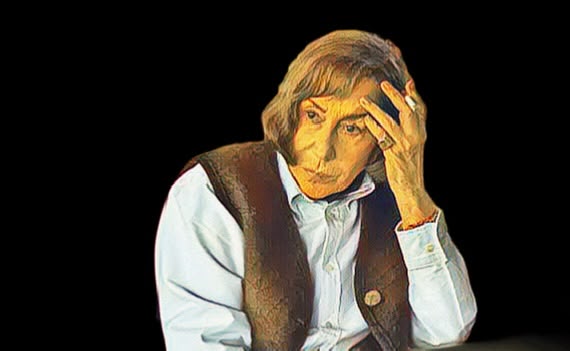
The story is adapted from Switzerland, a play by Joanna Murray-Smith, who also wrote the screenplay. Rather than offering a conventional biopic, the film transforms Patricia Highsmith herself into the central character of an intrigue that could easily have emerged from one of her novels. And it places before her a seemingly harmless young man who may understand the rules of her literary universe all too well.
Has Patricia Highsmith Met Her Own Tom Ripley?
It is 1995. Patricia Highsmith lives in isolation in Switzerland, far removed from literary circles, aging, bitter, and utterly uninterested in pleasing anyone. Her reputation as an extraordinary novelist exists alongside her notoriety as a difficult, misanthropic woman, frequently cruel in her opinions.
Enter Edward Ridgeway, played by Alden Ehrenreich, a young representative of a New York publishing house with an apparently straightforward mission: persuade Highsmith to write one more novel featuring Tom Ripley.
Before arriving at the writer’s home, Edward meets Clementine Balfour, played by Olivia Cooke, a young American heiress with whom he flirts during a train journey through Switzerland. Clementine is on her way to visit her wealthy aunt, played by Juliet Stevenson. Their seemingly casual encounter eventually provides the ingredients for a plot that could easily belong to the world of Tom Ripley.
Highsmith has no intention of cooperating with Edward. But he persists, and their relationship develops into a battle of intelligence, manipulation, and suspicion. As they begin imagining a new novel, Clementine becomes a potential murder victim, while Edward takes on a Ripley-like role in the imagined sequences.
It is precisely this movement between the actual encounter, the literary creation, and the scenes depicting the fictional story that drives the suspense. What begins as an exercise in crime writing gradually raises questions about Edward’s intentions and whether someone might be using the writer’s imagination for purposes beyond literature.

The film does not attempt to portray a true episode from Highsmith’s life. The situation is fictional, although built around genuine aspects of her personality and literary career. And perhaps that is its most compelling idea: turning the author herself into a character confronted with the same moral ambiguities that defined her work.
The Woman Behind Tom Ripley
Born in Texas in 1921, Patricia Highsmith built an extraordinary career writing about crime, obsession, false identities, and characters who rarely display the remorse one might expect from them.
Her first novel, Strangers on a Train, published in 1950, was adapted by Alfred Hitchcock the following year. In 1955, she published The Talented Mr. Ripley, the first of five novels devoted to the character who would become her most famous creation.
Ripley is no conventional murderer. He is intelligent, cultured, sensitive to beauty, and deeply interested in taking other people’s places. What makes him especially disturbing is not merely his willingness to kill, but the ease with which he reorganizes his conscience to carry on living.
Unlike so many fictional criminals, Ripley does not necessarily need to be punished for his story to make sense. Highsmith understood that the absence of guilt could be more unsettling than any display of violence.
The writer herself, however, was far from a simple or admirable figure. Her antisemitic and racist views, documented even in her diaries, form part of a biography filled with contradictions. She possessed immense literary talent, but was also capable of profoundly unpleasant attitudes and judgments.
Her relationship with identity also runs throughout her work. In 1952, she published The Price of Salt under the pseudonym Claire Morgan, a novel about a relationship between two women that would be adapted decades later into the film Carol, starring Cate Blanchett and Rooney Mara. At the time, writing about a lesbian relationship without condemning its protagonists to the tragic fate commonly imposed on such characters was an unusual choice.
It is curious to consider how a writer capable of such sensitivity toward certain human experiences could also harbor such deeply rooted prejudices in other areas of her life.
This is not, of course, about confusing the author with her characters, much less suggesting that creating Ripley amounted to a disguised confession. The more interesting question is something else entirely: how deeply must a writer understand the psychological mechanisms behind the actions of the characters they create?
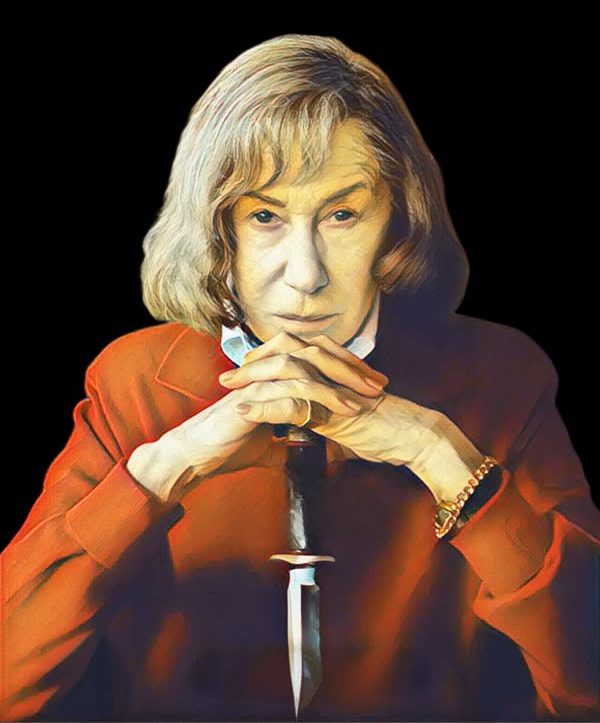
Helen Mirren and the Challenge of Playing an Unpleasant Woman
Helen Mirren is hardly an actress known for avoiding difficult characters. An Academy Award winner for The Queen, she has built a career portraying strong-willed women, often domineering and rarely inclined to compromise their authority.
In A Talent for Murder, however, the challenge appears somewhat different. Patricia Highsmith does not need to win the audience’s affection. Her intelligence coexists with her hostility, and her genius offers no excuse for her cruelty.
Under the direction of Anton Corbijn, whose credits include Control and A Most Wanted Man, the film favors suspense built primarily through dialogue, silence, and psychological confrontation. The writer’s isolation in Switzerland provides the ideal setting for a story in which two apparently civilized people may pose far greater threats than they initially suggest.
Alden Ehrenreich, as the young Edward, provides the necessary counterbalance to Mirren. Their relationship sustains a narrative in which words can be as dangerous as weapons. Olivia Cooke, particularly well known for House of the Dragon and Slow Horses, plays an important role in this game: Clementine is not simply a character who crosses the protagonist’s path, but the figure connecting reality to the crime imagined by Edward and Highsmith.
Juliet Stevenson completes the central ensemble in a story that uses crime fiction not merely as a reference, but as part of its very narrative structure.
The Enduring Fascination With Tom Ripley
The film arrives at a time when Highsmith’s work continues to demonstrate its remarkable power on screen. Tom Ripley has been portrayed by Alain Delon in Purple Noon, Matt Damon in The Talented Mr. Ripley, and Andrew Scott in Netflix’s Ripley, each offering a strikingly different interpretation of the same character.
Delon explored the impostor’s charm and almost insolent beauty. Damon emphasized his insecurity and desperate need for acceptance. Scott created a colder, more methodical, and opaque Ripley in a visually fascinating adaptation.
We should not forget John Malkovich, who played a more mature and established version of the character in Ripley’s Game, or Dennis Hopper, the star of Wim Wenders’s The American Friend, another adaptation inspired by Highsmith’s fictional universe.
These interpretations help explain the enduring appeal of her creation. Ripley is not merely a criminal: he represents the fantasy of abandoning one’s own identity, appropriating a more interesting life, and escaping the consequences.
There is also a fundamental psychological question at the heart of his characterization. Ripley desires what belongs to others, but his envy is not limited to possessions, money, or privilege. He wants to occupy the place of those who possess these things. His ambition involves a transformation of identity, as though someone else’s existence offered a more satisfying version of his own.

Highsmith died in 1995, at the age of 74, leaving behind a body of work that remains as uncomfortable as it is relevant. Her final Ripley novel, Ripley Under Water, had been published in 1991.
A Talent for Murder draws on this relationship between author and creation to construct a fictional story in which literature seems to invade reality. The idea of confronting Patricia Highsmith with someone who may understand her own psychological games is, in itself, an irresistible premise.
The question is whether the film can sustain the complexity of the real woman without reducing her to a caricature of an eccentric, cruel writer. The danger in dramatizing such a controversial personality lies in reducing all her contradictions to a collection of unpleasant characteristics, when her literary work reveals a far more sophisticated understanding of human behavior.
After all, Patricia Highsmith’s greatest talent was never simply writing about murder. It was making readers understand the murderer, sometimes root for him, and, before realizing what was happening, become accomplices to his logic.
And that remains far more disturbing than any crime.
Descubra mais sobre
Assine para receber nossas notícias mais recentes por e-mail.

