
Published originally on 04.06.2021 and updated on 07.23.3026
One of the most beautiful songs in Westeros is also one of its most terrifying. Not because it speaks of monsters, dragons, or great battles, but because it turns the extermination of an entire family into a warning that survives across generations. The Rains of Castamere was not created simply to tell a story. It was used to make sure no one ever forgot it — and, above all, to prevent anyone from daring to repeat it.
George R.R. Martin wrote the lyrics for A Song of Ice and Fire, while Ramin Djawadi composed the solemn, menacing melody that became instantly recognizable in Game of Thrones. The song tells of a conflict between two houses represented by lions: the Lannisters of Casterly Rock and the Reynes of Castamere. One golden lion and one red, both convinced that their claws were equally long and sharp.
They were not.

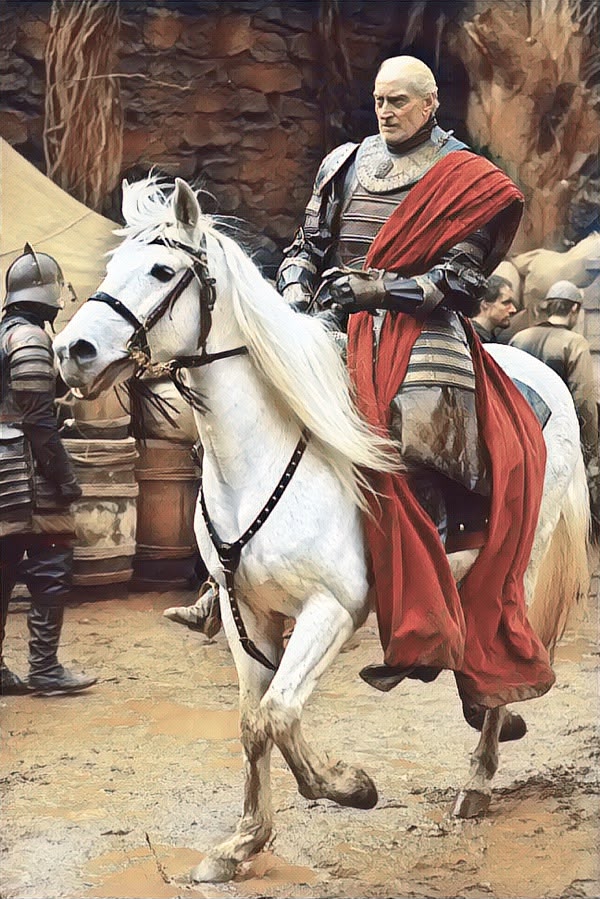

And who are you, the proud lord said, that I must bow so low? Only a cat of a different coat, that’s all the truth I know
The Family That Believed It Could Defy the Lannisters
When Tywin Lannister was young, his house did not yet inspire the fear it would later command. His father, Tytos, was regarded by many of his own vassals as generous, indulgent, and weak. He lent money he could not collect, forgave insults, and allowed families sworn to Casterly Rock to behave as though they were his equals.
Among them were the Reynes of Castamere and the Tarbecks of Tarbeck Hall.
Roger Reyne, known as the Red Lion, was a respected warrior and the lord of a wealthy, powerful, and proud house. The Reynes had accumulated influence during Tytos’s years of weakness and believed that Tywin, still very young, would not be strong enough to force them back into submission. The question that opens the song — “And who are you?” — carries precisely that arrogance. Why should one lion bow before another?
Tywin answered in a way that would define the rest of his life.
After defeating the rebels, he marched to Castamere, where the survivors of House Reyne had taken refuge in a stronghold built partly over old mines. Reynard Reyne believed the underground shelter would be impossible to invade and attempted to negotiate a surrender. Tywin did not negotiate. He ordered the entrances sealed and a nearby stream diverted into the mines.
Everyone inside drowned.
The ruins of Castamere were left standing not through neglect, but as part of the message. Destroying the Reynes was not enough. The place where they had once existed had to remain as a reminder of what happened to those who mistook Tytos’s tolerance for a permanent weakness in House Lannister. From that moment on, Tywin would not need to repeat the massacre every time he was challenged. The story would do it for him.
When a Song Replaces an Army
That is what makes The Rains of Castamere far more than a family anthem. The song functions as a portable form of power. Tywin does not need to be present, and his soldiers do not need to draw their swords. Someone only has to play the melody for everyone to understand the threat.
Years later, when Lord Farman once again challenged the authority of Casterly Rock, Tywin sent him a musician. The man delivered no demands and made no speeches. He simply played The Rains of Castamere. The message was understood, and Farman caused no further trouble.
Tywin’s story had therefore begun to work on his behalf. While other lords had to prove their strength again and again, he had built a reputation that arrived before his armies. The massacre at Castamere became a kind of political capital, and the song ensured that its value would never diminish.
Tywin understood something essential about Westeros: power depends on facts, but it also depends on the narrative constructed around them. Defeating the Reynes was not enough. The victory had to appear absolute, inevitable, and impossible to challenge.
The song accomplished that.
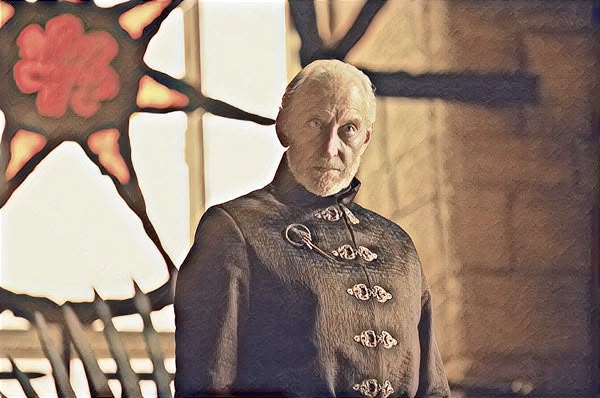
How Game of Thrones Turned Music Into a Threat
Tywin appears in the first season of Game of Thrones, played brilliantly by Charles Dance, and quickly becomes one of the series’ most intimidating characters. He has no desire to sit on the Iron Throne himself because he understands that the king is not always the man who truly rules. He prefers to operate behind the scenes, arranging marriages, controlling resources, distributing punishments, and ensuring that the Lannister name outlives the individuals who carry it.
The series uses The Rains of Castamere in the same way Tywin does: not merely as music, but as political language.
Now the rains weep over his hall and not a soul to hear
The National’s sung version plays over the closing credits of “Blackwater,” after the Lannister victory over Stannis Baratheon. Bronn also sings it with the soldiers before the battle. Later, Cersei reminds Margaery Tyrell of the Reynes’ fate, making it clear that the memory of Castamere remains a weapon available to any Lannister.
At Joffrey’s wedding, the members of Sigur Rós appear performing a deliberately bleak version of the song, much to the king’s irritation. The cameo may almost seem like a joke within the series, but it reinforces how thoroughly the song has escaped its original context and become part of Westeros’s collective imagination.
Its most devastating use, however, comes in the episode that bears its name.
The Song That Announces the Red Wedding
When the musicians begin playing the opening notes during the wedding of Edmure Tully and Roslin Frey, Catelyn Stark recognizes the song immediately. She understands that this is not an innocent choice of music. The Rains of Castamere belongs to her son’s enemies and tells the story of a family that believed it could challenge the Lannisters before being completely destroyed.
The song announces the sentence.
Before the doors are closed, before the weapons appear, and before Roose Bolton reveals his betrayal, Tywin is already symbolically inside the hall. He does not attend the wedding, stain his hands, or need to witness the massacre. The song takes its place.
Tywin Won the War for Memory
At different points, Tywin shows contempt for Robb Stark’s fame on the battlefield and for the songs that might be written about the young King in the North. The irony is that Tywin understood the value of a song perfectly. Perhaps better than anyone else.
Robb had to win battle after battle to remain admired. Tywin needed only one incontestable victory to be feared for the rest of his life. The destruction of Castamere compensated for his military defeats because the reputation built around it suggested that any victory over the Lannisters would only ever be temporary. Tywin could lose a battle and still make everyone believe he would win the war.
It is one of the most brilliant moments in Game of Thrones because it transforms something the audience already recognizes as a musical theme into an active part of the narrative. The melody does not accompany the violence. It begins. For Catelyn and for everyone watching, hearing those first notes means realizing that something terrible has already started, even though it can no longer be stopped.
Review Bronn singing with the soldiers
The episode became popularly known as the Red Wedding, but its official title is “The Rains of Castamere.” Not only because the Lannisters are behind the massacre, but because Robb Stark ultimately receives the same message the Reynes had received decades earlier: Tywin may tolerate temporary defeats, but he will not accept anyone threatening the survival of his house.
His death, therefore, could hardly have been more humiliating. The man who built his image around control, legacy, and greatness died on a privy, struck by arrows fired by the son he despised. There was no army, no great hall, and no ceremony. Only a family argument finally returned the violence to the house he claimed to protect.
And yet his death did not destroy the song.
That may be Tywin Lannister’s darkest triumph. He died a small death, but secured an enormous memory. The Reynes disappeared, Castamere remained empty, and, decades later, their story was still being sung in halls, camps, and weddings.



The Rains of Castamere appears to be about the dead, but it was always about the man who survived them. Tywin turned a massacre into music, the music into a threat, and the threat into a way of ruling Westeros even when he was nowhere to be seen.
The rains may weep over Castamere’s empty halls. What everyone hears, however, is the name of the Lannisters.
Descubra mais sobre
Assine para receber nossas notícias mais recentes por e-mail.


4 comentários Adicione o seu