
As published in CLAUDIA
There are many versions about who Karl Lagerfeld was, he presented several contradictory ones while he was alive, but it only seems that after his death the new trend began to weave a new narrative around his trajectory. At his peak, the self-proclaimed Kaiser (Emperor) of Fashion was not a figure associated with smiles or friendliness, always hiding behind a fan or sunglasses, but Becoming Karl Lagerfeld, the new Star Plus series, wants to make us rethink this image.
Before getting into the series itself, it is important to keep in mind that the “real” Kaiser made numerous controversial statements about weight, women, immigrants, victims of sexual assault, and even gay marriage. Daniel Brühl, who navigates the Marvel Universe, Hollywood, and art films with the same elegance, ease, and talent, is wonderful and yes, he brings us a taciturn, reactive, envious, and ambitious Karl Lagerfeld, who lives in the shadow of the brilliant Yves Saint-Laurent (Arnaud Valois) and is corroded by it.
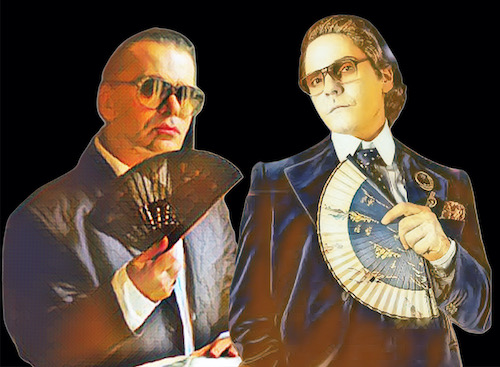
Those unfamiliar with the world of fashion or who are too young may only associate Lagerfeld with his management of more than three decades at Chanel, but we will not see any of that. Here we will understand how the 11 years before he arrived at Chanel, in 1983, were essential for his personal and professional transformation.
An adaptation of the book Kaiser Karl, by Raphaëlle Bacqué, released after Lagerfeld died in 2019, Becoming Karl Lagerfeld, tries to reveal the truth among so many lies about the couturier who began working in Paris in 1954, without formal training. Lagerfeld joined Pierre Balmain‘s team after winning the prestigious Woolmark Prize in the coats category and, over the years, gained a reputation as a “mercenary” for delivering collections to several ready-to-wear houses without exclusivity.
When we begin the series, Karl Lagerfeld works at Chloé, and its founder, Gaby Aghion (Agnès Jaoui), was the first to identify and bet on his talent, in a partnership that began in 1966 and lasted until the early 1980s. Gaby is one of the most significant female figures in the German’s life, who has a close friendship and extreme trust with his mother, Elisabeth (Liza Krauser), his greatest confidant and supporter. The two are, in a way, Karl’s shield amid a party-going and “morally decadent” Paris, where he was still a ready-to-wear designer of little fame.
Using the formula of needlepoint between fashion rivals that we saw in Cristóbal (about Cristóbal Balenciaga, who had problems with Christian Dior and which is also available on Star Plus), or The New Look, from Apple TV Plus, which pitted Coco Chanel against Dior, or even Halston, from Netflix, which showed the American fighting with the financial market, Becoming Karl Lagerfeld is about how Lagerfeld and Saint Laurent were almost opposites – Saint Laurent as a dreamy and legendary prodigy, while Lagerfeld is a grinder without a label or aesthetic of his own – but they fell in love with the same man, with tragic consequences for Fashion and for them.
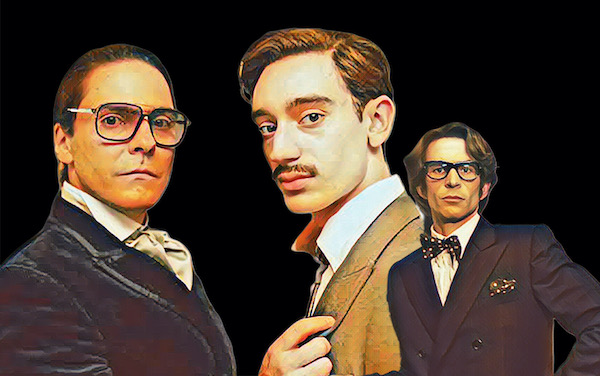
By avoiding the catwalk and choosing ego-driven fights, this toxic love triangle places the young Jacques de Bascher (Théodore Pellerin), an ambitious and seductive dandy, at the apex of the drama. And if Lagerfeld was complex, Bascher was easily frowned upon.
In the 2014 film Yves Saint Laurent, Jacques is the main antagonist, while Saint Laurent’s partner and manager, Pierre Bergé (Alex Lutz), is a more affectionate figure. In Becoming Karl Lagerfeld, Bergé is the antagonist, which already shows how much the series aims to rewrite Lagerfeld’s legacy. Bergé is shown as a controlling, even aggressive man, probably jealous of how obsessed Saint Laurent is with Bascher. For many years, Bergé fueled the myth that Lagerfeld had planted the dandy in his rival’s life just to destroy him. Here, it’s Carlos Drummond de Andrade‘s Quadrilha: Yves who loved Jacques who loved Karl who loved no one.
Canadian actor Théodore Pellerin, who also starred in the series Franklin (from Apple TV Plus), brings an unexpected empathy to Jacques’s reckless life, in a proposal infinitely more sympathetic than those that marked his biography until then. Although Lagerfeld’s negative characteristics are toned down (he even appears devouring sweets and wearing a corset to characterize his struggle with the scales), the series does suggest that he manipulated the people around him, in a very harmful and abusive game.
Jacques de Bascher, who died at age 38 from AIDS in the late 1980s, was Karl Lagerfeld’s partner for almost two decades and is always pointed out as the catalyst for Saint Laurent’s decline into the world of drugs. There is more than one biography about him, but only The 2017 series, with statements from Lagerfeld, was approved by the Kaiser and part of this narrative is in Becoming Karl Lagerfeld.
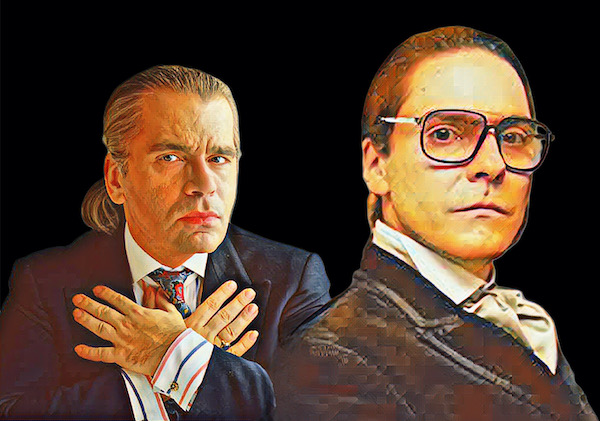
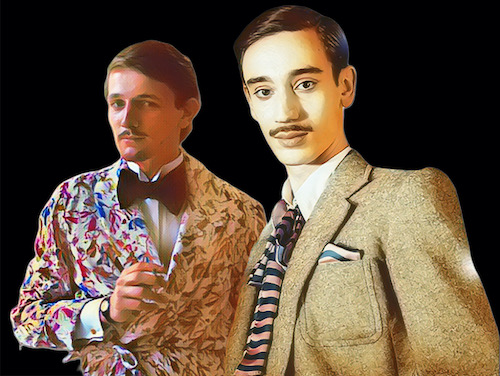
It is frustrating that the series ends with a shock, in the 6th episode, just when we would see Lagerfeld at Chanel, but by then he had already transformed. Another advantage of Becoming Karl Lagerfeld is the opportunity to explore the Parisian gay nightlife, with its classic restaurants and clubs, some of which are closed and others still open. In addition, we meet Paloma Picasso (Jeanne Damas), the daughter of the Spanish painter and at the time the muse of both Lagerfeld and Saint Laurent.
Costume designer Pascaline Chavanne had access to the Chloé archive to recreate the iconic 1973 show, which symbolized the difference in Lagerfeld’s understanding of pop, creating the polar opposite of the bourgeois sophistication of Saint Laurent’s clientele, who only consumed haute couture. In the end, there were more than three thousand costumes that helped us travel through time (yes, the soundtrack is also spectacular).
Considering that Becoming Karl Lagerfeld is at least the fourth series about the Fashion universe in the last 4 years, and The New Look was (in my opinion) quite flawed, it is worth noting that the new series is careful with the reconstruction of the period and brings great performances. With the caveat of omitting the less cool parts of its protagonist, it is worth remembering what Daniel Brühl, who knew Karl Lagerfeld and felt insecure about playing him, said in an interview: “Lagerfeld invented many different versions of his life, which I found captivating. I like people who are impostors”. The series feeds us yet another version of this fiction.
Descubra mais sobre
Assine para receber nossas notícias mais recentes por e-mail.

