
While Game of Thrones still comfortably wears the crown of the worst series finale of all time, Stranger Things ends its nine-year journey in a far more ambiguous place, nowhere near an outright disaster, but also far from the greatness it once seemed capable of reaching. Not pleasing everyone was inevitable. The massive farewell campaign, the tone of finality, and the promise of a “definitive” ending created expectations no series could ever satisfy unanimously. Still, I begin 2026 surprised by my own grumpiness: there are more problems than virtues in this finale. It could — and perhaps should — have been much better.
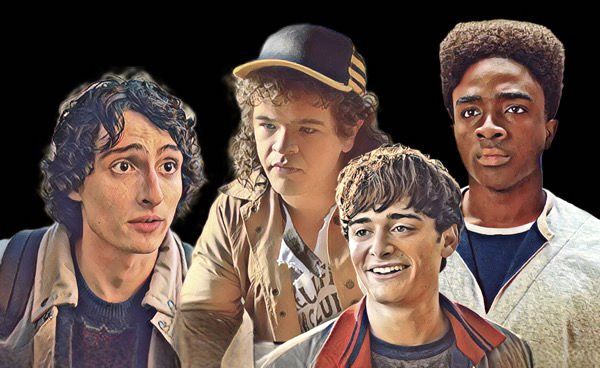
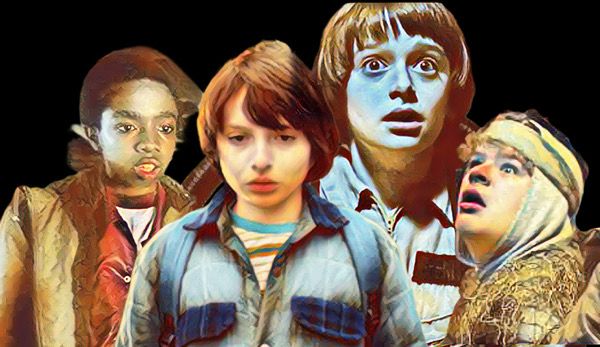
The series’s greatest strength, and one that survives until the very end, lies in how its return to the 1980s was never merely decorative. The absence of cell phones, GPS, and the internet is not just nostalgia, but the structural foundation that makes the mystery plausible. The risks Generation X lived with — without realizing they were risks — gain an almost archaeological dimension here: everything is slower, more dangerous, more irreversible. Music, clothing, innocence, even silence, all work together to create nostalgia with purpose, something rare in an industry that often confuses reference with empty repetition. In this respect, Stranger Things has always been exemplary, and remains so.
The young cast is another enduring asset. Surrounding inexperienced actors with solid veterans gave emotional weight to the fantasy and grounded a universe that, on paper, could easily have felt artificial. Not all of them matured as performers at the same pace, but as a whole, the ensemble works. Dustin remains the intellectual backbone of the story from beginning to end, Lucas grows in presence and action, and Will gains symbolic layers and even powers that resonate with his long-standing sense of displacement. The problem is that this growth was unevenly distributed.
Mike, in particular, reaches the end of the series almost as a narrative appendix. For a character who was once a central strategist of the group, one of the first to believe in Eleven, and a major emotional engine of the story, his muted presence in the final episode feels like a structural misstep. What’s missing is real risk, leadership, and conflict. Even his romantic farewell lacks impact: the scene feels more like a polite goodbye between friends than the culmination of a love story meant to carry the weight of everything that came before. The lack of chemistry there is not merely an acting issue, but a dramatic choice that weakens the ending.

Keeping Henry/Vecna as an irredeemable villain, fully convinced of his own evil, was a smart decision. In an era obsessed with redemption arcs and psychological justifications, resisting the urge to soften his choices gives the series an antagonist with real symbolic force. Even though the mythology above him — something greater supposedly controlling everything — is confusing and inelegant, Vecna himself holds firm as a capital-V Villain. That works. What doesn’t is what surrounds him.
The episode suffers from a glaring inability to synthesize. The modern obsession with bloated finales reaches its peak here: two hours that barely contain half an hour of actual narrative progress. The excessive use of slow motion turns simple scenes into drawn-out sequences, proving once again that this device, as my sister has said since The Lord of the Rings, ages badly and quickly dates a work. Stranger Things manages the dubious feat of stretching time to the point where the viewer looks at the clock and wonders, “What else?” That is never a good question for a story to provoke.
The soundtrack — historically one of the series’ greatest strengths — also stumbles. There were countless opportunities to use the show’s own theme and reinforce its emotional identity, yet choices like Purple Rain, despite the song’s undeniable greatness, feel oddly misplaced. Instead of heightening emotion, they distract. It’s as if the series, so aware of its own iconography, suddenly doubted it at the very end.
Then there is the issue of false stakes. The term “plot armor,” popularized by critics and fans on platforms like TikTok and Reddit, has never felt more appropriate. If the series has no intention of sacrificing central characters, perhaps it shouldn’t build suspense as though it might. At no point did I truly fear for anyone. Eleven’s supposed sacrifice — revealed to be staged, as she survives, escapes the military, and symbolically cuts ties with those she loves — is sweet and consistent with her lifelong suffering and isolation, but utterly predictable. Stranger Things has never killed a protagonist, and the finale was never going to be the moment to break that pattern without laying proper groundwork.
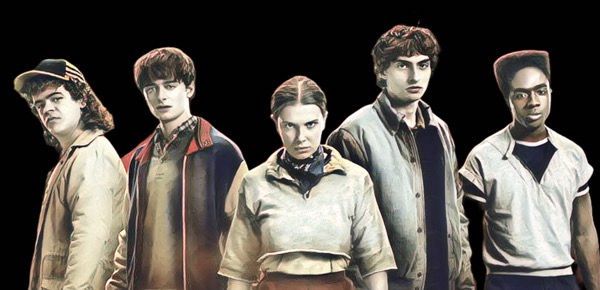
That predictability also empties out secondary characters who once seemed promising. Dr. Kay is a telling example. The celebration surrounding Linda Hamilton’s casting created expectations that were never fulfilled. Her presence neither raises the stakes nor deepens the conflict, ultimately bordering on the embarrassing. With the world literally collapsing, the military’s obsession with capturing Eleven and Kali feels bureaucratic and dramatically pointless. Once the army enters the story, it becomes obvious they are nothing more than “redshirts,” there to die in place of the protagonists. There is no tension — only noise.
Finally, it’s impossible to ignore Millie Bobby Brown’s performance. This may not be a popular opinion, but it feels necessary: she was extraordinary when she first appeared, but over time has become an actress limited to a single emotional register. That limitation drains Eleven of the dramatic complexity she most needed at the end. The result is a protagonist who carries enormous symbolic weight, but not the internal conflict to match it.
The final scene, however, works. Acknowledging that the basement games, the dice, and the D&D campaigns must be placed on a shelf to make room for adulthood is a simple, beautiful, genuinely poetic gesture. There, Stranger Things finds its truth: growing up doesn’t mean losing things, only learning where to keep them. It’s an ending that moves fans, especially those who grew up alongside the series.
Perhaps the greatest flaw of Stranger Things’ finale lies not in what it does, but in what it refuses to do. It lacks the courage to lose, to cut, to wound. In a story that has always spoken about fear, trauma, and growing up, the goodbye feels overly protective. Beautiful, yes. Affectionate, without question. But far less powerful than what this series taught us to expect for so many years.
Descubra mais sobre
Assine para receber nossas notícias mais recentes por e-mail.

