
One of the film Michael’s greatest strengths, in the way it briefly moves through each phase, is showing the inspirations that shaped Michael Jackson, the icon and legend he became. Not all of them made it into the final cut (such as Diana Ross), but others are there. And it is a task that, at first glance, seems like a simple exercise. The names are well known, repeated by Michael himself throughout his life, appearing in interviews, speeches, and behind-the-scenes accounts.
The question was never to identify where the step, the costume, or the music video came from. The more interesting point is understanding how he never anchored himself in his influences, but instead took them further.
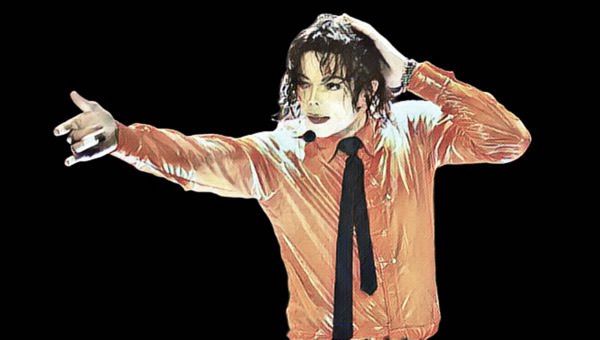
The presence of James Brown is the most obvious and, at the same time, the most revealing. Michael spoke of him without hesitation, recognizing in Brown the origin of his understanding of performance. Timing, the use of the body as tension, and the almost physical relationship with the audience. There is a direct line between the two, but it is never about imitation. Michael absorbs Brown’s energy and reorganizes it into something more controlled, more precise, almost hyper-choreographed, as if transforming impulse into language.
This movement only becomes complete when Fred Astaire enters the equation. If Brown represents explosion, Astaire represents the disappearance of effort. Lightness as construction. Michael often said he studied his movements frame by frame, not to replicate them, but to understand how the body can appear inevitable, as if always in the right place without ever revealing the work behind it. What emerges is a rare synthesis: strength and precision coexisting without conflict.
There is, however, a less obvious and perhaps deeper layer. When Michael speaks of Charlie Chaplin, he is not referring only to performance, but to emotion. Chaplin introduces the idea that the body can carry contradiction, melancholy, and irony. In Michael, this appears as a fracture within perfection. Even in his most controlled moments, something always escapes, an emotional charge that never fully resolves and prevents the spectacle from becoming mere surface.
This logic expands with Marcel Marceau, whose influence helps explain why Michael never relied solely on his voice. There is a clear awareness that narrative can exist without words, that gesture alone can sustain an entire story. It is no coincidence that his most iconic videos still function even when the sound is removed. The body continues to speak.
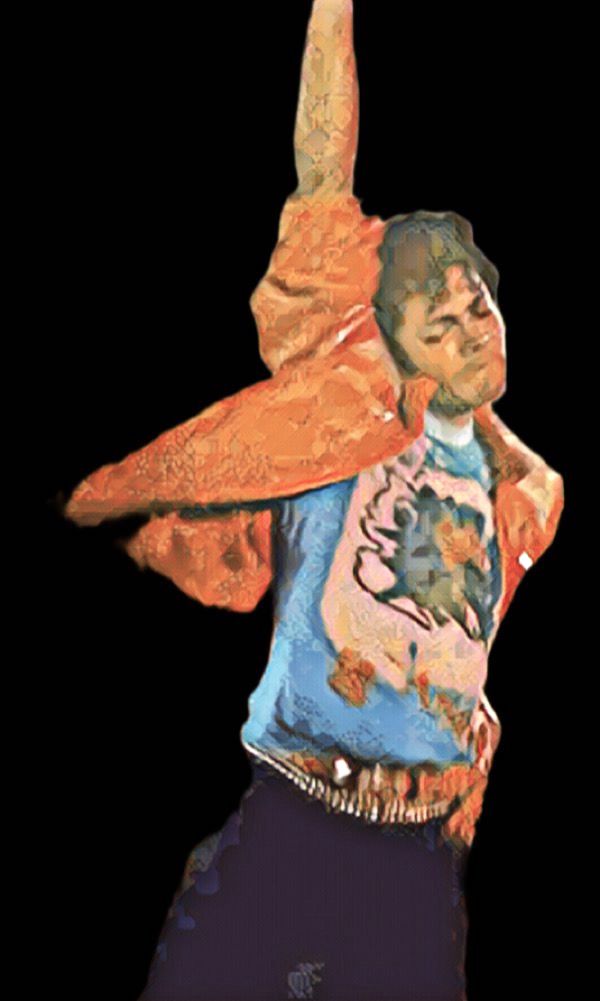
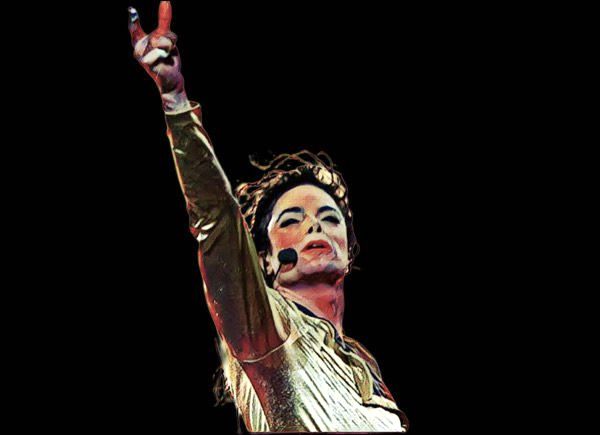
If the physical construction comes from this dialogue between dance, cinema, and mime, the voice is shaped by another tradition. Sam Cooke is present in the softness, in the way emotion is guided without excess. Smokey Robinson appears in the detail, in phrasing, in how each syllable finds its place. And Stevie Wonder emerges as a model of creative autonomy, someone who does not separate composition, production, and performance.
Within this same axis, Diana Ross occupies a particular place. More than an aesthetic influence, she represents a form of guidance, a presence that helps shape not only the artist but the way he positions himself within the industry. There is a lesson there in posture, in understanding what it means to exist under constant scrutiny.
Perhaps Michael’s most ambitious gesture, however, lies in how he expands this repertoire beyond Black American music. In recognizing Elvis Presley, he points to the possibility of crossing audiences and challenging racial boundaries within pop culture. With The Beatles, the interest seems different: not only immediate impact, but the construction of legacy, of a catalog that endures and reshapes itself across generations.
This ambition finds a kind of synthesis in the influence of West Side Story and choreographers like Bob Fosse. Here lies the idea of total spectacle. Music, dance, and narrative function as parts of the same structure. It is no longer about performing a song, but about building a universe around it, where each element reinforces the other.

What these references reveal is not merely a set of tastes or preferences. They outline a highly conscious artistic project. Michael knew exactly what he was absorbing and, more importantly, why. Each influence fulfills a specific function within a larger architecture that never allows itself to be reduced to a single origin.
This is perhaps why any attempt to map his influences always feels insufficient. Because, in the end, what defines Michael Jackson is not where he came from, but the fact that he managed to transform all of it into a language of his own. A language in which body, voice, image, and narrative cease to be separate elements and begin to operate as a single system.
And it is at this point that the list of references stops explaining. It helps trace the path, but it cannot fully account for the result.
Descubra mais sobre
Assine para receber nossas notícias mais recentes por e-mail.


1 comentário Adicione o seu