
Before any series, the space race condensed, in just a few years, a conflict that was at once technological, political, and symbolic. The question organizing that moment seemed straightforward, almost naïve in its formulation, yet it carried far-reaching implications: who gets there first. What was at stake was never simply reaching the Moon, but determining who would have the authority to define what that achievement meant for the entire world.
When the Soviet Union launched Sputnik in 1957 and sent Yuri Gagarin into space in 1961, it initiated a sequence of milestones that shifted the symbolic balance of power during the Cold War. The United States, which until then had sustained an image of unquestioned technological superiority, was forced into an accelerated response. The Apollo program emerged from this need to reverse a disadvantage that was not only scientific but narrative. In 1969, by placing Neil Armstrong and Buzz Aldrin on the lunar surface, the United States did more than achieve a technical goal; it reshaped how that moment would be remembered, interpreted, and absorbed into the idea of global leadership.
Getting there first means controlling, at the same time, the timing of the event, the discourse surrounding it, and the projection of the future that follows from it. The Moon became a stage on which it was decided who held the legitimacy to guide the collective imagination of what comes next.

The human cost of an accelerated race
This process did not unfold linearly, nor without loss. The acceleration driven by political deadlines meant that decisions were made under constant pressure, often with full awareness of the risks involved. In the United States, three astronauts died in the Apollo 1 fire in 1967 during a ground test that exposed serious flaws in the program. In the Soviet Union, Vladimir Komarov died aboard Soyuz 1 in the same year, and the crew of Soyuz 11 lost their lives in 1971 after a depressurization failure. These figures, often cited as the toll of the crewed space race, do not capture the full picture.
The Nedelin disaster in 1960, caused by a rocket explosion during testing in Baikonur, killed dozens of engineers and technicians and remained hidden for decades. This episode reveals a structural difference between the two sides: while the United States made its failures public, the Soviet Union absorbed them within a system of secrecy that shaped not only external perception but also the way the program itself evolved. The space race was presented as a narrative of continuous progress, yet beneath it lay a process marked by human loss and decisions that prioritized speed over safety.
Star City is the core of the Soviet project
It is within this context that Star City emerged, a closed town built outside Moscow to train cosmonauts. More than a technical facility, it functioned as a fully controlled environment where science, ideology, and daily life were intertwined. The Yuri Gagarin Cosmonaut Training Center brought together simulators, centrifuges, isolation chambers, and structures capable of reproducing the extreme conditions of space, while also organizing the lives of cosmonauts and their families within a system isolated from the rest of the country.
During the Cold War, Star City operated under strict secrecy, did not appear on maps, and remained inaccessible to the public. Its function extended beyond training, as it also participated in constructing a narrative of competence and control that needed to be sustained before the world. Today, the site remains active under Roscosmos, receives astronauts from different countries, and participates in international programs, but it no longer occupies the same symbolic position it held during the most intense period of competition between the United States and the Soviet Union. Space remains strategic, but the form that strategy takes has changed.
The divergence that gave rise to For All Mankind
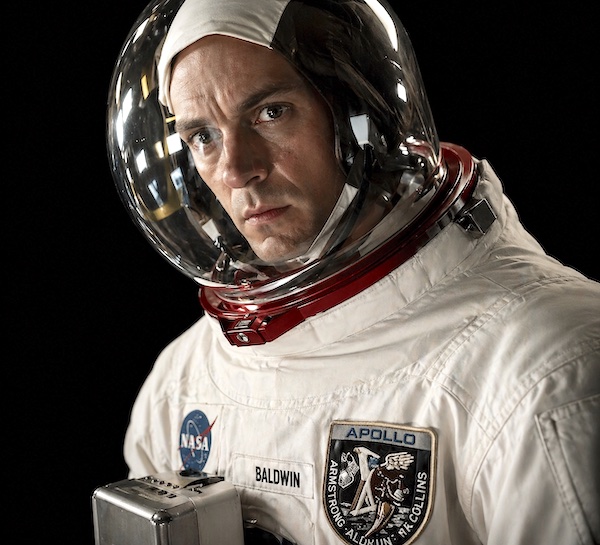
The series For All Mankind was born precisely from the possibility of reversing that decisive moment. Created by Ronald D. Moore, Ben Nedivi, and Matt Wolpert, it begins with a simple premise that reorganizes the entire historical narrative: what if the Soviet Union had reached the Moon first? From that point, the show builds an alternative timeline that unfolds across decades, advancing roughly ten years with each season.
The first season focuses on the immediate impact of that reversal, showing how the United States responds to a defeat that reshapes not only public policy but also the internal structure of NASA. Women enter the astronaut program earlier, and the presence on the Moon shifts from symbolic to permanent with the creation of the Jamestown base. The second season expands the scope by turning space into a direct extension of geopolitical rivalry, introducing militarization in orbit, and escalating indirect conflicts. The third shifts the axis to Mars, incorporating private companies and illustrating how the race extends beyond the original two blocs. The fourth introduces economic logic more explicitly, with resource extraction and the consolidation of a human presence that moves closer to a productive system rather than a purely exploratory one.
Across these seasons, the series constructs a narrative in which technological advances and political decisions are always tied to personal consequences. Characters age, accumulate losses, reassess choices, and reveal that every step forward carries implications that stretch across decades. The Soviet Union, although central to the premise, initially appears as a distant and only partially explored presence. Over time, it is portrayed with greater complexity, including engineers, internal decisions, and moments of cooperation, but it never fully occupies the narrative center.
The emergence of Star City as a spin-off
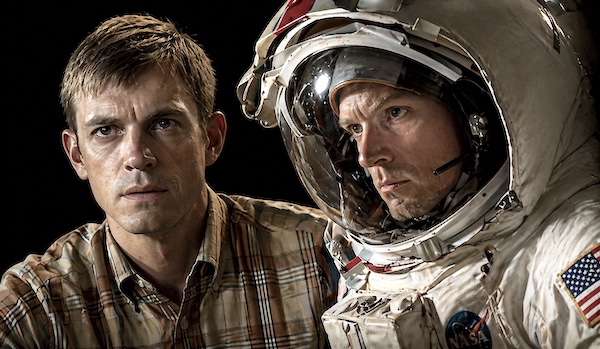
It is precisely this partial absence that creates space for Star City to emerge as a spin-off. The new Apple TV+ series shifts the point of view and situates itself within the Soviet system to examine what victory produces from the inside. Instead of following the American response to defeat, as For All Mankind does, the focus turns to the functioning of a structure that must continuously sustain the image of success it has created.
Star City proposes to explore the daily lives of cosmonauts, engineers, state agents, and political figures, revealing how surveillance, information control, and institutional pressure shape decisions and relationships. Victory, in this context, ceases to be an endpoint and becomes a condition that must be constantly reaffirmed. What is at stake is not only maintaining technological leadership but preserving the narrative that legitimizes it.
What connects reality and fiction
By bringing together the real space race, the construction of Star City, and the hypothesis explored in For All Mankind and its spin-off, it becomes clear that the central element remains the same. Getting there first has never been merely a chronological milestone. It is about determining who defines the meaning of the achievement and who shapes the collective imagination of the future.
In reality, the United States assumed that role when it reached the Moon in 1969. In fiction, the reversal allows us to observe how that same position transforms when it belongs to the other side. In both cases, the achievement does not end the conflict, but initiates a new phase in which the challenge becomes sustaining, justifying, and expanding what has been accomplished.
The space race, whether in history or on screen, reveals that the true arena of competition lies not only in technology but in the ability to transform an achievement into a lasting reference point. That is what connects the Moon of 1969 to the narrative of For All Mankind and to the emergence of Star City as its natural continuation.
Descubra mais sobre
Assine para receber nossas notícias mais recentes por e-mail.

