
Michael Jackson’s relationship with the Beatles cannot be read as an isolated chapter within his biography. It functions almost as a key to understanding how he saw music, fame, and, above all, power. What begins as admiration turns into collaboration and ultimately culminates in a decision that reshapes not only his own trajectory but the very logic of the music industry.
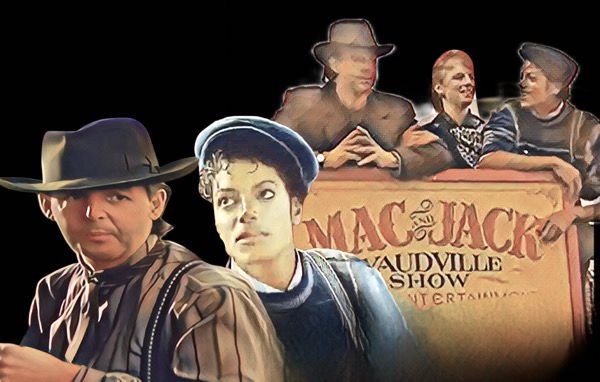
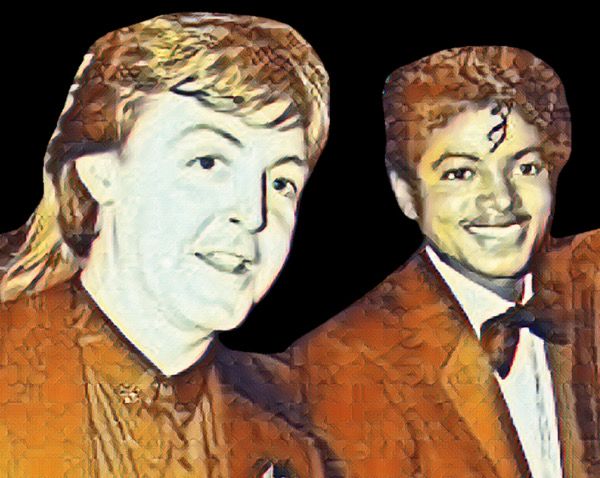
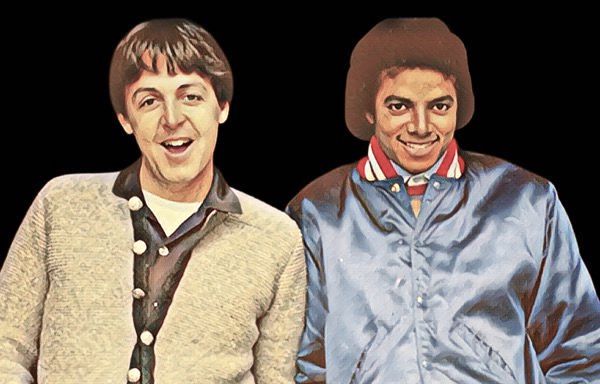
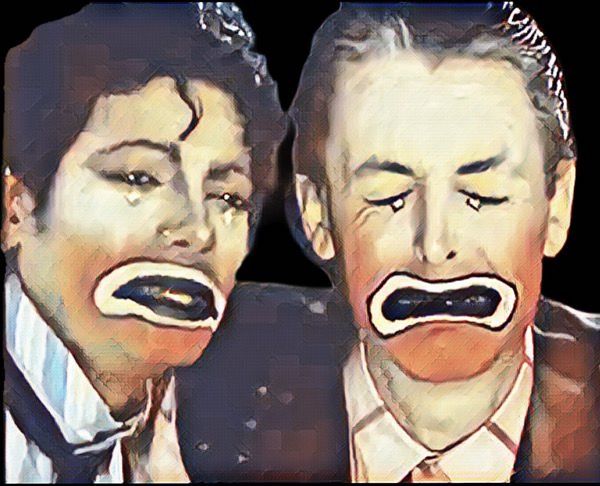
Michael grew up listening to the Beatles and recognized in them a model of songwriting and cultural impact. Even at a young age, he cited them as a reference, not only for their sound, but for their ability to turn pop music into something larger, almost universal. When he grew closer to Paul McCartney in the early 1980s, that connection took on a concrete form. The two recorded “The Girl Is Mine,” released on Thriller, as well as “Say Say Say” and “The Man.” “Say Say Say,” in particular, became a major success and featured an emblematic music video in which they appeared as characters in a small-scale con, revealing a light, almost playful dynamic between two artists operating on the same global scale.
That partnership, however, already carried a structural dimension that was not immediately visible. Paul McCartney had lost control of the songs he wrote with John Lennon back in the 1960s. Over the decades, that catalog passed through different companies, becoming the subject of ongoing disputes. Copyright ownership was already one of the central unresolved tensions between Paul, Yoko Ono, and the business interests surrounding the Beatles’ work. McCartney spoke openly about the mistake of not owning his own songs and about his unsuccessful attempts to regain them.
Michael listened carefully, but interpreted the situation differently. Rather than seeing only an irreparable loss, he understood where the true center of power in the music industry lay. From that point on, his interest in publishing rights shifted from peripheral to strategic. He did not want to be just the biggest artist in the world. He wanted to engage with the structure that made such greatness possible.
When ATV Music, the company that owned the Beatles’ catalog, entered negotiations, Michael did not act as a fan but as an investor. In 1985, he offered approximately $47.5 million and completed the acquisition. The move was widely regarded as brilliant from a business standpoint, but devastating on a personal level. Paul McCartney not only lost yet another opportunity to recover his songs, but saw them end up in the hands of someone close to him, someone who fully understood the weight of that history. Their relationship never returned to what it had been.
This acquisition must also be understood in light of Michael’s own trajectory. Since childhood, his career had been shaped by others, first within his family, then within the industry. Acquiring a catalog of that magnitude was a way of reversing that dynamic. He was no longer just the artist subject to market rules; he became someone capable of influencing them. More than a financial investment, it was a move toward autonomy.
The economic impact of this decision was enormous. The catalog generated tens of millions of dollars per year and functioned as a stable source of revenue, independent of his public exposure. In 1995, Michael took another step by merging ATV with Sony’s publishing division, creating Sony/ATV Music Publishing. He received around $95 million in the deal and retained a significant stake in the company, turning that asset into one of the pillars of his fortune.
Who owns the Beatles’ catalog today?
Today, the publishing rights to the Beatles’ songs are controlled by Sony Music Publishing. This outcome is directly tied to Michael Jackson. After his death, his estate sold its stake in Sony/ATV to Sony in 2016 for approximately $750 million. From that point on, the company gained full ownership of the catalog within its structure.
It is essential to distinguish between publishing rights and the original recordings. While the compositions passed through ATV, Michael, and later Sony, the Beatles’ recordings belong to Apple Corps and are distributed by Universal Music Group. This distinction helps explain why publishing has always been the central arena of dispute, as it governs how songs are used, licensed, and adapted.
Which songs were included in the catalog that Michael Jackson acquired
Michael Jackson did not acquire just “a few Beatles songs.” He gained control over the publishing rights to a large portion of the catalog written by John Lennon and Paul McCartney, which in practice represents the core of the Beatles’ body of work.
This catalog included around 250 songs by the Lennon–McCartney partnership, in addition to thousands of other compositions by different artists. Even so, its symbolic and economic value was concentrated in those defining works that shaped the history of pop music.
Among the most important songs were “Yesterday,” “Hey Jude,” “Let It Be,” “All You Need Is Love,” and “Help!” “A Hard Day’s Night,” “Ticket to Ride,” “Can’t Buy Me Love,” “Penny Lane,” “Strawberry Fields Forever,” and “Come Together,” along with George Harrison compositions such as “Something” and “Here Comes the Sun,” which were also part of that publishing structure at the time.
What Michael acquired were publishing rights, meaning the ability to authorize and monetize the use of these songs. He did not own the original Beatles recordings, which belong to Apple Corps and are distributed by Universal. The value lay precisely in control over usage.
Another key point is that the catalog extended beyond the Beatles. ATV also included songs by artists such as The Rolling Stones, Elvis Presley, and numerous songwriters from 20th-century pop and rock, further increasing its value.
By acquiring this body of work, Michael Jackson did not merely associate himself symbolically with the Beatles. He positioned himself at the center of the economic exploitation of a repertoire that defines modern popular music. That is why this move cannot be reduced to a financial gesture. It represents, in the most literal sense, the appropriation of one of pop culture’s most important legacies.
How the catalog generated revenue
Between 1985 and 2016, 31 years passed.
During that period, these songs generated income in multiple ways. Whenever a track was publicly performed, whether on radio, television, live shows, or streaming platforms, royalties were paid. Part of that revenue went to the songwriters and part to the publishing owner, in this case, ATV and later Sony/ATV, in which Michael held a stake.
When someone recorded a cover or included a song on an album, mechanical royalties were also paid, again shared between songwriters and the publisher.
One of the most lucrative areas was licensing for films, commercials, and advertising campaigns. Whenever a Beatles song was synchronized with visual media, that use required authorization and involved negotiations that could reach very high values. This type of control placed Michael in a highly strategic position within the industry.
There are two important nuances. First, this income was not entirely his, as it was shared with songwriters and, after 1995, also with Sony. Second, not every use resulted in a clearly visible payment, as many royalties are aggregated and distributed through global collection systems.
Even so, the principle is clear. Over those 31 years, virtually every time one of these songs was played, covered, or licensed, Michael Jackson participated economically in that use.
How much Michael Jackson made from the Beatles’ catalog
There is no single definitive figure, but the most accepted estimates place the earnings associated with this catalog in the billions of dollars over three decades.
He acquired ATV in 1985 for approximately $47.5 million. In the years that followed, the catalog began generating tens of millions annually in publishing income, with industry estimates often ranging between $50 million and $100 million per year, depending on the period.
In 1995, by merging ATV with Sony to form Sony/ATV, Michael transformed that asset into something even larger. He received around $95 million in the deal and retained half of the company, continuing to profit from its growth.
That growth was substantial. Sony/ATV became one of the largest music publishing companies in the world, expanding far beyond the Beatles and incorporating thousands of additional compositions.
The most concrete figure comes from the outcome. In 2016, Michael’s estate sold its remaining stake to Sony for approximately $750 million.
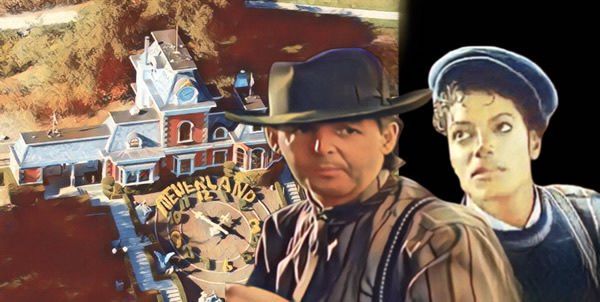
When combining decades of steady revenue, the joint venture payment, and the final sale, analysts generally estimate that the original $47.5 million investment generated returns exceeding $1 billion, potentially reaching between $1 billion and $2 billion depending on the methodology.
More than the exact figure, the broader consensus is clear. The acquisition of the Beatles’ catalog was one of the most profitable investments ever made by an artist in the history of music.
But reducing this decision to numbers is still insufficient. What this move reveals is something more unsettling and, at the same time, more precise about Michael Jackson.
For years, his public image was shaped by eccentricity, isolation, and a certain perception of fragility. Neverland, his identification with Peter Pan, and his gradual withdrawal from the ordinary world all contributed to that narrative. It became easy to see him as someone detached from reality, almost infantilized by the mythology surrounding him.
The acquisition of the Beatles’ catalog points in the opposite direction.
It reveals an artist who clearly understood where the true center of power in the music industry lay and who acted with strategy and precision at the right moment. Michael not only dominates the stage. He understood the system that sustained it and chose to operate within it.
There is, therefore, a duality that runs through his entire trajectory. On one side, the public figure is marked by excess, estrangement, and an attempt to escape time. On the other hand, an extremely lucid operator, capable of turning repertoire into assets, circulation into revenue, and legacy into structure.
At that point, the story with the Beatles stops being a curious or controversial episode and becomes a synthesis. Michael Jackson was not only one of the greatest pop artists in history. He was also one of its most sophisticated strategists.
And perhaps that is precisely the dimension that remained least visible.
Descubra mais sobre
Assine para receber nossas notícias mais recentes por e-mail.
 miscelana.com