
After settling accounts with the past, Hacks shifts its focus in this episode to something far more difficult to organize: the present. Deborah hesitates, but ultimately agrees to participate in a special edition of The Amazing Race alongside her daughter, D.J., turning an old promise into an unavoidable commitment. The idea seems simple, but quickly proves to be an impossible environment for a relationship that has never quite stabilized.
At the same time, Ava moves forward in her attempt to make the Who’s Making Dinner? reboot happens, which leads her directly to Deborah’s sister, the holder of the show’s rights, and places her in a space that requires less idealism and far more strategy.
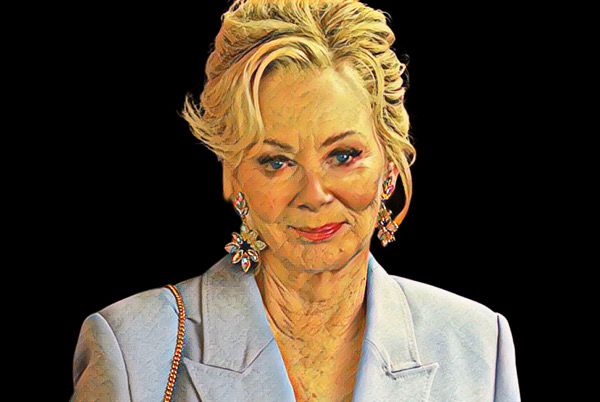
Different impulses in front of the camera
Putting Deborah and D.J. in a competitive reality show is not just a comedic device or a stylistic choice. It is a way of condensing a relationship that, throughout the series, has always appeared in fragments. For Deborah, once again, what matters is not being with her daughter, or even the prospect of winning the prize money, but promoting her Madison Square Garden show. Until the end of the season, nothing else will pull her away from that goal.
But under pressure, with clear rules and constant exposure, what emerges is not just conflict. It is the Vance family pattern.
D.J. enters the competition already expecting to fail. Deborah enters, trying to anticipate and correct every mistake. Neither of them is actually responding to the present. Both are operating from a script that existed long before the race even began.
What the episode does so precisely is make that structure visible.
Failure as a shared language
There is something particularly uncomfortable in the way the episode builds their failure. D.J. does not fail because she is incapable, but because she never reaches what she believes her mother expects from her. Deborah, in turn, cannot allow mistakes because she sees in them the confirmation of something she has been trying to avoid for years: her daughter’s humiliation and the consequence of feeling inadequate.
Both of them, unfortunately, are right. Deborah is demanding, and D.J. is insecure. It doesn’t work.
And perhaps this is the episode’s most difficult gesture. Instead of creating a dramatic rupture, it reveals how deeply ingrained this dynamic already is.

Protection as an attempt at displacement
What changes, even if subtly, is Deborah’s position. For the first time, the effort is not to shape her daughter in her own image, but to prevent her from repeating the exact same path.
This shift does not come through a grand emotional gesture, but through smaller moments. In the way Deborah starts observing D.J., in how she holds back the impulse to correct, in her still-unstable attempt to recognize someone who needs to exist outside her logic.
Ava and the logic of legacy
Speaking of logic, while Deborah and D.J. orbit this uneasy relationship, Ava moves forward more decisively. The negotiation for the rights to Who’s Making Dinner? demands something the series has been building in her for seasons: the ability to act without seeking moral permission.
Cathy, Deborah’s sister, inherited the rights to the sitcom, which had belonged to Frank before his death. At Ava’s urging, before leaving for the reality show, Deborah tries to reason with her longtime rival, who makes a strange demand. She wants specific pieces from Deborah’s salt shaker collection, something Deborah guards more carefully than any of her relationships. It is a boundary she refuses to cross.
Because of this, Ava has no alternative. She lies, manipulates, and crosses lines. After four seasons, I thought, “This is it, this will tear them apart again.” But Ava is sharper now. She forges the pieces and negotiates with Cathy, who suspects nothing. More than that, she enjoys the idea that Ava has “taken” something valuable from Deborah, just as she once did when she seduced Frank. In return, she agrees to hand over the rights to the series.
With that, if the previous episode reorganized the past, this one reorganizes the future. And that future is no longer centered on Deborah.
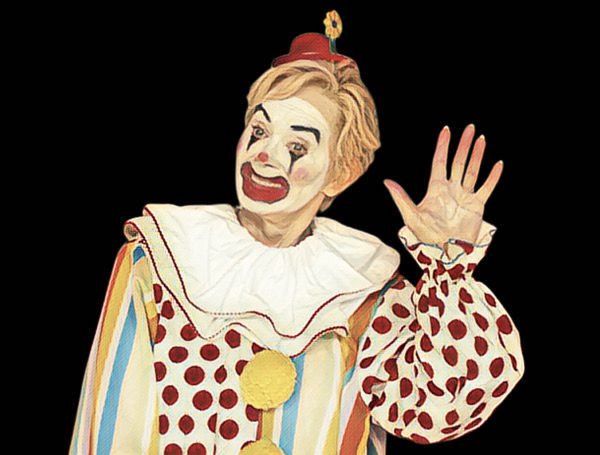
A future that exists outside of her
D.J., who for much of the series existed as noise or consequence, begins to find her own voice. Still insecure, still unstable, but with something new: the possibility of existing without needing to measure up.
Hacks does not resolve Deborah and D.J.’s relationship through easy reconciliation or emotional catharsis. That would be too simple. What the series does instead is more precise. They accept each other, even with everything that remains unresolved.
Which also means that Ava, like D.J., can begin to imagine a future that runs parallel to Deborah’s, rather than dependent on it.
Descubra mais sobre
Assine para receber nossas notícias mais recentes por e-mail.
 miscelana.com