
One of May’s biggest releases carries a Brazilian accent. The new adaptation of Man on Fire, now as a series, is Netflix’s take on A. J. Quinnell’s novel, which has already been adapted more than once for the screen, is most closely associated with Tony Scott’s 2004 film starring Denzel Washington.
That trajectory is not just a piece of background. It is what makes the series legible now. Because Man on Fire has never been exactly the same story, even when it began from the same premise.
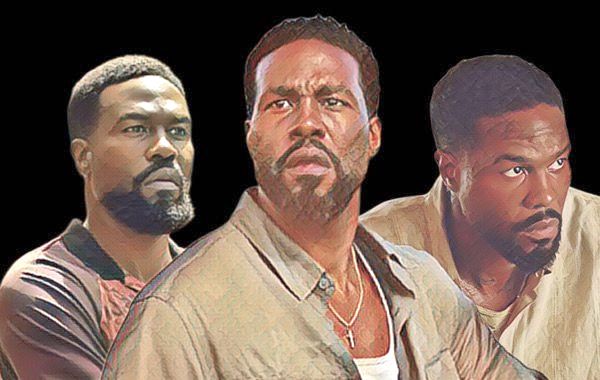
In the 1980 novel, John Creasy is constructed through direct logic. A former mercenary who has moved through wars and shed any illusion about the world, hired to protect a child and, when he fails, reorganizes his existence around a single response. Revenge does not appear as an impulse, but as language. There is no negotiation, no deviation, no doubt capable of altering the course of action.
Tony Scott’s film preserves that structure while shifting its meaning. By relocating the story to Mexico City and reshaping Creasy into a man in collapse who finds, through his relationship with Pita, a way to reconnect with the world, violence stops being mere execution and becomes an emotional experience. What emerges is no longer just a trajectory, but perception.
The Netflix series enters this lineage without attempting to replicate any of those forms. It begins with the same character, but shifts the narrative axis. The question is no longer what a man does when he loses everything, but how he continues to exist when he can no longer operate alone.
Trauma as a starting point, not a trigger
The most decisive shift appears in the way the series introduces Creasy. He is not presented as someone ready to act, nor as someone waiting to be activated by a specific event. He arrives already broken.
The loss of his team during a mission in Mexico does not function merely as backstory, but as the structure organizing the character. Trauma does not immediately propel the narrative forward. It paralyzes, disorients, and prevents Creasy from forming bonds or even recognizing the possibility of acting again. Alcoholism, isolation, and the refusal to connect cease to be traits and become the center of the construction.
That choice completely alters the kind of story being told. Instead of following a man executing a plan, the series follows someone trying to rebuild the very capacity to act.
Brazil is part of the narrative, not just a setting
By relocating the story to Brazil, with Rio de Janeiro at its center, the series does more than change geography. It reshapes how the world itself operates.
The presence of characters such as Valeria, played by Alice Braga, prevents the narrative from being driven by an external gaze. There is a consistent effort to ground relationships, language, and social dynamics from within, which alters the kind of thriller being constructed.
At the same time, the series expands the conflict by incorporating structures of power that were less visible in previous versions. The attack that destroys Poe’s family is not an isolated event, but part of a political operation designed as a false pretext to consolidate power, involving both the Brazilian government and American intelligence.
This move changes the status of violence within the story. It stops being a response and becomes a strategy.
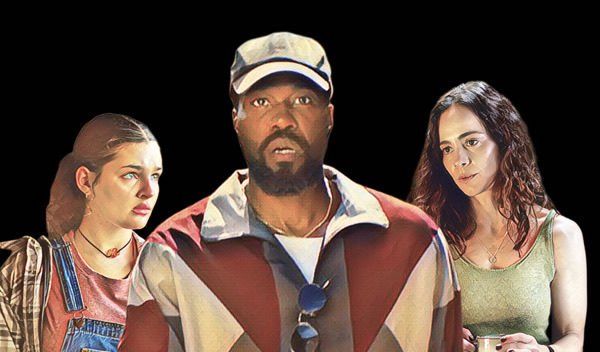
Creasy and Poe and the end of a single emotional axis
In the novel, the child Creasy functions as a moral trigger. In the film, Pita becomes the emotional axis and the possibility of redemption. The series refuses to organize the entire narrative around a single relationship.
Poe enters the story already shaped by displacement, family conflict, and a constant attempt to return to a life that no longer exists. The attack that destroys her family not only places her at the center of the narrative but situates her within the same logic of trauma that defines Creasy.
What develops between them is not a dynamic of salvation, but one of recognition. The series brings their experiences into proximity without turning them into equivalents, creating a bond built through what remains unsaid, unresolved, and marked by loss.
This choice prevents the narrative from revolving around a single emotional axis and distributes its weight across multiple relationships.
When revenge no longer resolves the story
The clearest difference between the versions lies in how the series reorganizes violence.
In the novel, it drives the narrative. In the film, it structures the experience. In the series, it stops being a solution.
Creasy’s trajectory points toward the impossibility of acting alone. He must accept help, build alliances, and negotiate paths forward. Characters like Valeria, Livro, and Vico are not simply support; they actively shape the outcome.
This shift also appears in the structure of the story, which abandons linearity in favor of a sequence of operations that require coordination. The plane escape, the prison infiltration, and the parallel plans point to a narrative that does not resolve through direct execution, but through construction.
The enemy is no longer a single man
The series also expands the idea of antagonism.
The conflict is no longer organized around who carries out the violence, but around who structures it. The revelation that the attack was part of a broader operation involving political and strategic interests reshapes the scale of the story.
Tappen is central to this shift. He is not framed as a traditional villain, but as someone operating within a logic in which individual lives can be sacrificed in the name of a larger calculation. The conflict moves beyond morality into structure.
The limit of sacrifice
Tony Scott’s film transforms Creasy’s final gesture into a sacrifice. The series approaches that possibility, but ultimately steps away from it.
The idea that death could resolve the story is replaced by something more difficult to sustain. Survival becomes a responsibility, especially in relation to someone like Poe, who must continue living with what remains.
This shift alters the meaning of the narrative. The final gesture is no longer self-destruction, but continuation.
What changes when the story does not end
The ending does not organize the narrative as closure.
The conspiracy is exposed, those responsible are eliminated, but what remains is no resolution. Poe finds a way to reorganize her relationship with memory. Creasy survives, and in surviving, must face something previous versions did not demand with the same intensity: staying in the world.
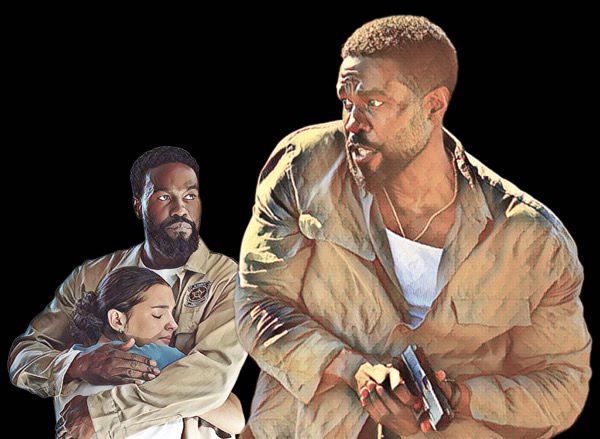
At the same time, the series leaves open the possibility of returning to action, now directed toward an unresolved past, suggesting that this transformation is not complete.
One story, three readings
Comparing the novel, the film, and the series does not produce a hierarchy, but a shift in perspective.
The novel treats revenge as a method. The film reframes it as experience and redemption. The series dismantles that logic and proposes a reading in which the individual can no longer sustain the full weight of the narrative alone.
In that movement, Man on Fire stops being only the story of a man on fire and becomes the story of a world that continues to burn, even when the idea of control no longer holds, and when survival stops being a consequence and becomes a choice that must be actively sustained.
Descubra mais sobre
Assine para receber nossas notícias mais recentes por e-mail.

