
The Newton Brothers have quietly become one of the most influential composing duos in film and television over the last decade. Even for viewers who may not immediately recognize the name, it is almost impossible not to have been affected by their work in recent years. Just think of series like The Haunting of Hill House, Midnight Mass, The Fall of the House of Usher, X-Men ’97, or Daredevil: Born Again. Or films such as Doctor Sleep and Five Nights at Freddy’s. There is a very specific emotional identity running through all of these productions, and it comes from the way Andy Grush and Taylor Stewart understand music not as accompaniment, but as psychological atmosphere.
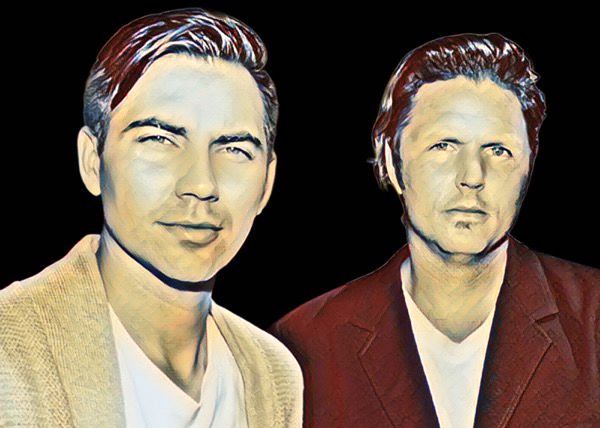
Curiously, they are not actually brothers. The name “The Newton Brothers” naturally creates that impression, but the partnership was born from the creative affinity between John Andrew Grush and Taylor Newton Stewart, two American multi-instrumentalists who began collaborating in the 2000s. Over time, the dynamic between them became so integrated that the name itself started to feel almost symbolic of their artistic relationship.
From the beginning, both showed a fascination with the relationship between image and sound. They grew up listening not only to opera and classical film scores by composers like John Williams, but also to electronic music, synthwave, and bands such as Kraftwerk. Yet their influences go far beyond that. In interviews, the duo frequently cites composers like Bernard Herrmann, Jerry Goldsmith, Hans Zimmer, Ennio Morricone, and Angelo Badalamenti as key inspirations for understanding music as emotional language rather than mere narrative support. There is also a strong minimalist influence, particularly from Philip Glass and Jóhann Jóhannsson, visible in their use of repetition, slow progression, and atmospheric construction.
That helps explain why their work rarely sounds “retro” or traditionally orchestral, even when classical instrumentation is present. The Newton Brothers operate in a unique space between the organic and the electronic. Melancholic strings coexist with analog synthesizers, processed noises, manipulated breathing, and industrial-like drones. Rather than simply underlining emotions, they create psychological states.
Another striking characteristic is the sheer number of instruments they play. Between them, they perform piano, guitar, bass, clarinet, flute, saxophone, cello, accordion, organ, percussion, and synthesizers. That versatility allows each project to feel distinct while still maintaining the duo’s unmistakable identity.
And perhaps that is precisely where their true signature lies.
While many contemporary composers approach horror through sonic aggression, the Newton Brothers approach horror through emotional vulnerability. Their music rarely screams. It seeps in slowly. There is an ongoing sense of grief, suspension, and fractured memory throughout their compositions. In many of their projects, the score feels like the internal manifestation of the characters themselves, as though anxiety, guilt, and trauma are being translated directly into sound.
That becomes especially clear in the way they use silence and space. In The Haunting of Hill House, for example, the absence of music in certain scenes becomes just as important as the themes themselves. In Midnight Mass, meanwhile, their signature emerges through almost liturgical sound design, transforming choir, organ, and sacred harmonies into something simultaneously spiritual and threatening.
Another recurring trait is their use of deceptively simple melodic themes that become emotionally devastating over time. Instead of relying on grand, immediately memorable melodies, the Newton Brothers often favor fragile musical fragments that return throughout the story like traumatic memories. The audience may not consciously recognize those repetitions, but they feel them emotionally.
That also helps explain why their partnership with Mike Flanagan became so important for both sides. Today, it is almost impossible to separate the director’s audiovisual identity from the music created by the duo. Since Oculus, they have worked together in a near-symbiotic relationship, redefining the sound of modern horror for a generation accustomed to jump scares and overwhelming sound design.
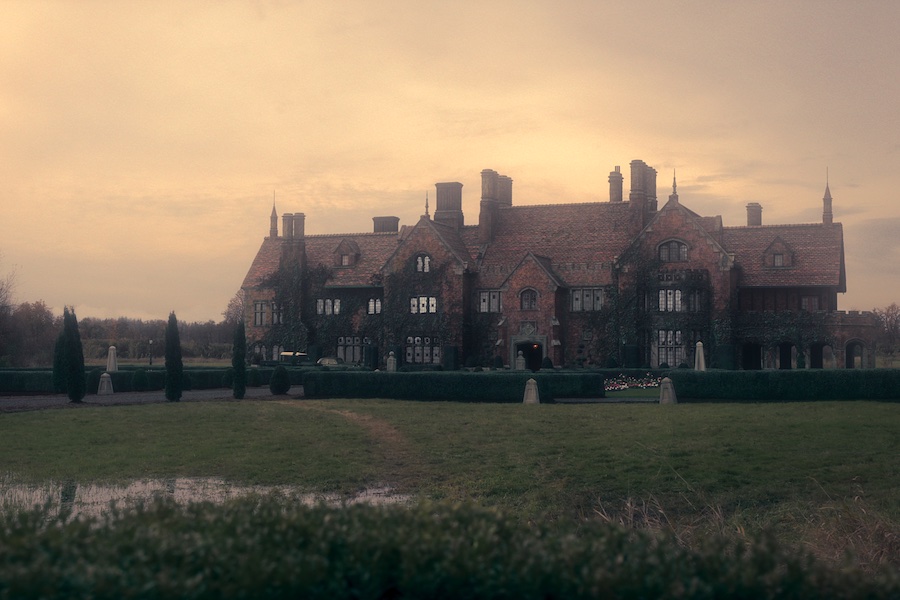
For many years, horror was associated with aggressive scores, sonic shocks, and excessive musical cues. The Newton Brothers moved in the opposite direction. In productions like Hill House and Midnight Mass, silence becomes as important as the score itself. They build emotional tension before physical tension. Instead of merely announcing scares, the music creates a lingering atmosphere of grief, disorientation, and melancholy.
That is particularly evident in Midnight Mass, perhaps one of the duo’s most sophisticated works. The series blends religious horror, Catholic guilt, spiritual longing, and fanaticism. The score approaches all of this in an almost liturgical way, using organs, choir, and minimalist harmonies to create a simultaneous sense of devotion and menace. It is not simply horror music. It is music about faith, death, and redemption.
In The Haunting of Hill House, meanwhile, they treat traumatic memory itself as something sonic. Certain themes return like emotional ghosts. The score is not there merely to frighten, but to constantly remind both the characters and the audience that the past never truly disappears.
That emotional understanding of horror elevated the duo to another level within the industry. When Mike Flanagan took on Doctor Sleep, the sequel to The Shining, the Newton Brothers faced perhaps their greatest challenge: musically engaging with one of the most iconic horror films ever made without simply imitating it.
Their solution was remarkable. They incorporated references to the original The Shining score, including variations of the “Dies Irae,” while expanding the soundscape into something more melancholic and emotionally driven. After all, Doctor Sleep is less about a haunted hotel than about generational trauma, alcoholism, and survival. The score understands that perfectly.
But their career no longer belongs exclusively to horror.
In recent years, the Newton Brothers have increasingly become part of major contemporary franchises. X-Men ’97 represented a pivotal moment because it proved they could translate their emotional signature into a completely different universe. Rather than treating the animated revival as pure nostalgia, they built a score that deepens the political, emotional, and epic dimensions of the mutant characters.
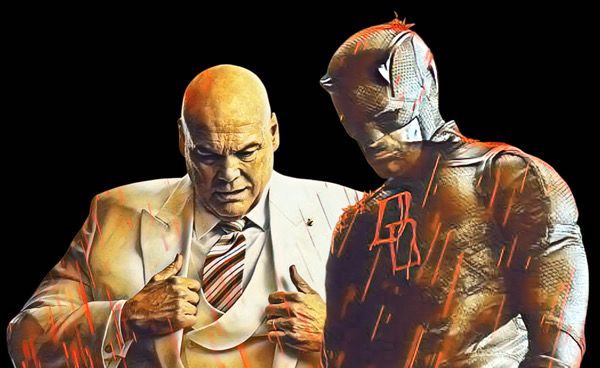
The same happened with Daredevil: Born Again, where they embraced a more psychological and urban approach than a traditionally heroic Marvel sound. There is something almost noir-like in the way they use low percussion, dark synthesizers, and restrained strings to accompany Matt Murdock.
At the same time, they remain deeply connected to Mike Flanagan’s universe. Among their most recent projects is The Fall of the House of Usher, Netflix’s Edgar Allan Poe adaptation, which blends gothic horror, social critique, and moral decay with a score oscillating between classical elegance and modern unease.
Another recent project was Five Nights at Freddy’s, the adaptation of the hugely successful video game franchise, where they had to connect with a younger audience without abandoning the atmospheric density that defines their work.
And the next few years are likely to consolidate their position even further.
The Newton Brothers are directly involved in Carrie, Mike Flanagan’s upcoming adaptation for Amazon MGM Studios, currently one of the most anticipated horror projects in development. They are also expected to continue collaborating on Flanagan’s future television projects following his move from Netflix to Amazon, making them central to the sonic identity of this new phase of the director’s career.
In addition, the massive success of X-Men ’97 firmly placed the duo on the radar of major studios looking for composers capable of handling both emotional depth and franchise storytelling. Today, they occupy a rare space in Hollywood: composers able to move between auteur horror, prestige streaming television, geek franchises, and blockbuster filmmaking without losing their artistic identity.
And perhaps that is precisely why their work has become so important in contemporary audiovisual storytelling. The Newton Brothers understand something many films and series are still trying to figure out: a score does not exist merely to accompany images. It exists to create emotional memory.
In many of their projects, viewers may forget specific lines of dialogue or plot details, but they continue carrying the feeling left behind by the music long after the credits roll. Because the true signature of the Newton Brothers is not simply in the notes they compose. It is in their ability to transform sound into emotionally haunting.
Descubra mais sobre
Assine para receber nossas notícias mais recentes por e-mail.

